
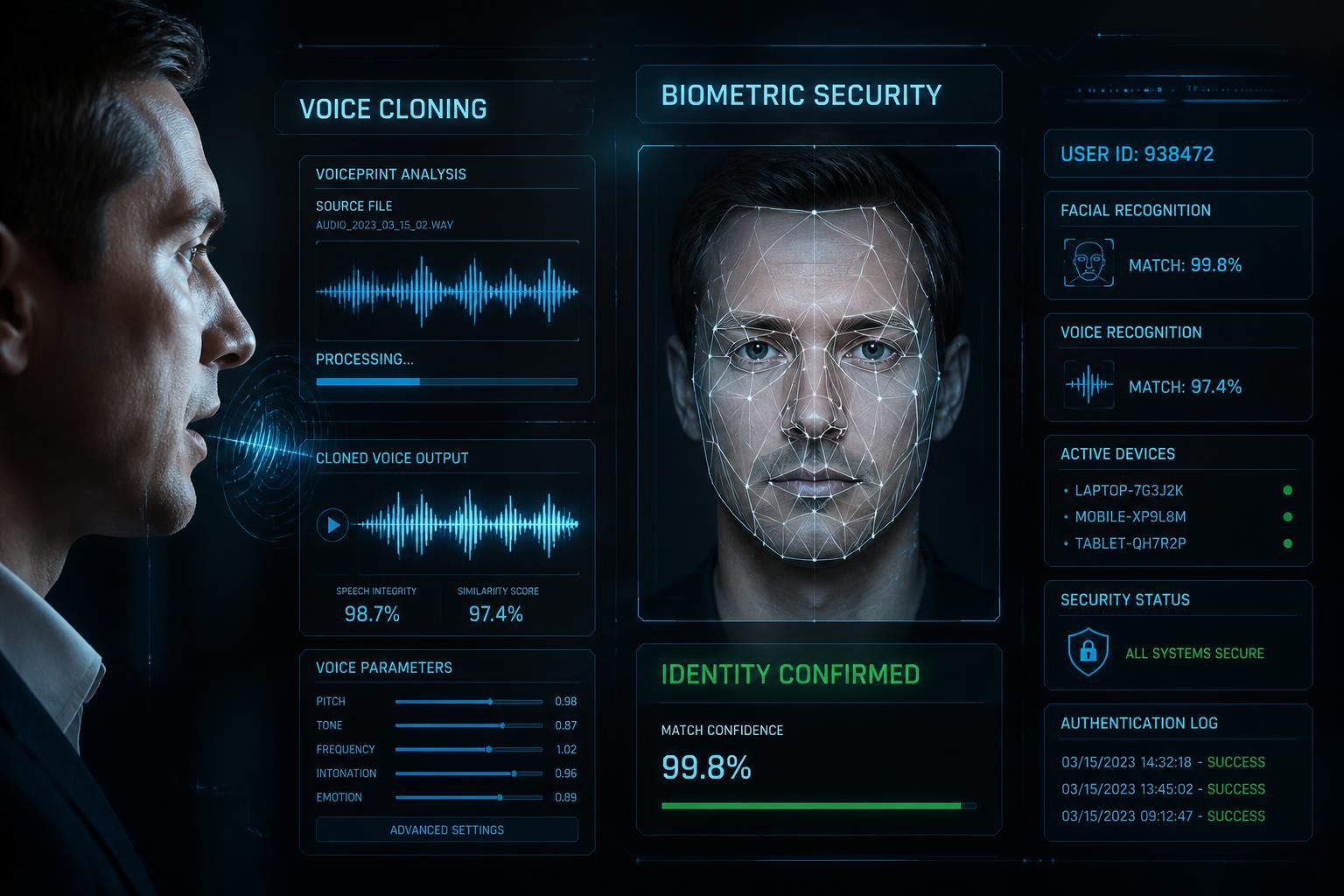
Rising Concerns Over Voice Cloning AI as Legal Protections Lag Behind have increasingly caught the attention of professionals and consumers worldwide. The rapid progression of Voice Cloning technology—enabled by advances in Artificial Intelligence—promises innovative applications but simultaneously exposes critical vulnerabilities in Privacy Concerns, Biometric Security, and the legislative framework that regulates the use of synthetic voices. As voices become easily replicable, questions arise about consent, identity theft, and the gaps in legal safeguards.
Understanding Voice Cloning Technology and Emerging Privacy Concerns
Voice Cloning uses deep learning algorithms and vast datasets to generate convincing replicas of a person’s voice from minimal audio samples. This technology is now powerful enough to mimic not only basic speech patterns but also subtle intonations and emotional nuances. From entertainment and smart tourism applications to fraud and misinformation, the impact is wide-ranging.
With AI Ethics at the forefront, the most significant worry lies in the potential misuse of cloned voices: impersonation for scams, unauthorized endorsements, or creating false evidence. One real-world example involves a UK voice-over artist discovering her voice had been cloned and sold online more than 900 times without consent, profoundly impacting her career and digital dignity.
The privacy risks are magnified because many jurisdictions, including the UK, have laws predating such technology, rendering current protections insufficient. The UK relies on an inconsistent patchwork of copyright, data protection, and trademark laws that do not fully encompass the reality of AI-enabled cloning technology. By contrast, several European countries like France, Italy, and Denmark have framed stricter personality rights that include the protection of voice, image, and identity—offering more comprehensive coverage.
This situation is underscored by rising cybercrime incidents using AI-generated voices to bypass biometric security, mislead individuals, and steal identities. As deepfake technology becomes more accessible, the ramifications for fraud prevention and identity theft become pressing concerns. Regulation gaps expose victims to harm before legal remedies can be secured.
In a landscape where consent is paramount but often overlooked, companies developing voice AI technologies are called upon to uphold transparency and ethical standards rigorously. Several firms have begun implementing restrictions against unauthorized uploads and voice model creations; however, enforcement remains challenging. For a deeper dive into recent legal updates and their implications, readers can explore detailed analyses of AI voice cloning regulation.
The Regulatory Gap in Voice Cloning: Challenges and Legal Precedents
The lag between technological innovation and the enactment of effective legal protections is starkly evident in voice cloning. Many existing laws were designed without foresight into the AI era and therefore leave considerable loopholes, especially around consent and ownership of one’s voice and likeness.
One fundamental challenge is the classification of AI-generated voices under intellectual property (IP) law. The traditional frameworks for copyright and trademark do not easily extend to synthetic voices, which are often generated through the use of copyrighted source material but lack substantial originality themselves.
Legal professionals debate whether and how personality rights—protecting a person’s image, voice, and identity—should evolve to cover these emergent technologies. In the US and UK, courts are beginning to engage with the issues, setting early precedents in cases where voice actors sue AI firms for unauthorized use of their vocal performances. For instance, a landmark lawsuit brought by voice artists has highlighted how lacking explicit legal consent protocols can lead to major disputes over digital identity and compensation.
Key Issues in Voice Cloning Legislation
- ⚖️ Consent and Authorization: Determining valid consent for voice use and reproduction in AI-generated content.
- 🔐 Data Protection: Handling biometric data involved in voice samples under privacy laws like GDPR.
- 🛡️ Right of Publicity and Personality: Extending protections to cover voice as part of individual persona rights.
- 📜 Intellectual Property Challenges: Defining originality and ownership of AI-created voice recordings.
Recent court rulings, such as those analyzed by experts in voice cloning cases from 2024 to 2026, illustrate how judges are grappling with the interpretations of existing laws to adapt them to synthetic voice challenges. Similarly, the New York district court’s decision on AI voice cloning legality stretches contract, copyright, and state law parameters, shaping a new frontier in legal protections.
One notable limitation arises from the General Data Protection Regulation (GDPR), which has been employed somewhat successfully in the EU context to control unauthorized voice cloning by framing voices as personal data. However, this approach is only a partial remedy since GDPR was designed before the era of AI-enabled deepfake technology and thus does not capture all ethical or legal concerns around synthetic identity misuse.
Such gaps underscore the urgent need for tailored legislation that explicitly addresses AI’s unique risks and challenges.
Implications of Insufficient Legal Protections on Voice Artists and Consumers
The absence of robust legal protection exposes voice artists, public figures, and ordinary consumers to exploitation and financial harm. Professionals dependent on their voice as a core asset are increasingly vulnerable to unauthorized cloning, which dilutes their brand and revenue streams.
The case of Faye Dicker, a voice-over artist whose likeness was cloned without permission and monetized by an AI firm, highlights how such breaches can disrupt livelihoods and lead to loss of control over one’s voice identity. This is more than just an economic issue—it impacts digital dignity and personal autonomy, fundamental rights deserving recognition and protection in digital culture.
Beyond individual consequences, consumer trust can sharply decline when AI-generated misrepresentations proliferate. The proliferation of voice scams is a growing risk, with cybercriminals utilizing cloned voices to deceive victims into fraudulent schemes—jeopardizing both financial safety and reputation.
Trade unions like Equity have responded proactively, submitting claims on behalf of numerous members affected by unauthorized AI voice replication. These interventions underscore the widespread nature of the problem and push for stronger policy reforms.
Adopting practical safeguards can mitigate these risks:
- 🔍 Implementing strict consent validation and audit trails for voice data usage.
- 🛑 Enforcing transparent and fair licensing agreements tailored to AI voice applications.
- 💡 Educating artists and consumers about detecting and reporting voice cloning abuse.
- 🔐 Strengthening biometric security measures to thwart unauthorized access.
- ⚖️ Advocating for comprehensive legislation on AI voice cloning and personality protection.
For stakeholders interested in deeper discussions on the interplay of AI voice cloning, identity, and legal limits, additional insights are available exploring legal challenges and protections.
Advancing Ethical AI Use: The Role of Advocacy and Emerging Solutions
Ethical AI use is gaining momentum as society acknowledges the profound risks of unregulated voice cloning. Industry leaders, lawmakers, and advocacy groups stress the importance of balancing innovation with respect for individual rights.
Digital regulation campaigners like Baroness Beeban Kidron actively press for stronger copyright and personality rights frameworks to grant legal parity to voice likenesses in AI contexts. Kidron critiques the existing governmental approach as insufficient for protecting creators against the dominance of big tech corporations prioritizing profit over personal safeguards.
Technological innovations are also stepping in to address the issue. Certain AI companies invest in developing watermarking and detection tools that identify synthetic voices, adding an essential layer of defense. Others focus on creating transparent user agreements and technical filters preventing the use of unauthorized voice data.
Aligned with federal initiatives, the FTC has issued calls for multidisciplinary strategies to prevent harms associated with AI voice cloning. These strategies combine product design, regulatory policies, and procedural safeguards to protect consumers from fraud and misuse of biometric and creative content.
The table below summarizes key efforts and potential impacts:
| 🚀 Initiative | 🎯 Focus Area | ⚖️ Legal/Ethical Aspect | 🔮 Expected Outcome |
|---|---|---|---|
| Watermarking AI Voices | Detection & Transparency | Supports authenticity verification | Reduces misinformation and fraud risk |
| Enhanced Consent Protocols | User Rights & Licensing | Strengthens contract enforceability | Protects voice owners legally |
| Regulatory Consultations | Policy Development | Bridges regulation gap | Crafts AI-specific laws |
| Consumer Awareness Campaigns | Education & Reporting | Improves detection of abuse | Empowers victims & stakeholders |
Integrating these multidisciplinary approaches ensures effective mitigation of risks whilst fostering trust in responsible AI voice technologies.
How to Navigate Voice Cloning AI Safely in the Smart Tourism and Cultural Sectors
The tourism and cultural sectors stand to gain immensely from AI-powered voice cloning through enhanced visitor experiences and accessibility improvements. For example, smart tourism applications like Grupem utilize voice AI to create interactive audio guides that cater to diverse audiences efficiently.
However, these benefits must be balanced against ethical considerations and compliance with data protection and intellectual property laws. Organizations must adopt best practices to safeguard user data and ensure content authenticity.
Key recommendations for professionals in these sectors include:
- 📱 Utilizing authorized AI voice cloning tools with strong security measures to prevent misuse (recommended platforms).
- 📝 Securing explicit consent from voice contributors before digitization and reproduction.
- 🔎 Monitoring deployed AI voices to promptly detect and address fraudulent or unauthorized activities.
- 🔄 Updating privacy policies and user agreements to clarify AI voice use and users’ rights.
- 🎧 Providing clear information to clients about the origin and legitimacy of AI-generated audio content to maintain trust.
By adhering to these practices, cultural institutions and tour operators can innovate responsibly, enhance visitor engagement, and protect all parties involved from the downsides of AI misuse.
For those seeking to explore smart tourism solutions leveraging responsible voice AI, insights on cutting-edge applications can be explored through Grupem’s detailed presentation on Lionel Richie AI Voice project.
What are the main risks associated with AI voice cloning?
Major risks include identity theft, fraud, privacy breaches, unauthorized voice use, and loss of personal control over one’s digital identity.
How do current laws fall short in protecting voices from cloning?
Most existing laws are outdated, focusing on copyright or data protection but lacking explicit provisions for AI-generated voice likeness and consent management.
Which countries offer stronger legal protection for voice cloning victims?
Countries like France, Italy, the Netherlands, and Denmark have more comprehensive personality rights protecting voice, image, and identity.
What steps can voice actors take to defend against unauthorized cloning?
Voice actors should negotiate strong contractual terms, monitor AI platforms for misuse, engage with unions like Equity, and pursue legal claims if necessary.
How can organizations using AI voice technology maintain ethical standards?
Implement clear consent protocols, use technical safeguards to detect misuse, inform users transparently, and comply with emerging regulations and best practices.
