
Enhancing Educational Impact with the Renovated Sendik’s Exhibit at Betty Brinn Children’s Museum
The recent Grand Reopening of the Sendik’s Exhibit at the Betty Brinn Children’s Museum marks a pivotal moment in interactive educational displays designed for early childhood development. This renovated exhibit, fully unveiled on April 9th, 2026, transforms the traditional play grocery store into an enriched, realistic environment that invites children to engage in imaginative play while cultivating critical social and motor skills.
Originally installed more than 15 years ago, the Sendik’s Food Market exhibit was due for a comprehensive update to reflect contemporary retail environments more accurately. The renovation introduces modern grocery store elements, including produce and floral sections, tangible shopping carts, and advanced touchscreen cash registers. This level of detail creates an immersive, authentic experience that goes beyond simple role-play, boosting educational value.
Such exhibits are crucial in offering children the opportunity to model adult behaviors within a safe, structured, yet playful setting. As Tina Quealy, CEO of the museum, notes, this type of interactive display supports not just imaginative growth but also enhances children’s social-emotional learning and gross motor skills. It invites collaborative play and role experimentation, indispensable elements for children’s cognitive and interpersonal development.
By aligning the exhibit’s design with real-world grocery shopping, the museum reinforces practical life skills through experiential learning. Children navigating the aisles, selecting items, and simulating checkout processes are engaging in activities analogous to daily experiences. This reinforces not only recognition and decision-making skills but also social interactions such as sharing, cooperation, and communication.
Moreover, the inclusion of a historic 1920s Model T grocery delivery truck as play equipment cleverly integrates educational content about local history and Sendik’s centenary milestone. This fusion of past and present invites family dialogues around history and community evolution, enriching the educational layers of the exhibit.
For professionals involved in designing or upgrading museum exhibits, the Sendik’s renovation exemplifies the importance of combining realism with interactivity. The updated setup not only sustains children’s attention but also enhances knowledge retention through hands-on engagement, a vital consideration in educational tourism and museum curation today.
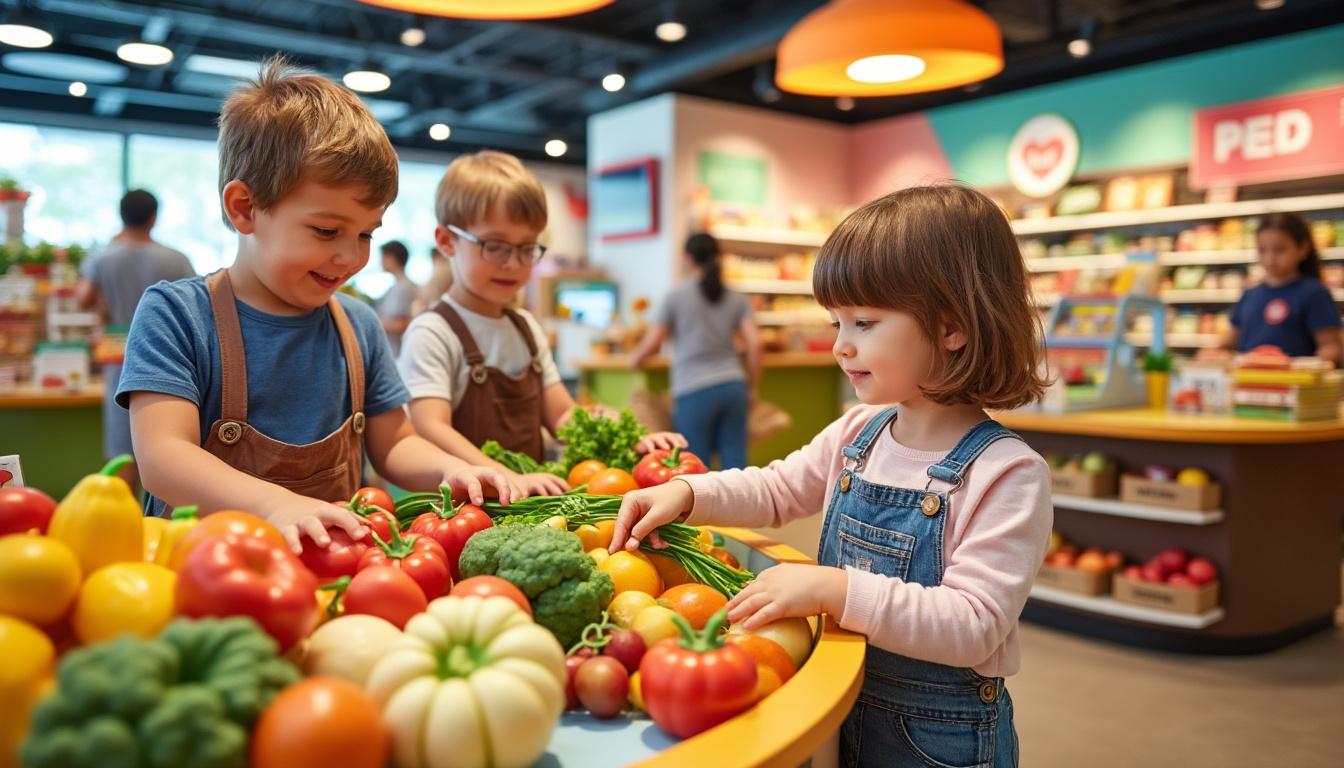
Interactive Technology Integration Elevating Visitor Experience
The renovated Sendik’s Exhibit incorporates interactive technology strategically to enhance learning outcomes while maintaining child-friendly accessibility. Touchscreen cash registers embedded within the checkout lanes introduce young visitors to basic technological interfaces they will encounter in everyday life, bridging the gap between learning and practical application.
This thoughtful inclusion exemplifies how smart technology can be seamlessly embedded in museum displays to aid educational missions without overshadowing the tactile and imaginative aspects crucial for child engagement. The touchscreen devices do not require complex instructions, enabling intuitive use even by the youngest visitors, thus supporting inclusivity.
In integrating digital interactions, the exhibit aligns with smart tourism principles that advocate for the adoption of technology to create dynamic visitor experiences. The result is a harmonious balance between hands-on play and digital literacy introduction, a combination increasingly demanded in educational settings in 2026.
Moreover, this renovation anticipates a rising trend in museum and cultural venue design: technological augmentation tailored to developmental capacities. By adapting devices to children’s abilities, the exhibit avoids common pitfalls of technology in education, such as overstimulation or disengagement. Visitors are gently exposed to digital tools within a purpose-driven context, enhancing affinity for technology through playful discovery.
For museums seeking similar updates, the Sendik’s example demonstrates the importance of selecting technologies that complement the physical setting and educational objectives. Instead of technology for its own sake, the integration supporting tangible learning milestones strengthens both visitor satisfaction and educational impact.
This approach also contributes to making the Betty Brinn Children’s Museum a reference point for innovative museum experiences that embrace digital evolution smartly, encouraging other institutions to reimagine their exhibits through a pragmatic yet forward-looking lens.
Community Engagement and Cultural Significance of the Sendik’s Exhibit Reopening
The reopening of the renovated Sendik’s Exhibit at the Betty Brinn Children’s Museum was more than an update; it was a significant community event that underscores the museum’s role as a vibrant, educational hub for Milwaukee families. The ceremony, supported by Sendik’s co-owner Ted Balistreri and local stakeholders, reinforced the mutual commitment between the business and the community it serves.
Balistreri highlighted the importance of reinvesting in community spaces, emphasizing that the museum operates as a “mini community” where families converge not just for entertainment but meaningful learning experiences. This renewed alliance reflects broader trends in corporate social responsibility where local businesses participate actively in cultural and educational initiatives.
Families attending the reopening participated in hands-on activities, including exploring the recreated grocery store sections and interacting with “Baggie,” Sendik’s mascot. These moments foster engagement, making the museum visit memorable and reinforcing community ties. Parents and caregivers can observe firsthand how interactive play contributes to child development, promoting the museum as an essential resource.
The event also coincided with Sendik’s 100th anniversary, a milestone celebrated by integrating historical elements into the exhibit, linking past and present community narratives. This strategic storytelling enriches visitor experience by embedding local heritage within educational contexts.
The museum’s expected move to a larger facility by 2031 reflects growing demand driven by such successful exhibits. With over 170,000 annual visitors engaging in its current 10,500 square feet space, the expansion aims to amplify impact by accommodating innovative, educational encounter opportunities.
Professionals and organizers in cultural tourism may draw valuable lessons from the museum’s approach—in particular, leveraging local partnerships and historic context to maximize exhibit relevance and visitor connection while planning for sustainable growth.
Practical Aspects of Exhibit Renovation: Design, Usability, and Visitor Flow
Executing a renovation of an established exhibit like Sendik’s demands rigorous attention to design principles that ensure both functionality and visitor engagement. The Betty Brinn Children’s Museum’s project prioritized usability through realistic store layouts and durable interactive components suited for heavy use by young visitors.
The exhibit replicates a real grocery shopping environment with dedicated produce and floral sections, multiple checkout aisles, and child-sized shopping carts, allowing simultaneous play without overcrowding. This design facilitates smooth visitor flow, preventing bottlenecks and maximizing time spent interacting with educational materials.
The materials chosen for props and structures reflect a balance between durability and aesthetic appeal. High-quality, tactile objects simulate real grocery items while withstanding active, repeated handling. This durability is essential for operational sustainability, reducing maintenance costs and exhibit downtime.
The renovation also paid close attention to safety standards, ensuring that all interactive elements comply with child safety guidelines without compromising on engagement levels. For example, electronic cash registers are enclosed within accessible but secure housings, protecting both visitors and equipment.
From an operational perspective, the museum staff benefits from smart organization of exhibit areas, which eases supervision and supports educational facilitation. Staff can effectively guide children through play scenarios, fostering learning outcomes and ensuring a positive, controlled experience.
Upcoming museum projects may consider a similar holistic design approach that melds educational goals, visitor experience optimization, and operational practicality to create exhibits that endure both physically and conceptually.
| Aspect 🛒 | Details 📝 | Benefit 🎯 |
|---|---|---|
| Design Realism 🏪 | Accurate grocery store layout with aisles, produce, and checkout | Facilitates authentic play, improving learning retention |
| Interactive Technology 💻 | Touchscreen registers, hands-on props | Introduces digital literacy aligned with child abilities |
| Durable Materials 🔧 | Tough, safe, tactile objects and sturdy furniture | Ensures long-term sustainability and user safety |
| Visitor Flow Optimization ↔️ | Multiple aisles and spacious play areas | Prevents overcrowding, enhances engagement opportunities |
| Community Integration 🤝 | Local business partnership and historical elements | Strengthens visitor connection and educational depth |
Leveraging the Sendik’s Exhibit as a Model for Future Museum Innovations
The renewed Sendik’s Exhibit serves as an exemplary case study in the integration of modern educational strategies, interactive technology, and community involvement within an accessible, engaging children’s museum environment. As museums globally seek to reinvent visitor experiences, the insights drawn from this project are directly applicable.
Key recommendations for cultural institutions aiming to elevate their exhibits include:
- ⚙️ Focus on interactive realism: Develop exhibits inspired by real-life scenarios children encounter to foster practical learning.
- 📲 Incorporate age-appropriate technology: Embed digital tools thoughtfully to enhance, not replace, tactile exploration.
- 🤝 Forge community partnerships: Collaborate with local businesses and organizations to enrich content and broaden impact.
- 🛠️ Prioritize durability and safety: Select materials and design elements that endure frequent use without sacrificing visitor welfare.
- 📊 Monitor visitor flow and engagement: Design space to accommodate group play, minimize congestion, and maximize educational interactions.
This strategy aligns closely with current trends in smart tourism, which emphasize seamless integration of technology and human-centered design to create meaningful cultural experiences. For museums exploring similar redevelopment, the Sendik’s exhibit highlights how combining traditional educational values with modern innovation can drive engagement effectively.
More insights on successful museum reopening strategies and exhibit enhancement can be explored, such as recent developments in the top museum debuts of 2026, informing a broader perspective on the evolving museum landscape.
The video offers a detailed walkthrough of the renovated exhibit, illustrating how interactivity and community spirit converge to create a memorable educational experience.
This footage displays children engaging with the redesigned Sendik’s environment, demonstrating the practical application of the educational principles described.
What age group is the Sendik’s Exhibit designed for?
The exhibit primarily targets preschool and early elementary-aged children, roughly between ages 2 and 7, accommodating developmental stages focused on imaginative play and social skills.
How does the exhibit incorporate technology while remaining child-friendly?
By using simple touchscreen cash registers and durable interactive props that require basic interaction skills, the exhibit introduces children to technology without causing overstimulation or exclusion.
Why is a grocery store theme effective for educational display?
A grocery store setting is relatable and practical, allowing children to simulate everyday adult tasks, enhancing skills like decision-making, cooperation, counting, and social interaction.
How does the community benefit from the museum and Sendik’s partnership?
This collaboration strengthens local ties through shared educational goals, promotes cultural heritage awareness, and provides families with enriched learning opportunities in an accessible environment.
Where can I find more information about Betty Brinn Children’s Museum updates?
Additional details and updates can be accessed on the museum’s official website and social media channels, including their comprehensive site at Betty Brinn Children’s Museum.
