
Critical Year of Reflection for Massachusetts Art Museums Amidst Political and Economic Challenges
Massachusetts art museums faced a demanding and complex year marked by external political pressures and internal adaptation efforts in 2025. While institutions like Boston’s Institute of Contemporary Art (ICA) celebrated public engagement with events such as the First Friday series—featuring lively music and social gatherings—the undercurrents of funding uncertainty and policy scrutiny have shaped a cautious operational landscape.
Directors reported challenges predominantly linked to federal funding cuts and politically motivated oversight. The Trump administration’s approach to cultural institutions, emphasizing a restrictive stance on diversity, equity, and inclusion (DEI), led to millions of dollars in revoked grants nationally, including substantial impacts in Massachusetts. These developments forced museums to reconsider affiliations, program directions, and their very ability to maintain artistic freedom.
For example, ICA’s leadership declined a $60,000 National Endowment for the Arts grant supporting “An Indigenous Present,” citing concerns about governmental restrictions that could influence content. Likewise, the Museum of Fine Arts, Boston (MFA), refused $400,000 from the National Endowment for the Humanities because of ambiguous compliance demands. Such decisions underscore museums’ commitment to editorial independence, even at financial cost.
These events illustrate the tension between sustaining cultural programming and navigating a charged political atmosphere. The American Alliance of Museums revealed that one-third of museums surveyed nationally lost government contracts or grants, a data point that contextualizes Massachusetts museums’ experiences within a broader sector-wide challenge. Leadership in these institutions maintained a focus on their core mission and community accountability, even as they tightened budgets, scaled back ambitious loans, and pursued diversified private funding sources.
Further insights on Massachusetts art museums’ 2025 reflections highlight ongoing efforts to balance immediate operational constraints with long-term cultural impact. This critical year emphasized resilience, strategic navigation of funding landscapes, and adherence to mission values despite unprecedented external pressures.
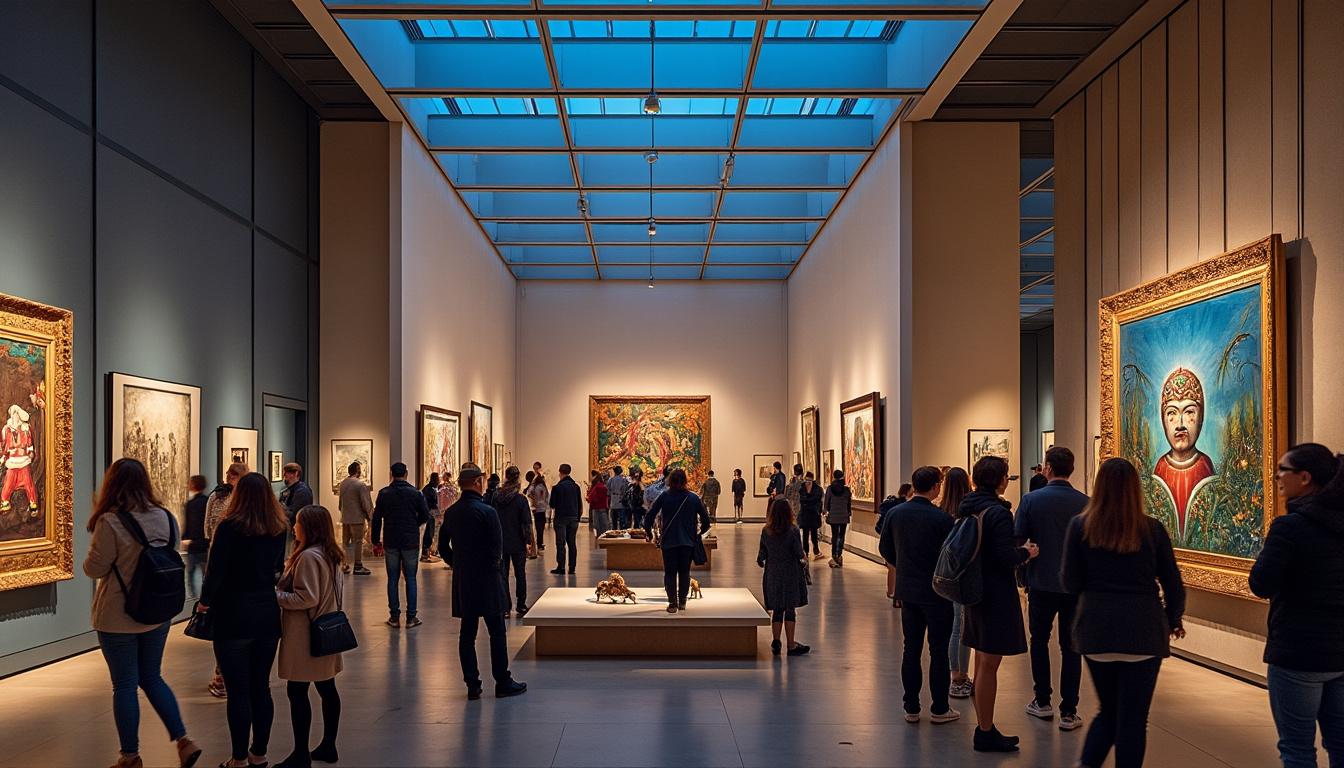
Adaptation and Strategic Innovation in Massachusetts Museums’ 2024-2030 Roadmap
MASS MoCA in North Adams exemplifies institutional foresight with its comprehensive 2024-2030 strategic plan, which emphasizes adaptability and multifaceted innovation. The museum’s origin—a transformation of a defunct factory into North America’s largest multidisciplinary contemporary art space—speaks to its transformative approach to culture and community. In a time of significant uncertainty, this strategic plan focuses on diversification, community engagement, and inventive curatorial practices.
Kristy Edmunds, MASS MoCA’s director, underscored the importance of upholding the museum’s values during federal funding disruptions. The abrupt cancellation of federal grants, including a $50,000 grant for an exhibition by queer and Indigenous artist Jeffrey Gibson, posed financial and ethical challenges. However, MASS MoCA continued to prioritize its mission, maintaining exhibitions like “Power Full Because We’re Different,” which highlights inclusive narratives crucial to contemporary cultural discourse.
This strategic overview embraces innovation not just in exhibitions but also in operational models leveraging technological enhancements, including smart audio guides and immersive experiences, which align perfectly with the evolving landscape of digital cultural mediation, a domain becoming essential for contemporary museums.
Such strategic focus supports community activation through:
- 🤝 Fostering inclusive narratives that incorporate underrepresented voices
- 🎨 Leveraging technology to enhance visitor engagement and accessibility
- 📈 Strengthening partnerships with local and global cultural organizations
- 💼 Diversifying revenue streams beyond fluctuating government support
- 🌍 Positioning the museum as a cultural and economic anchor within its community
This comprehensive plan is illustrative of how Massachusetts museums are not only responding to immediate challenges but also building resilience through visionary adaptation. For more on this approach, the MASS MoCA strategic plan contains detailed insights relevant to similar institutions.
Community Engagement as a Pillar in Reflecting Cultural Diversity and Addressing Social Impact
Massachusetts art museums have reaffirmed their role as central community hubs, advocating inclusivity and social relevance. Amid the political scrutiny and funding uncertainties, institutions increasingly recognize that fostering deep community connections is not just a moral imperative but a sustainable strategy.
Isabella Stewart Gardner Museum director Peggy Fogelman highlighted the ethical dimensions of cultural curation, emphasizing fairness and the importance of representing marginalized histories. Museums in the state are striving to move beyond passive exhibition toward active participation, where diverse communities see themselves reflected and valued.
Attendance statistics for 2025 reflect these efforts, with museums like the Gardner and the MFA reporting visitor numbers surpassing pre-pandemic levels. This resurgence demonstrates effective engagement strategies anchored in accessible programming and transparent communication.
However, challenges remain as museums confront the increasing polarization of public discourse. The shift from civic dialogue to polemic threatens the capacity of museums to serve as spaces of respectful exchange and empathy.
Key community-focused initiatives embraced by Massachusetts museums include:
- 🗣️ Hosting forums and panel discussions that encourage respectful dialogue on social issues
- 📚 Developing educational programs tailored to local school curricula that emphasize arts’ societal role
- 🎟️ Providing equitable access through discounted or free admission to underserved populations
- 🎥 Utilizing multimedia and smart technology platforms to engage diverse audiences remotely
- 🎨 Promoting exhibitions that reflect a multiplicity of cultural perspectives and experiences
These approaches reinforce museums’ social impact while building lasting community trust. For a broader context on the sector’s evolution, consult the State of the Sector: Arts and Culture in Massachusetts report.
Innovating Visitor Experience Through Technology and Smart Cultural Mediation
Innovation in visitor engagement has become a critical priority for Massachusetts art museums aiming to remain relevant in a rapidly evolving cultural landscape. Institutions are embracing smart tourism principles and intelligent audio technologies to enhance accessibility, interpretative depth, and user experience.
The integration of mobile applications that transform smartphones into professional tour guides is increasingly common, facilitating personalized and multi-lingual experiences. This shift extends museum reach beyond physical spaces, catering to visitors’ digital expectations and diverse needs.
Additional technological innovations include:
- 🎧 High-quality wireless audio guides with adaptive soundscapes to enrich immersion
- 📱 Interactive digital maps and augmented reality overlays that contextualize exhibits
- 💬 AI-driven chatbots providing on-demand information and visitor assistance
- 📊 Data analytics tools to monitor visitor flow, preferences, and engagement metrics
- ♿ Enhanced accessibility features catering to disabilities and language diversity
These technologies not only improve visitor satisfaction but also offer museums valuable data to refine exhibitions and tailor cultural mediation. Embracing these tools aligns with national and international trends seen in institutions like the Smithsonian and MoMA, signaling a sector-wide shift toward digital transformation.
For museums considering such implementations, Grupem’s insights into optimizing visitor experience provide practical guidelines based on proven technologies and user-centered design.
Financial Sustainability and Operational Adjustments in a Shifting Funding Landscape
The economic realities faced by Massachusetts museums in 2025 demand prudent financial management coupled with strategic fundraising diversification. Declining federal support and complex grant conditionality have compelled a re-evaluation of traditional funding models.
Institutions like the Museum of Fine Arts have adopted a conservative budget approach by reducing high-cost loans and scaling down expansive projects, reflecting a cautious fiscal stance attuned to uncertain economic forecasts. Simultaneously, they are intensifying private fundraising efforts given that philanthropy currently underpins approximately half of MFA’s $100 million budget.
The continuing trend of reduced governmental arts funding nationwide heightens competition for private philanthropy, challenging museums to clearly articulate value, transparency, and impact to donors and stakeholders.
Comparative financial data from several Massachusetts museums illustrate these trends:
| 🏛️ Museum | 💰 2025 Government Funding | 💵 Private Donations % | 📉 Budget Adjustments | 🎯 Strategic Priorities |
|---|---|---|---|---|
| Institute of Contemporary Art | Minimal (Grants declined) | 60% | Reduced federal grants acceptance | Artistic Independence |
| Museum of Fine Arts, Boston | Limited | ~50% | Scaled back exhibitions and loans | Private fundraising enhancement |
| MASS MoCA | Reduced due to cancellations | 55% | Operational cost containment | Community-centered programming |
In this context, museums must navigate a path that balances financial sustainability while safeguarding their culture and mission integrity. For a broader understanding of how art institutions are evolving financially, see analysis of financial woes and decreased admissions in art museums.
How have Massachusetts art museums responded to federal funding challenges?
Many museums have declined certain government grants to maintain editorial independence while seeking alternative funding through private donations and community partnerships.
What role does technology play in the evolution of visitor experiences in Massachusetts museums?
Technology enables personalized, accessible, and immersive visits through smart audio guides, augmented reality, AI assistants, and data analytics, enhancing engagement and operational insight.
How are art museums promoting diversity and inclusion despite political pressures?
By curating exhibitions that foreground marginalized voices, supporting social impact initiatives, and fostering community dialogue, museums in Massachusetts uphold principles of equity and inclusion.
What strategies ensure financial stability for art institutions facing reduced public funding?
Diversified income sources, including increased reliance on philanthropy, cost management, and strategic project scaling, help museums maintain financial health amidst funding uncertainties.
Why is community engagement a critical focus for Massachusetts museums in 2025?
Engagement strengthens social bonds, enhances visitor attendance, supports educational goals, and positions museums as essential cultural and economic anchors within their communities.
