
Spotlight Now: 15 Artists Dominating U.S. Museum Exhibitions Today
The contemporary art scene across U.S. museums is shaped at any moment by a select group of artists whose works resonate widely. Tracking this dynamic reveals not only emerging trends but also artists wielding significant creative influence. Among hundreds of exhibitions, only a fraction spotlight the same artists simultaneously, signaling their broad impact on visual arts and museum narratives in 2025.
Key Artists Leading U.S. Museum Exhibitions and Their Creative Influence
Monthly assessments of museum exhibitions uncover a consistent lineup of 15 contemporary artists dominating the cultural conversation. These figures achieve prominence through a mix of solo retrospectives, dedicated exhibitions, major commissions, and participation in group shows across institutions large and small. This nationwide presence underscores the depth of their impact and reflects shifting currents in art trends.
Marie Watt exemplifies this phenomenon, with her career-spanning print exhibition Storywork touring and appearing at notable venues such as the Jordan Schnitzer Museum of Art in Portland. Beyond solo presentations, her inclusion in multiple group exhibitions like Indigenous Identities: Here, Now & Always at the Zimmerli Art Museum highlights ongoing engagement with Native American contemporary art narratives. Her recent $250,000 Heinz Award attests to the recognition of her vision and dedication.
Jeffrey Gibson sustains his role as a leading figure through exhibitions like Power Full Because We Are Different at MASS MoCA and high-profile spotlight commissions, including work at the Metropolitan Museum of Art. His presence across diverse U.S. museums extends to thematic group exhibitions such as Power, Presence, and Future: American Indian Pop Art in Action at Duke University’s Nasher Museum, illustrating his influence on the discourse surrounding Indigenous identity and pop culture intersections.
Artists like Mickalene Thomas, known for exploring representations of Black female figures, expand their reach beyond traditional painting with video installations such as Do I Look Like a Lady? (Comedians and Singers), currently spotlighted at the Portland Art Museum. These multimedia approaches demonstrate evolving modes of creative expression that resonate across museum audiences.
Similarly, Rose B. Simpson gains attention with symbolic figurative sculptures and collaborations across multiple venues, from the de Young Museum in San Francisco to MoMA in New York, reflecting a growing appetite for intersecting traditional craft with contemporary narratives. These extensive displays amplify the dialogue on Indigenous art and craft’s evolving role in mainstream art spaces.
You may explore more on these artists and current exhibitions at Grupem’s detailed guide on the leading top artists in U.S. museums today.
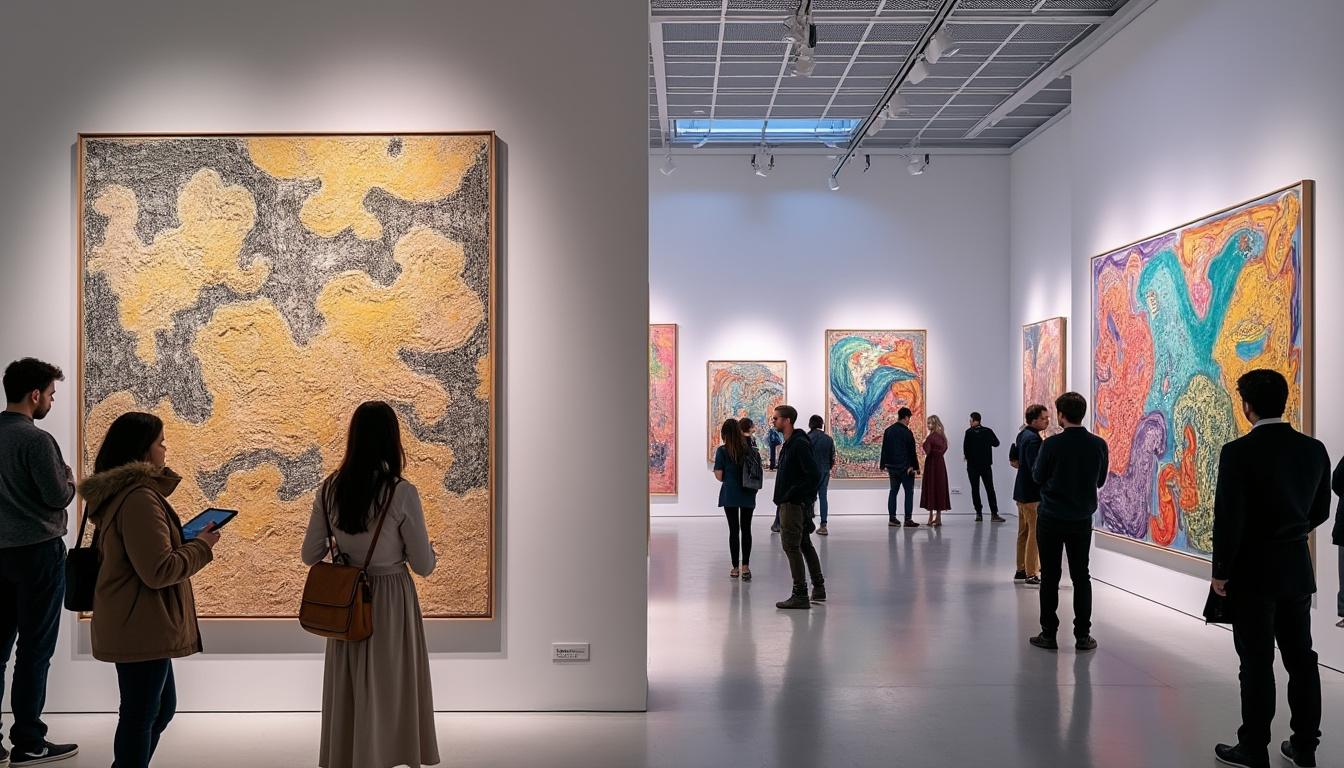
How Contemporary Art Trends Shape Museum Exhibitions in the United States
Contemporary art in U.S. museums increasingly integrates diverse cultural perspectives, multimedia techniques, and history-reflective themes. This results in a vibrant and often challenging visual arts environment, where artists like Kara Walker engage with difficult histories through installations such as Fortuna and the Immortality Garden (Machine) at SFMOMA. Walker’s work, alongside her role in co-curating major exhibitions like Monuments at MOCA Los Angeles, demonstrates a leadership that moves beyond artist to cultural commentator and curator.
The continued popularity of Yayoi Kusama, with her immersive infinity mirror rooms, shows a museum trend favoring experiential and Instagram-friendly installations. Kusama’s exhibitions, from the Buffalo AKG Art Museum to the Dallas Museum of Art, highlight how visually arresting environments draw widespread public interest and elevate museum attendance.
At the intersection of fine art and social narratives, artists like Carrie Mae Weems maintain strong presence primarily via group exhibitions dealing with race and identity. Her inclusion in over a dozen concurrent group shows nationwide underscores the importance of collaborative and thematic displays in conveying contemporary social issues through visual arts.
The rise of artists exploring Indigenous identities and histories—including Dyani White Hawk, Wendy Red Star, and Raven Halfmoon—showcases a broad museum effort to highlight underrepresented voices. Their works are featured not only in solo retrospectives but also in significant group exhibitions such as Indigenous Identities: Here, Now & Always and thematic biennials, redefining the narrative structures of museum collections.
Understanding these trends is key for museum professionals aiming to engage audiences with meaningful, diverse, and forward-looking exhibitions, as outlined in analytical resources like Artnet’s coverage of museum artists.
Exhibition Impact: Expanding Audience Engagement Through Innovative Displays
Shifting museum exhibition strategies now emphasize immersive and inclusive experiences. The focus extends beyond mere visual consumption to active visitor engagement, often facilitated by advanced audio tech and digital tools, aligning with Grupem’s mission to enhance guided visits.
Exhibitions such as Rashid Johnson: A Poem for Deep Thinkers at the Guggenheim highlight how nuanced thematic presentations deepen audience understanding of contemporary sociopolitical issues. Complemented by group shows in major institutions like the Brooklyn Museum and Milwaukee Art Museum, Johnson’s work exemplifies the power of layered curatorial approaches.
Moreover, collaborations between museums and artists, visible in multiple spotlights and group shows for creatives like Shahzia Sikander, provide expanded narratives that connect art historical contexts with contemporary perspectives. Sikander’s works featured across Stanford University, the Smithsonian, and others showcase the capacity of inter-institutional collaboration to maximize creative reach.
List of key factors driving contemporary museum exhibition success includes:
- 🎨 Use of immersive installations and multimedia presentations
- 📱 Integration of smart tourism technologies like audio guides to enhance visitor experience
- 🌍 Emphasis on diversity and underrepresented cultural narratives
- 🖼️ Cross-institutional collaboration extending artist exposure
- 📅 Strategic timing and placement of solo and group exhibitions for maximum impact
For institutions looking to optimize audience engagement through smart technology, resources such as Grupem provide essential frameworks on modernizing guided visits that complement exhibition techniques (Learn more about integrating contemporary art trends with visitor experience).
Geographic Distribution and Museum Variety Amplifying Artist Influence Across the U.S.
The museums hosting these artists range widely, from regional institutions to world-renowned museums in major cities. This inclusivity allows artists notable in niche circles to receive broad recognition, providing a fuller picture of the contemporary art landscape.
For instance, Wendy Red Star’s survey at Dickinson College and participation in exhibitions at the Zimmerli Art Museum reveal a strategic balance of local and national exposure. Likewise, Dawoud Bey appears in exhibitions spanning from the New Orleans Museum of Art to the Minneapolis Institute of Art, illustrating how a wide geographic span supports sustained artist relevance.
| 🎨 Artist | 📍 Representative Museums | 🗓️ Exhibition Duration |
|---|---|---|
| Marie Watt | Jordan Schnitzer Museum, Zimmerli Art Museum | Aug – Dec 2025 |
| Jeffrey Gibson | MASS MoCA, Metropolitan Museum of Art | Nov 2024 – Aug 2026 |
| Rose B. Simpson | de Young Museum, MoMA | Aug 2025 – Spring 2026 |
| Kara Walker | SFMOMA, MOCA Los Angeles | Jul 2024 – Jun 2026 |
| Rashid Johnson | Solomon R. Guggenheim Museum | Apr 2025 – Jan 2026 |
| Dyani White Hawk | Walker Art Center, The Block Museum | Oct 2025 – Feb 2026 |
Such diversity of locations ensures wider public exposure and enriches the ongoing conversation in the visual arts across the country. For updated perspectives on new museum openings and exhibitions, including emerging cultural hubs, see Grupem’s coverage on new museums in Los Angeles.
Technology and Digital Tools as Catalysts for Modern Museum Experiences
Innovative audio technologies and smart tourism applications are transforming how museum visitors interact with exhibitions of leading artists. Tools that integrate digital storytelling and augmented experiences enable deeper understanding and accessibility, even in complex contemporary art environments.
Leading applications now expand beyond traditional audio tours by incorporating user-friendly features such as personalized content, multi-language support, and GPS integration to guide visitors seamlessly through large exhibitions. This enhances appreciation of artists like Mickalene Thomas and Firelei Báez, whose multimedia works demand contextual explanation to maximize audience impact.
The adoption of these technologies not only improves visitor engagement but also supports museums in attracting diverse audiences, including those less familiar with contemporary art nuances. It aligns with the growing trend of smart cultural tourism, a space where Grupem is positioned as a leading app supporting easy-to-deploy audio tours tailored for museums and cultural sites alike.
Such a tech-enabled experience is essential for institutions hosting multiple artists with contrasting styles and narratives. For example, juxtaposing Rashid Johnson’s conceptual works with the immersive mirror environments of Yayoi Kusama becomes more accessible and informative when visitors receive tailored audio content during their museum visit.
How are these top artists selected for museum exhibitions?
Selection is based on a quarterly survey of U.S. museum exhibitions, considering solo retrospectives, dedicated spotlights, commissioned works, biennial participations, and group show inclusions to reflect broad influence.
What role does technology play in enhancing exhibition experiences?
Technology such as smart audio guides and digital storytelling tools increases visitor engagement, caters to diverse audiences, and deepens comprehension of complex contemporary artworks.
Why is Indigenous art gaining prominence in U.S. museums?
Indigenous art is increasingly represented to correct historical underrepresentation, explore rich cultural narratives, and introduce fresh perspectives that resonate with contemporary social and artistic dialogues.
How can museums balance local and national artist exposure?
By combining exhibitions in major cities with shows in regional and academic venues, museums enable artists to reach varied audiences, fostering inclusive and sustained visibility.
What are effective strategies for museums to attract younger visitors?
Incorporating immersive installations, digital interactivity, and accessible smart technologies creates engaging environments that resonate with tech-savvy and socially conscious younger audiences.
