
Explosive Growth of the Voice-Activated AI Companion Market Driven by Innovation and Consumer Demand
The voice-activated AI companion market has become a swiftly expanding sector, projected to reach a valuation close to USD 79.7 billion by 2035 with an impressive compound annual growth rate (CAGR of 19.7%). This growth reflects the escalating consumer and enterprise interest in conversational AI solutions blending voice recognition, natural language understanding, and artificial intelligence technologies to deliver seamless interaction. Notably, North America leads this surge with a commanding 38.9% market share, underlining its role as a hub for smart assistant adoption and voice-enabled device penetration.
Voice-activated AI companions are integrated deeply into consumer lifestyles, embedded in smartphones, wearables, smart speakers, and even vehicles. These companions facilitate daily tasks such as setting reminders, managing schedules, and providing real-time information, all using natural voice commands. This accessibility and convenience foster increasing acceptance across demographics, fueling a feedback loop of innovation and market expansion. For example, automotive applications like Lucid Motors’ Lucid Assistant utilize generative AI to enhance hands-free driving experiences, combining voice AI with advanced contextual responsiveness for safety and convenience.
Market participants are intensifying efforts on improving conversational quality and context awareness, addressing critical user expectations for natural dialogue and emotional intelligence. These advancements extend beyond purely functional interaction to create empathetic, socially aware AI companions. From healthcare to personal productivity, the voice companion market is diversifying its applications, presenting multifaceted growth opportunities. This section delves into the factors propelling this rapid market ascendance and the role of AI technology in reshaping user-technology engagement.
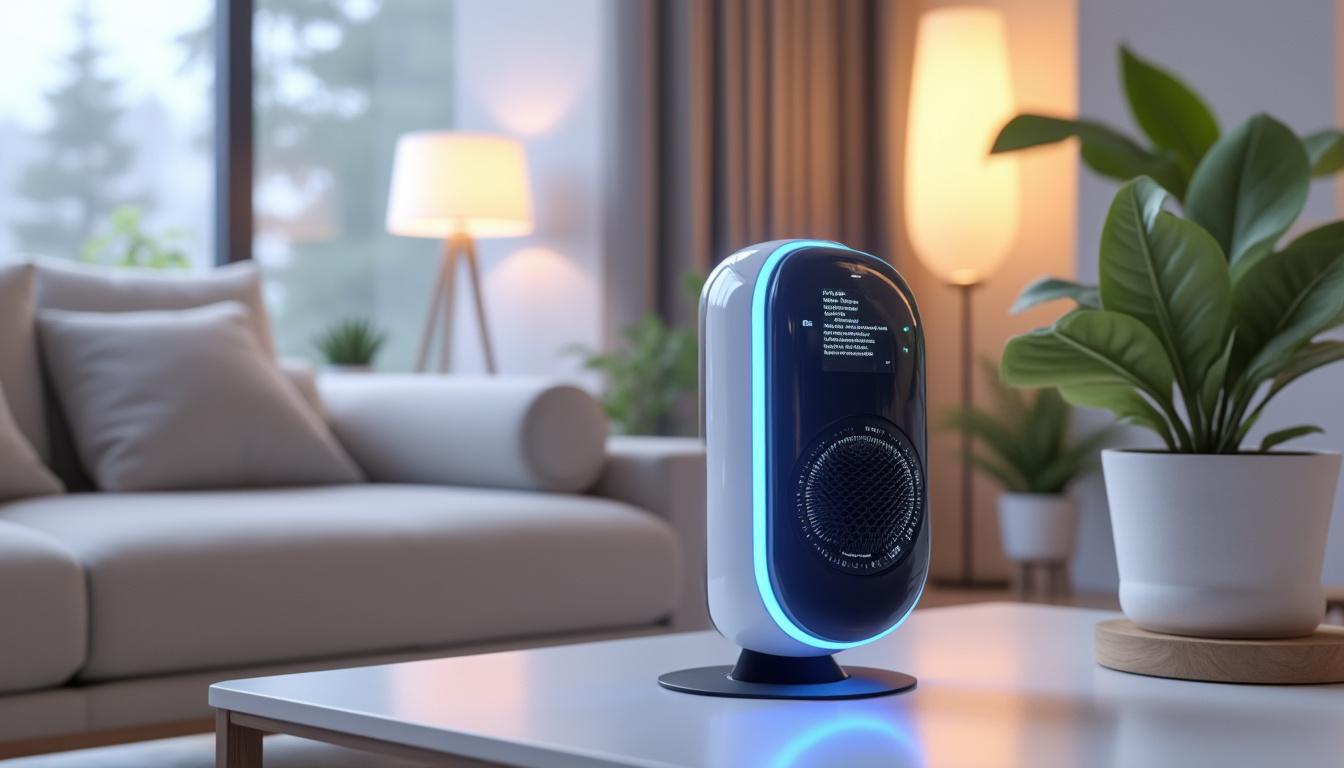
Key Drivers Behind the Rapid Expansion of Voice-Activated AI Companion Products
The accelerated adoption of voice-activated AI companions stems chiefly from the increasing ubiquity of smart devices paired with evolving user preferences for intuitive, hands-free interfaces. Around 2025-2026, the market witnessed a pivot from text-based to voice-based interaction, motivated by the desire for seamless, efficient communication with technology.
Pinpointing particular drivers:
- 📱 Integration with Smart Devices: The proliferation of smartphones, smart speakers, wearables, and connected home systems compels users to demand smoother voice interaction to control functions and obtain information effortlessly.
- 🎙️ Enhanced Voice Recognition: Continuous improvements in speech recognition accuracy and natural language processing offer near-human understanding, facilitating complex multi-turn conversations and context retention.
- 🚗 Hands-Free Utility: Voice AI companions provide unmatched convenience during activities like driving, cooking, or healthcare, where manual operation would be distracting or impossible.
- 🏥 Specialized Use Cases: Initiatives like Voize’s AI companion for nurses demonstrate the value of voice AI in automating clinical documentation with remarkable accuracy, supporting workflow efficiency in demanding environments.
Further, the rise of cloud-based deployment models, representing over 50% of market share, ensures scalability and regular updates that refine AI capabilities over time without imposing hardware constraints on users. Subscription-based business models, preferred by nearly half of the industry, provide sustainable revenue streams backing continuous technological enhancements.
Linking to applied industry insights, these growth dynamics are detailed extensively in analyses like the voice-based AI companion product market overview, which highlights how embedded companions embedded in devices dominate with close to 47% of the product share, signifying the competitive edge gained by deep hardware-software integration.
Technological Innovations Shaping the Future of Voice-Activated AI Companions
Technological progress remains a cornerstone of the voice-activated AI companion market expansion, with advancements in emotion recognition, natural language understanding (NLU), and personalized memory-enhanced conversational models elevating user engagement to new heights.
Developers are increasingly focusing on delivering AI that can discern emotional nuances within a conversation, enhancing empathetic responses that resonate with users. Companies like Hume AI and Meela make strides in sentiment-adaptive voice interfaces, which tailor replies based on user mood or context. This shift fosters deeper social interactions, blurring lines between utilitarian tools and personalized companions.
Moreover, AI companions are no longer confined to conventional devices. Their integration into varied smart ecosystems—vehicles, televisions, wearables, and home automation hubs—maximizes interactive opportunities, making AI companions omnipresent in daily life. For instance, Google’s upgrade to its Assistant platform with Gemini reflects an industry pivot toward unified, multimodal AI agents that seamlessly transition across devices to maintain conversational continuity.
This multi-device ubiquity amplifies the accessibility and versatility of AI companions, unlocking diverse applications such as mental wellness support, elderly care, and educational assistance. The capacity to localize AI companions to languages and dialects worldwide is another emerging trend critical for global market penetration, especially in multicultural regions.
Given the competitive landscape, innovation in conversational AI is crucial, with companies like SoundHound AI and Witlingo pioneering advanced speech recognition technology. Partnerships, such as between SoundHound and Tencent, exemplify how collaboration fuels improvements in generative AI models, making voice interactions more intuitive and humanlike, creating a clear competitive advantage in this booming market (see SoundHound-Tencent partnership).
Market Segmentation and Consumer Trends Illustrating Diverse Adoption Patterns
The voice-activated AI companion market’s structure reveals distinct segments by product type, end user, application, deployment, and geography, each illuminating diverse adoption motivations and technological emphases.
| Segment 🗂️ | Dominant Share 📊 | Notable Driver 📈 | Example Use Case 💡 |
|---|---|---|---|
| Product Type | Embedded AI Companions (46.8%) | Device-level integration reducing latency | Smartphone voice assistants enabling offline access |
| End User | Individual Consumers (55.5%) | Ease of lifestyle integration and personalization | Daily task management through reminders and queries |
| Application | Productivity & Personal Assistance (33.1%) | Demand for efficient task automation | Appointment scheduling and multitasking |
| Deployment Model | Cloud-Based (50.5%) | Scalability and continuous feature upgrades | AI improvements through data-driven learning |
| Business Model | Subscription-Based (45.1%) | Regular updates and premium features | Tiered voice assistant plans |
User demographics also highlight intriguing trends: over 72% of teenagers in the US have engaged with AI companions, many valuing social and emotional support from these devices. Therapeutic voice companions exhibit high retention rates, affirming their role in mental health and emotional wellbeing arenas. Similarly, professionals in healthcare employ vocal AI companions to streamline documentation and patient care, exemplified by providers like Voize appreciated by thousands of nurses across multiple countries.
These demographic insights underscore the voice-activated AI companion market’s broad appeal, transcending age, profession, and use case to embed itself into diverse daily routines and professional workflows. As such, stakeholders should consider tailored strategies to optimize for specific audience needs and enhance user experience.
Challenges and Ethical Considerations in the Expansion of Voice AI Companions
Despite remarkable growth, the voice-activated AI companion market faces critical challenges relating to technology robustness, user trust, and ethical boundaries. Ensuring accurate voice recognition across varying accents, dialects, and noisy environments demands advanced signal processing and adaptive algorithmic models — a complex technical hurdle that must be overcome to sustain user confidence.
More fundamentally, the deepening emotional engagement enabled by empathetic AI companions raises questions regarding psychological impacts on vulnerable users. Prolonged interaction with AI companions could influence emotional states or behaviors, especially among teenagers or socially isolated individuals. Industry and regulatory bodies are increasingly debating frameworks to govern responsible AI deployment, emphasizing transparency, consent, and data privacy.
Ethical use also pertains to data security given these AI systems’ continuous access to personal conversations and sensitive information. Establishing secure cloud environments and on-device processing safeguards limits potential misuse or breaches. Voice AI providers must balance the sophistication of their conversational models with user wellbeing to foster sustainable adoption.
- ⚠️ Accuracy in diverse acoustic settings: To maintain reliability across global users
- ⚠️ Psychological impact assessment: Addressing emotional dependency risks
- ⚠️ Privacy and data protection: Implementing stringent security protocols
These challenges underscore the need for continuous refinement and ethical vigilance, ensuring that voice-activated AI companions evolve as useful, trustworthy partners embedded ethically into users’ environments.
What factors are driving the 19% CAGR growth forecast in the voice-activated AI companion market?
Market growth is primarily driven by increasing smart device integration, advances in voice recognition and natural language understanding, and growing consumer preference for hands-free, intuitive digital interfaces.
How are embedded AI companions different from standalone applications?
Embedded AI companions are integrated directly into devices like smartphones or wearables, offering low latency and offline capabilities, whereas standalone apps require separate installation and internet connectivity for AI processing.
What are the main ethical challenges faced by AI voice companions?
Ethical challenges include potential emotional dependency, privacy concerns due to constant data collection, and the need to ensure unbiased, safe AI interactions especially for vulnerable populations.
How does cloud deployment benefit voice AI companions?
Cloud-based deployment supports scalable AI processing, enables continuous feature updates, and ensures access to the latest AI models without requiring frequent hardware upgrades by users.
Which industries besides personal use are adopting voice-activated AI companions?
Healthcare is a significant adopter, using voice AI to automate documentation and assist clinical workflows, while education and elderly care are emerging sectors exploring companion AI applications.
