
Peu de temps ? Voici l’essentiel à retenir :
- ✅ The Milwaukee Public Museum has initiated the relocation of its inaugural exhibit artifact, marking a pivotal step in its move to the new Nature & Culture Museum of Wisconsin.
- ✅ Complex museum logistics require careful planning and specialized handling for large-scale and delicate cultural objects, exemplified by the Haida canoe transportation process.
- ✅ Maintaining cultural preservation during museum relocation demands meticulous inventory management and thoughtful exhibit design in the new premises.
Precision in Museum Logistics: Managing the Shipment of the Milwaukee Public Museum’s Inaugural Exhibit Artifact
The Milwaukee Public Museum has embarked on a critical phase of its transition by moving the first exhibit artifact into the facility that will soon become the new home for Wisconsin’s cultural treasures. This shipment represents not only a significant physical relocation but also an emblematic moment in the preservation and continuation of the museum’s legacy.
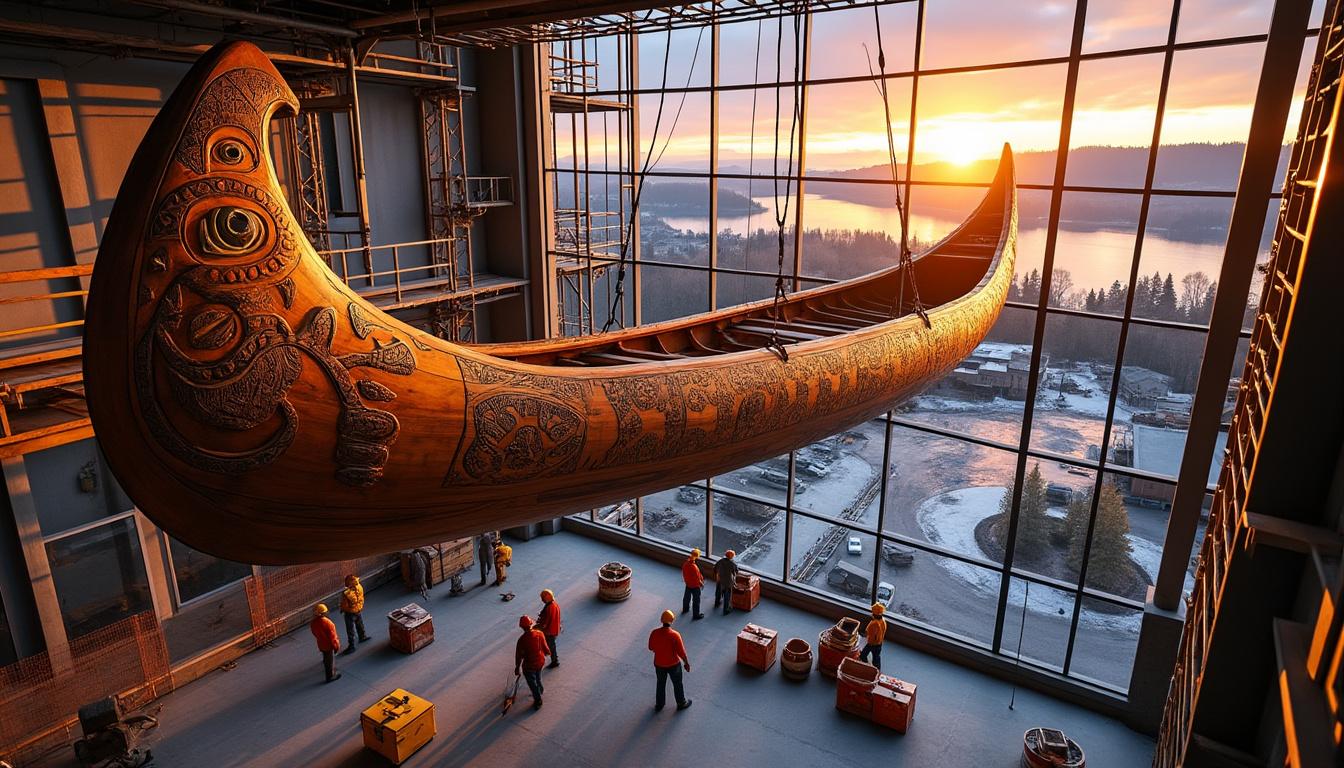
On March 27, the museum transported a monumental component — a 20-foot-long replica Haida canoe — into the still-under-construction Nature & Culture Museum of Wisconsin, situated at North Sixth Street and West McKinley Avenue. This artifact serves as a tangible link between past traditions and the museum’s future narrative, illustrating the importance of immersive historical storytelling.
The operation was complex and necessitated detailed logistics coordination. Due to the canoe’s size and weight, it could not be moved through the building’s standard vertical transport systems, such as elevators, nor carried up the stairs without risk. Instead, the artifact, encased in a 27-foot-long crate weighing approximately 2,300 pounds, was carefully lifted by crane through a large window on the museum’s fourth floor, before the window glass installation was complete.
Handling such an artifact exemplifies the challenges typical in museum relocation projects: balancing preservation requirements with the constraints of modern construction and design. In practice, this requires cooperation between exhibit fabricators, conservators, logistics experts, and construction teams. The Milwaukee Public Museum’s MOVE highlights a strategic approach to anticipating physical and technical limitations early in the planning process, ensuring artifacts are not only preserved but also arrive ready for installation and display.
Craig Yanek, the exhibit artist behind the canoe’s creation in 1996, modeled it after traditional canoes carved by the Haida people from the northwest coast of North America. This deliberate selection underscores the museum’s commitment to cultural accuracy and authentic storytelling, crucial for engaging audiences while respecting Indigenous heritage.
As explained on the official museum website, the Haida canoe will be featured in the Living in a Dynamic World exhibit—a centerpiece reflecting the interactions between people, plants, and animals across diverse landscapes. This upcoming gallery represents a major evolution in how the museum curates and presents its extensive historical artifacts collection, prioritizing immersive and educational experiences.
Safeguarding Cultural Preservation Through Thoughtful Exhibit Shipment and Handling
Relocating valuable and culturally significant objects is more than a physical task; it is an intricate process entwined with cultural preservation principles. The Milwaukee Public Museum’s project illustrates the necessity of safeguarding each artifact’s condition, provenance, and interpretive context during moves.
Each shipment begins with a comprehensive inventory and condition report to document the artifact’s state and guide handling procedures. Such protocols reduce the risks of damage, loss, or misplacement, which are critical concerns when dealing with both small objects and large-scale components like the Haida canoe.
In this context, museum logistics extend beyond the actual transportation. Specialized packaging, climate-controlled environments, and expert personnel ensure the artifacts’ stability. For example, the canoe’s crate was specifically designed to support its weight and shape, preventing any stress during lifting and placement.
The museum team’s careful timing—moving the artifact before window installation—also ensured safe entry without compromising the building’s interior environment. This approach reflects intelligent coordination between architectural progress and artifact management.
Moreover, as the museum prepares to move additional exhibit items later in 2026, these procedures will be refined and scaled according to the complexities of each piece, emphasizing the importance of modular planning and adaptive strategies in large museum relocations.
Such efforts resonate within the museum’s broader aim to continue presenting its museum collection to the public in ways that respect artifact integrity while enhancing visitor engagement through modern and accessible exhibition designs.
Importance of the New Premises in Redefining Visitor Experience at the Milwaukee Public Museum
Transitioning from the well-established museum at 800 W. Wells Street to the new five-story, 200,000-square-foot Nature & Culture Museum of Wisconsin marks a transformative chapter. Scheduled to open in spring 2027, the new premises emphasize immersive exhibits and integrated narratives designed to captivate a wide audience.
Critically, the future museum prioritizes accessible and engaging educational experiences through updated exhibit spaces that incorporate technology, innovative storytelling, and hands-on interactions. The relocation offers a unique opportunity to reassess and enhance how collections are contextualized, focusing on thematic presentations that align with contemporary visitor expectations.
This modern approach is consistent with trends in smart tourism and digital mediation, where audio guides and augmented reality might redefine how exhibits like the Haida canoe and others communicate their stories. Museums are increasingly adopting digital solutions to enable layered, personalized visitor experiences, a philosophy aligned with the innovations promoted by platforms such as Grupem.
The new facility’s design also reflects environmental considerations and sustainable building practices, underscoring how cultural institutions are embedding future-ready strategies that integrate visitor comfort, energy efficiency, and artifact conservation.
The current museum will remain open until January 3, 2027, allowing visitors to enjoy its existing exhibits while preparations continue. This phased approach ensures the museum continues to fulfill its educational mission uninterrupted as it transitions to its new identity and space.
Exhibit Fabrication and Integration: Crafting a Cohesive Narrative for the New Museum
The successful shipment of the Haida canoe also signals ongoing progress in exhibit fabrication, an indispensable phase in establishing the new museum’s identity. The Milwaukee Public Museum has partnered with Kubik Maltbie, a leading exhibit fabricator, to realize their vision for engaging, durable, and content-rich displays.
This phase involves meticulous design, constructibility reviews, material selection, and multimedia integration, ensuring exhibits are both informative and immersive. The artifacts—once moved—are integrated into complex environments that simulate their natural settings or cultural contexts.
Such narrative-driven exhibits demand cross-disciplinary collaboration between curators, conservators, designers, and technology experts, aimed at creating holistic experiences that connect visitors emotionally and intellectually with the exhibits.
The canoe will belong to the thematic gallery “Living in a Dynamic World,” which itself underscores the museum’s dedication to illustrating complex ecological and cultural relationships. This multi-sensory storytelling approach reflects broader trends in museum innovation, where dynamic, interactive, and accessible presentation forms are prioritized.
The phased deinstallation and reinstallation process is scheduled carefully to minimize disruptions. A previous report indicated that temporary closures within the existing facility are strategically staggered throughout 2026 to ensure continuous public access while collections preparation proceeds.
Table: Key Milestones in Milwaukee Public Museum’s Relocation and Exhibit Fabrication
| 🔑 Milestone | 📅 Date | 📍 Description |
|---|---|---|
| Artifact shipment: Haida Canoe | March 27, 2026 | First large exhibit component moved via crane to new museum’s 4th floor through window |
| Start of exhibit fabrication | Early 2026 | Kubik Maltbie begins fabricating thematic exhibits for new museum |
| New museum construction completion | Late 2026 | Final stages of construction, window installation, and interior finishing |
| Public opening of new museum | Spring 2027 | Grand opening of Nature & Culture Museum of Wisconsin |
| Closure of current museum | January 3, 2027 | Last day for visitors at Milwaukee Public Museum at Wells Street location |
Best Practices for Museums in Artifact Relocation and Collection Management
For cultural institutions undertaking substantial moves, the Milwaukee Public Museum’s approach provides several concrete best practices to consider. These insights span operational efficiency, artifact safety, public engagement, and strategic planning.
- 📦 Comprehensive Cataloging: Detailed, digital inventories aid tracking, condition assessment, and smooth transfers.
- 🛠 Custom Crating and Packing: Tailored packaging solutions prevent damage and facilitate handling of unusual or oversized items.
- 🤝 Interdisciplinary Collaboration: Aligning teams across conservation, logistics, exhibit design, and construction fosters problem-solving.
- 🚚 Phased Transportation: Spreading shipments over time reduces risk and allows adaptation to unforeseen challenges.
- 🎯 Visitor Engagement During Transition: Maintaining some level of public access, even while closures occur, nurtures goodwill and anticipation.
Such practices exemplify how combining traditional museum care with modern project management and technology enhances both preservation and visitor experience. The ongoing activity at the Milwaukee Public Museum can serve as a guidepost for institutions planning similar undertakings.
What is the significance of the Haida canoe in the museum’s collection?
The Haida canoe replica, created by artist Craig Yanek in 1996, represents the Indigenous craftsmanship of the Haida people from the northwest coast of North America and will be featured prominently in the new exhibit.
Why was the Haida canoe moved before window installation in the new building?
Due to its large size and weight, the Haida canoe could not be moved using elevators or stairs and had to be lifted by crane through an open window, which required moving it before glass installation.
When is the new Nature & Culture Museum of Wisconsin scheduled to open?
The new museum is on track to open in spring 2027, following the completion of construction and the installation of exhibits.
How does the museum ensure the safety of artifacts during relocation?
By using specialized crates, conducting thorough inventory and condition assessments, and coordinating with expert staff and fabricators to manage transport and installation carefully.
Will the Milwaukee Public Museum remain open during the relocation process?
Yes, the current museum location will remain accessible to the public until January 3, 2027, while exhibit items are gradually moved and preparations continue.
