
Quick overview? Here is what matters:
✅ Met Museum staff voted overwhelmingly to unionize with the UAW Local 2110, securing a historic win in cultural labor rights.
✅ The formation of the union empowers nearly 900 employees across departments through collective bargaining and enhanced representation.
✅ This labor organization marks a significant shift in employee advocacy within major U.S. museums, influencing future workforce strategies.
How Met Museum Staff Secured a Historic Union Vote and What It Means for Labor Rights in Cultural Institutions
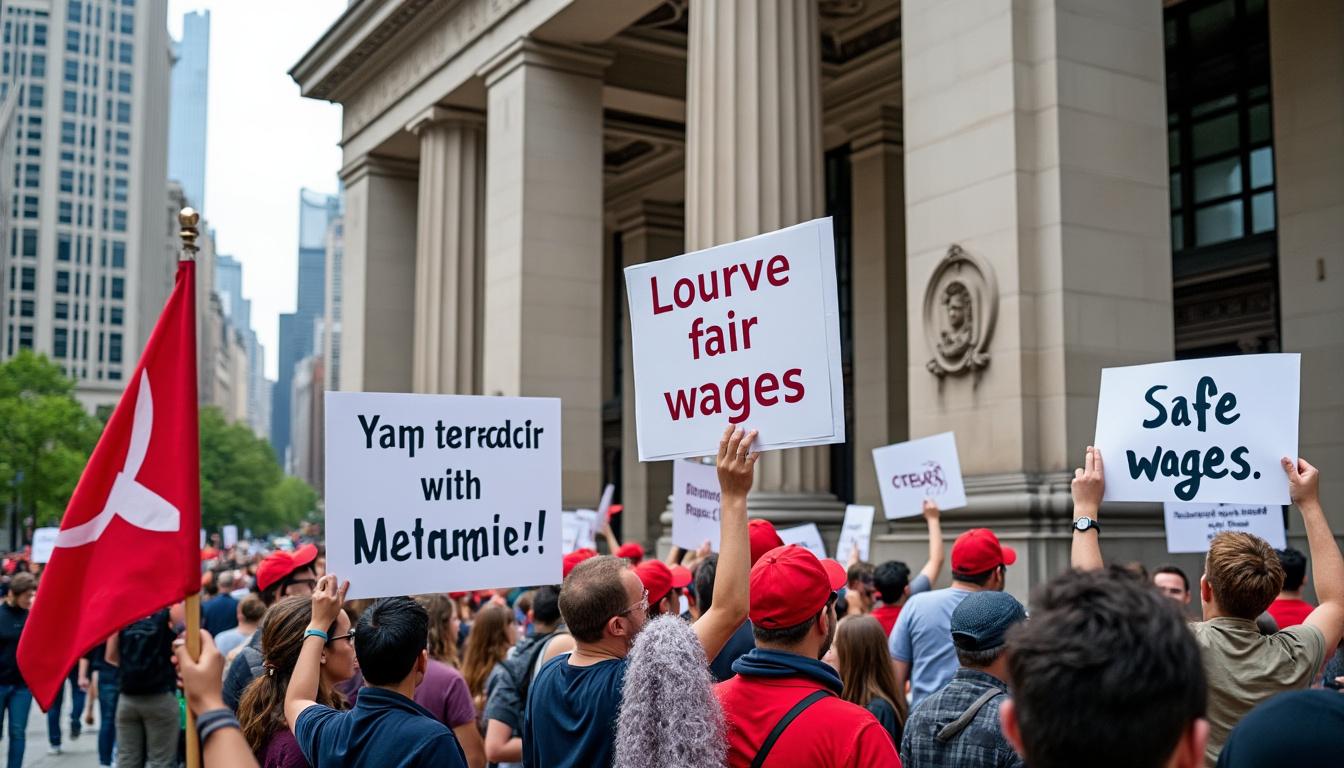
The Metropolitan Museum of Art in New York City, one of the world’s preeminent cultural institutions, recently witnessed a groundbreaking transformation in its workforce organization. With a decisive majority, the Met Museum staff voted to form a union affiliated with the United Auto Workers (UAW) Local 2110. This victory not only reflects long-standing efforts by the staff to gain formal employee representation but also represents one of the largest union wins within the museum sector to date.
The vote, resulting in 542 in favor and 172 opposed, translates to a strong 76% approval rate, confirming the staff’s desire to engage in collective bargaining. The nearly 900 employees involved span curatorial, conservation, retail, and security departments, underscoring a breadth of roles unified under a common cause. This unification amplifies voices that historically operated independently in balancing workplace conditions and negotiations.
This event is part of a broader labor rights movement reshaping cultural institutions. Museums, historically known for traditional management approaches, now witness a paradigm shift emphasizing employee rights, equitable work environments, and sustainable labor practices. According to analyses such as those presented by Bloomberg and others, the decision signals a renewed focus on workers engaging proactively with institutional leadership to negotiate fair compensation, improved benefits, and job security.
Concerns driving the vote include the growing complexity of museum operations, fluctuations in funding, and the increasing demand for inclusivity and diversity both among staff and institutional programs. Unionization offers an organized framework for addressing these challenges, ensuring employees have a seat at the table in shaping policies that impact the museum’s future.
This development situates the Met Museum among a rising wave of American museums embracing unionization as a strategic approach to labor relations. It resonates with similar movements reported on The New York Times and Artforum, emphasizing a shift in cultural sector employment standards. As these negotiations unfold, other institutions may take cues, expanding collective bargaining frameworks that foster transparent and equitable workplace dialogue.
Organizing Strategies Behind the Met Museum Staff Union Victory: Lessons for Cultural and Tourism Sectors
The successful organization of Met Museum staff into a union was achieved through meticulous planning and persistent grassroots initiative. The journey towards unionization reflects strategic mobilization efforts that can serve as a blueprint for other cultural and tourism-related organizations seeking to empower their workforce.
Key to this effort was the formation of a cohesive organizing committee that represented a cross-section of employees, from frontline attendants and curators to conservation experts and retail workers. This diverse coalition fostered solidarity across categories, bridging distinctions that often separate salaried from hourly staff, or administrative from operational roles. The committee leveraged communication channels, involving direct conversations, workshops, and confidential surveys to articulate worker concerns clearly.
Moreover, the alliance with the United Auto Workers, a well-established labor union, provided both legitimacy and legal resources. This partnership ensured procedural rigor during the balloting process, safeguarded workers’ rights amid employer resistance, and facilitated educational campaigns on collective bargaining benefits. The UAW Local 2110’s specialized experience in representing cultural sector employees aided in navigating the unique challenges posed by museum governance models and non-profit funding constraints.
Throughout the effort, organizers emphasized transparency and accessibility, addressing the need for clear, jargon-free communication tailored to individuals often unfamiliar with labor law nuances. A notable tool was the use of digital platforms and smart apps to disseminate information, schedule meetings, and collect feedback, inspired by innovations in smart tourism technology like those promoted by Grupem’s expertise. This tech-forward approach proved particularly effective given the geographically dispersed and diverse Met Museum workforce.
Challenges during organizing included initial employer opposition, concerns over potential strikes, and hesitancy among some staff fearing reprisals. However, consistent messaging focused on collective strength, practical benefits like improved job security and equitable pay, and the importance of having formal employee representation quelled much of the uncertainty.
For cultural institutions and tourism operators eyeing unionization, this case underscores the value of broad-based inclusion, strategic partnerships with established unions, and leveraging modern communication tech to engage employees efficiently and respectfully.
Steps to Successfully Organize Union Efforts in Museums and Cultural Sites
- 📌 Build a diverse organizing committee reflecting all employee categories
- 📌 Secure partnership with experienced labor unions familiar with cultural sectors
- 📌 Employ clear, accessible communication strategies to engage workers
- 📌 Use digital tools to facilitate information sharing and feedback
- 📌 Educate staff on labor rights and collective bargaining advantages
- 📌 Address employer concerns diplomatically while maintaining worker priorities
Impacts of Unionization on Employee Representation and Collective Bargaining at the Met Museum
The establishment of a union at the Met Museum transforms the internal dynamics of workforce management and engagement. Collective bargaining becomes the cornerstone for dialogues addressing compensation, working conditions, and institutional policies impacting staff welfare. This represents a pivotal shift in how employees influence decision-making processes within a major cultural institution.
Employee representation through the union strengthens negotiation capabilities, facilitating structured forums where staff can voice concerns and collaboratively seek resolutions. Rather than individual grievances addressed in isolation, collective bargaining empowers the group, allowing for systemic improvements benefiting broad segments of the workforce.
Examples of expected negotiation topics include fair wage adjustments aligned with inflation trends in urban centers like New York, equitable access to benefits including healthcare and retirement plans, safeguards against arbitrary job cuts or schedule changes, and initiatives promoting workplace diversity and anti-discrimination policies.
Enhanced employee representation also encourages transparent communication channels between museum management and staff, fostering mutual respect and trust. This reduces occurrences of conflicts arising from misunderstandings or unilateral decisions. Decision-making processes become more inclusive, reflecting a balance between institutional goals and employee well-being.
The positive ripple effects can extend externally to visitors and tourists. A motivated, fairly treated staff is better positioned to deliver engaging, high-quality cultural experiences. The union’s focus on sustainable labor practices aligns with modern expectations linked to ethical tourism and inclusive cultural programming, which increasingly influence visitor preferences documented in studies like those accessible via Grupem’s resources.
Overall, unionization at the Met Museum is expected to lead to improved job satisfaction, lower staff turnover, and a strengthened organizational culture attentive to both employee welfare and public service excellence.
Comparison of Pre- and Post-Unionization Employee Benefits and Roles at the Met Museum
| 🏛️ Aspect | 🔍 Before Unionization | ✅ After Unionization |
|---|---|---|
| Wages | Ad hoc adjustments, limited transparency | Regular reviews through collective bargaining agreement |
| Job Security | No formal protections, risk of arbitrary layoffs | Clear protocols for layoffs and grievance processes |
| Working Conditions | Variable, often dependent on management discretion | Standardized conditions negotiated and enforced |
| Employee Voice | Individual or informal feedback channels | Formal representation in negotiations and committees |
| Benefits | Basic health and retirement plans | Potential enhancements including healthcare, leave policies |
Financial and Institutional Implications of Union Formation for the Met Museum
The creation of a union at the Met Museum entails significant financial and operational consequences for both management and staff. Negotiating collective bargaining agreements requires thorough budgeting to accommodate potentially increased wage scales and benefits, prompting management to re-evaluate funding strategies.
These changes coincide with post-pandemic recovery efforts and evolving cultural funding landscapes. Securing sustainable operations while honoring labor commitments is a complex balancing act. As reported by MSN and USA Works, the Met’s leadership must integrate union demands without compromising programming quality or visitor experience.
The institutional benefits of unionization include enhanced employee retention, which reduces recruitment and training costs, as well as elevated staff morale that can translate into superior visitor engagement. Moreover, transparent labor relations mitigate risks of strikes or public controversies that might disrupt operations or damage the museum’s reputation.
From a financial perspective, unionization can encourage more equitable resource allocation and reveal inefficiencies, driving innovation in budget management. This could stimulate creative partnerships leveraging technology, such as intelligent audio guides and smart tourism tools promoted by experts like Grupem, to enrich the visitor experience cost-effectively.
Ultimately, union formation challenges the Met Museum to modernize internal governance and embrace labor collaboration as a strategic asset. Its approach may serve as a model for other cultural venues balancing fiscal responsibility with ethical labor practices.
Influence of Met Museum Union Victory on Future Cultural Sector Labor Movements and Industry Standards
The landmark achievement by Met Museum staff has ripple effects beyond the institution itself. It symbolizes a broader awakening within the cultural sector, encouraging other museums and arts organizations to reconsider their labor relations frameworks. The victory creates momentum that could inspire union campaigns elsewhere, reshaping industry norms.
Historically, museums have operated with limited union presence compared to public sector or manufacturing industries. This development reflects shifting demographics among museum employees, including younger generations emphasizing workplace fairness, and retirees pushing for retirement security. The Met unionization exemplifies how contemporary cultural workers value collective strength in addressing systemic challenges.
Moreover, this movement aligns with global trends in smart tourism and cultural accessibility, where workforce well-being directly impacts visitor satisfaction. Tools such as those highlighted by Grupem’s analysis on union strike impacts in museums demonstrate that labor harmony is a crucial factor for maintaining uninterrupted visitor services and fostering inclusive cultural engagement.
Institutional responses to this union drive may include reexamining pay scales, investing in employee training and welfare programs, and adopting advanced technologies to support operational efficiency. Forward-thinking organizations could see worker representation as integral to sustainable cultural stewardship and competitive differentiation.
This trend also invites cultural tourism stakeholders and policymakers to engage collaboratively in establishing labor standards that promote equity and innovation. Insights from this union victory, shared through platforms like UAW official channels and regional labor news, provide valuable lessons for crafting inclusive, future-ready cultural workplaces.
What does unionization mean for Met Museum staff?
It provides formal employee representation, enabling collective bargaining for better wages, benefits, and job security.
How was the union vote at the Met Museum organized?
Through cross-departmental organizing committees, partnership with UAW Local 2110, and transparent communication strategies leveraging digital tools.
What are the main benefits expected from unionization?
Improved job stability, transparent wage negotiations, standard working conditions, and enhanced benefits packages.
How does the union presence impact museum visitors?
A motivated and fairly treated staff fosters better visitor experiences and supports inclusive cultural programming.
Could other museums follow the Met’s lead in unionization?
Yes, the Met’s unionization sets a precedent likely to inspire similar labor rights movements in the cultural sector nationwide.
