
Peu de temps ? Voici l’essentiel à retenir :
- ✅ Melania Trump stunned the audience with a surprising entrance alongside a humanoid robot, showcasing the latest in robotics and artificial intelligence.
- ✅ The event highlighted a visionary futuristic concept where AI-driven robots serve as educators, transforming traditional learning methods.
- ✅ This unusual event at the White House marks a significant moment in public perception of technology interfacing with celebrity appearances and politics.
Melania Trump’s Revolutionary Entrance with a Humanoid Robot: A New Chapter in Celebrity & Technology Interaction
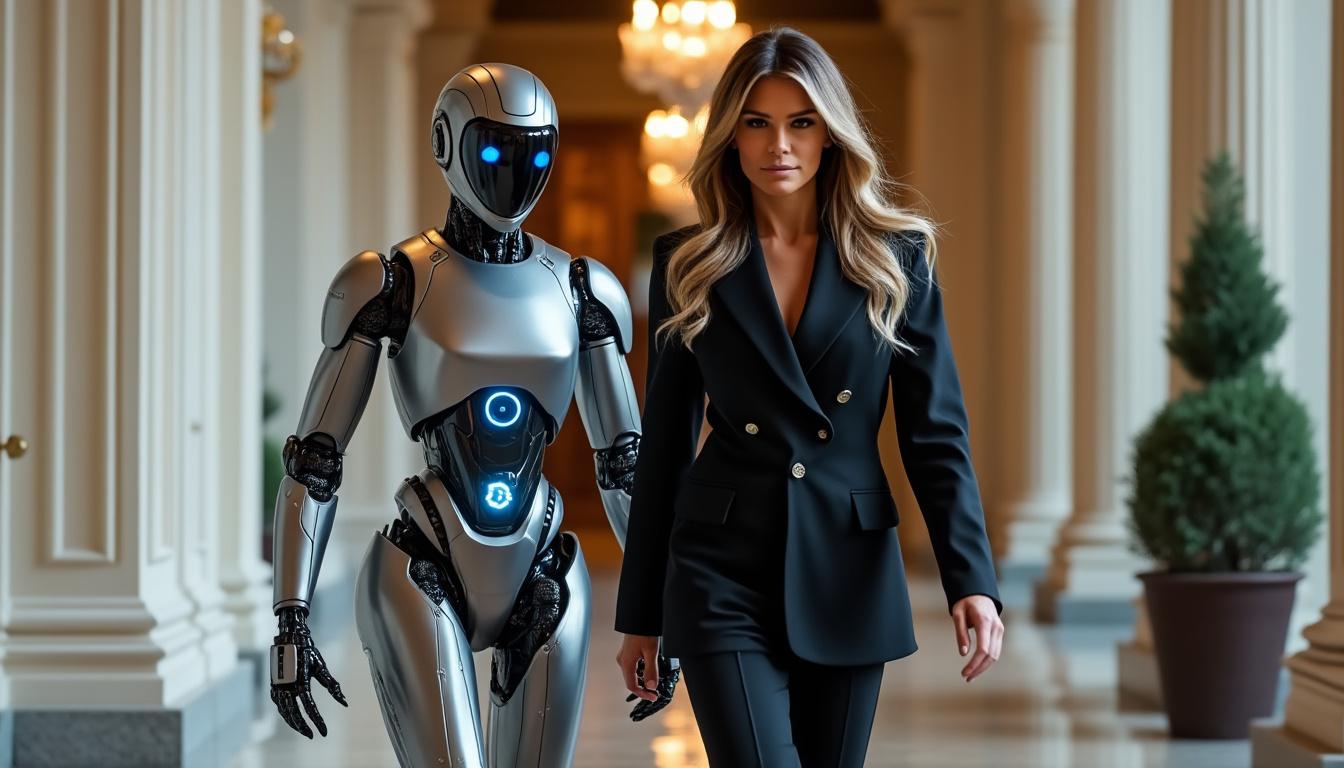
At the White House during the “Fostering the Future Together” summit, Melania Trump delivered a surprising entrance that captured global attention. Accompanied by “Figure 3,” a six-foot-tall humanoid robot developed by the California-based AI robotics company Figure, the first lady blended the realms of technology and public persona in an unprecedented manner.
This moment was more than a spectacle; it was a bold statement about the growing intersection between robotics and everyday life. The robot greeted guests in multiple languages with a clear, female voice, emphasizing technological versatility and accessibility. Despite occasional unsteady movements, “Figure 3” kept pace with Melania Trump, symbolizing the ongoing advancement in humanoid robotics—an area evolving rapidly towards greater fluidity and natural interaction.
This unprecedented pairing highlighted how celebrity appearances can act as powerful platforms to normalize new technologies in mainstream culture. The choice of a humanoid robot to greet an international assembly of diplomats and technology leaders reflected a future-oriented mindset, setting the tone for the emerging era when AI becomes integrated into various societal layers.
For professionals in smart tourism and digital mediation, this appearance underscores the importance of seamless technology integration in public engagement and experience enhancement. The occasion also serves as an example for cultural and event organizers aiming to innovate their approach without overwhelming their audience, mirroring what apps like Grupem aspire to achieve by offering intuitive audio technologies for guided tours and events.
Dissecting the Role of Humanoid Robots in 2026’s Technology & Education Summit
The humanoid robot accompanying Melania Trump was not just a gimmick but embodied a new vision for education and technological engagement. During her brief remarks, Melania introduced the crowd to her concept of “Plato”—a symbolic AI teacher inspired by the philosopher’s legacy of critical thinking and deeper learning.
This vision imagines a future where humanoid robots serve as personalized educators, capable of assisting with subjects ranging from classical studies to advanced philosophy. The personalization aspect is crucial; the AI would adapt their teaching strategies to each student’s unique needs and pace, ensuring optimal learning outcomes.
Such a framework promises numerous benefits:
- 📚 Access to Education Anytime, Anywhere: AI educators accessible from the comfort of one’s home remove geographical and temporal barriers.
- 🤖 Constant Availability: Unlike traditional teachers, robots like “Plato” are “always patient and always available,” providing consistent support.
- 🧠 Development of Critical Thinking: With AI tailored to foster independent reasoning, children may cultivate more profound analytical skills.
This proposition aligns with current trends where artificial intelligence assists in tailored learning experiences, a domain increasingly explored through various applications. For instance, modern audio technologies enhance guided learning in tourism and museums, allowing tourists to receive contextual, AI-driven commentary—similar in principle to a robot educator’s adaptive approach.
This educational shift promotes a technology-augmented future that values personalized interaction and depth over standardized instruction, potentially revolutionizing how knowledge is transmitted within classrooms and cultural institutions alike.
Analyzing the Impact of Technology-Driven Public Events Featuring Artificial Intelligence
The presence of “Figure 3” at a high-profile event such as the White House technology summit signals several cascading effects on public perception and adoption of cutting-edge technology.
First, it acknowledges robots and AI as valid participants in social functions, blurring the lines between human and machine roles. The robot’s multilingual greeting and formal presence demonstrated a level of sophistication that moves beyond utility towards participatory social interaction.
Second, the summit gathered over 40 first spouses from diverse nations, signaling an international platform where technology is not only showcased but also discussed as a global cooperation theme. Attendees such as Brigitte Macron and Olena Zelenska highlighted the diplomatic breadth of this meeting, cementing AI’s position within international cultural and political dialogues.
For professionals in event management and smart tourism, this pivot towards technology underlines a paradigm where AI-enhanced experiences may redefine engagement strategies. Smart audio guides, as offered by Grupem’s innovative voice AI, illustrate how embedding AI into in-person or virtual tours can create richer, more immersive narratives.
| 🌍 Aspect | 🤖 Technology Role | 🎯 Impact |
|---|---|---|
| Community Engagement | Interactive robotic presence offering greetings and real-time interaction | Boosts inclusivity and curiosity about AI applications |
| Education | AI-driven personalized learning modules | Facilitates lifelong learning and tailored pedagogy |
| Diplomacy | Robotic participation in international events | Symbolizes technological progress and cooperation |
Unpacking the Challenges and Opportunities of Integrating Humanoid Robotics in Education and Public Events
While the debut of a humanoid robot alongside Melania Trump represents groundbreaking progress, numerous challenges remain to be addressed for broader adoption.
Robotics at this level involves complex motion control, natural language processing, and cultural adaptability to ensure appropriate behavior in diverse settings. The occasional unsteady gait of “Figure 3” signifies ongoing technical hurdles.
Moreover, the integration of AI educators raises questions regarding curriculum design, ethical considerations, and accessibility. Ensuring that robotic teachers complement rather than replace human educators remains a vital concern. The human element in teaching—empathy, intuition, and adaptability—are aspects AI must progressively enhance.
However, these obstacles coexist with promising opportunities:
- 🤖 Enhanced Accessibility: AI can democratize education, delivering quality learning resources to underserved areas.
- 🌐 Global Connectivity: AI-driven platforms enable cross-cultural exchanges and multilingual support.
- 🛠️ Innovation in Event Design: The incorporation of humanoid robots in public gatherings introduces interactive elements that deepen engagement and offer novel marketing potential.
Addressing these aspects requires collaboration between technologists, educators, and cultural professionals. The success of such integrations depends not only on technology but also on user experience design, pedagogical effectiveness, and ethical governance.
How Melania Trump’s Appearance Signals a Shift in Public Perception of AI and Robotics
The media buzz and social media reactions to Melania Trump’s escorted entrance by a humanoid robot highlight a pivotal cultural moment. The event was described as “the most 2026 White House moment ever,” with some social accounts quickly amassing hundreds of thousands of views, underscoring widespread public intrigue and surprise.
This moment redefines the relationship between celebrity appearances and technological communication, positioning AI as an extension of modern public identities. By introducing a humanoid robot in such a formal and politically symbolic context, the first lady helped normalize AI presence in spheres traditionally dominated by human interaction.
Social media platforms and news outlets worldwide have since explored the implications of this spectacle, blending fascination with critical discussions about the future of AI:
- 📰 How will humanoid AI redefine leadership and public representation?
- 🌍 To what extent will robots integrate into everyday social and cultural rituals?
- 💡 What new opportunities arise for public engagement technologies in sectors like tourism and education?
For organizations seeking to modernize visitor engagement, this case study offers relevant insights: adopting emerging technologies thoughtfully can elevate user experience without alienating traditional audiences. Efforts similar to those seen in intelligent audio tech, as promoted by Grupem’s exploration of AI-driven guides, echo this principle by blending innovation and accessibility.
What is the significance of Melania Trump’s entrance with a humanoid robot?
It symbolizes a groundbreaking moment where robotics and public figures intersect, signaling broader acceptance and integration of AI technologies in public and political domains.
How does AI as an educator, like the ‘Plato’ concept, change traditional learning?
AI provides personalized, always-available learning support that adapts to individual needs, fostering critical thinking and accessible education beyond geographical limitations.
What challenges remain in incorporating humanoid robots into public events?
Technical hurdles such as movement fluidity, natural language interaction, and cultural sensitivity must be addressed along with ethical and pedagogical considerations.
How can smart tourism professionals learn from this event?
It highlights the value of integrating intelligent technology seamlessly into visitor experiences to enhance engagement and accessibility without overwhelming users.
Where can I explore AI-driven audio technologies relevant to tourism?
Platforms like Grupem provide cutting-edge voice AI systems that illustrate practical applications of artificial intelligence in cultural and tourism contexts.
