
Peu de temps ? Voici l’essentiel à retenir :
- ✅ The redesign of the Madrid museum’s exhibit highlights pivotal sociopolitical and cultural shifts in Spain over the last five decades.
- ✅ Innovative presentation methods engage visitors with immersive storytelling rooted in historical events and contemporary art.
- ✅ The exhibit avoids a singular narrative, fostering open dialogues about Spain’s transformation and its artistic reflections.
Curating Spain’s Journey: The Art of Historical Transformation at the Madrid Museum
The recent revamp of the Madrid museum exhibit stands as a distinguished example of how contemporary museums can effectively articulate a nation’s intricate social and cultural evolution. Launching with Juan Genovés’s powerful painting Document No … (1975)—portraying a detained man waiting under oppressive circumstances—the museum sets the tone for a deeper understanding of Spain’s transformation following the death of Francisco Franco.
This masterstroke of display design offers a poignant entry into an era deeply marked by political upheaval and the pursuit of democracy after four decades of dictatorship. The exhibit’s deliberate focus on this critical juncture frames the collective memory of Spain’s transition as an ongoing narrative, rather than a closed chapter.
Within its walls, the exhibition presents an array of 403 carefully selected pieces curated to encapsulate the interplay between artistic expression and sociopolitical reality. As a vast timeline spanning from 1975 to today, visitors are invited to explore how Spanish artists and their international peers have chronicled and responded to major social, environmental, and political developments.
Beyond the emblematic works by Genovés, the exhibit banks on diversity—featuring the © works of prominent figures like Nan Goldin, Hal Fischer, Peter Hujar, and Robert Mapplethorpe while spotlighting less internationally known but culturally significant creators such as queer activist José Pérez Ocaña. Their contributions illuminate facets of Spain’s dynamic artistic ecosystem set against the backdrop of the Movida madrileña, a countercultural explosion that defined post-Franco creativity.
For those keen on exploring the exhibit’s cultural layering, it provides a framework for understanding Spain’s rapid transformation not just as isolated incidents but as a continuous dialogue between art and society. This approach aligns closely with the museum’s broader mission to integrate contemporary art within the fabric of Spain’s rich, often turbulent history—something that contemporary cultural hubs in Madrid increasingly emphasize.
The benefit of this approach is twofold: visitors gain contextualized insights into historical events while also appreciating the evolving language of art. This facilitates not just passive observation but active engagement, with the exhibit bridging the gap between history and contemporary relevance.
This reinvigoration of the Madrid museum’s collection is in line with current trends observed in cultural institutions across Europe, as detailed in Architectura Viva’s overview of Madrid’s contemporary museum scene. The careful balance between tradition and innovation reflects smart museum practices designed to maintain relevance in a fast-changing cultural landscape.
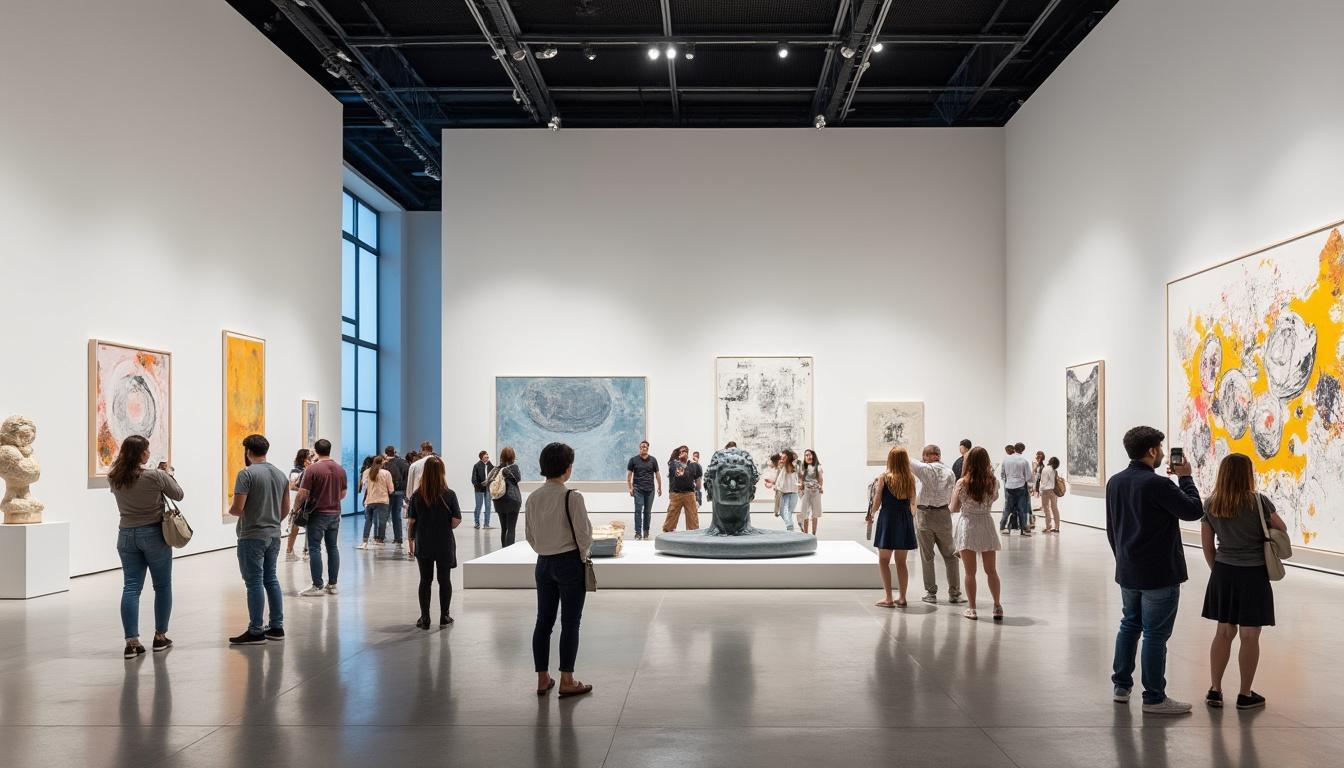
Artistic Reflections on Political and Social Turmoil in Spain
The exhibit’s foundation rests on framing Spanish art as a mirror of wide-ranging social changes, from the demise of authoritarianism to the rise of new societal challenges. This curatorial philosophy allows for a comprehensive overview of the many dimensions within Spain’s recent history.
For instance, the Transition period (La Transición) is examined through the lens of photography and installations that address pivotal moments such as Spain’s first gay pride march in 1977, captured by exiled Argentine photographer Carlos Bosch. These visual documents stand as testimonies of the historic push for democracy and societal inclusion.
Moreover, José Pérez Ocaña’s altar installations exemplify how art can appropriate and subvert entrenched Catholic rituals, offering a queer perspective that broadens understandings of cultural identity. This artistic choice challenges visitors to rethink traditional norms while connecting to local cultural practices.
One cannot overlook the impact of the Movida madrileña, the vibrant, and sometimes darker, 1980s cultural movement that reshaped modern Spanish art, fashion, and music. The exhibit features some of the movement’s most evocative works, including Chus Burés’s jewelry pieces featured in Pedro Almodóvar’s films, Iván Zulueta’s psychological arthouse horror film Arrebato (Rapture) (1979), and Alberto García-Alix’s haunting photograph En ausencia de Willy (1988).
García-Alix’s work poignantly memorializes the heroin epidemic that ravaged Spain, particularly in Madrid, during the 1980s—a time when societal disillusionment overlapped with creative liberation. The visual representation of his brother’s absence through the western shirt and pencil sketch evokes deep emotional resonance beyond formal aesthetics.
The exhibit also charts Spain’s encounter with global crises like the AIDS epidemic through installations such as Pepe Miralles’s Ajuares (Funerary Offerings), which compiles personal and medical artifacts to narrate individual battles against illness. Similarly, Peter Hujar’s photographs of mummified bodies forecast the physical toll AIDS would exact on artists and communities worldwide.
These curated selections provide visitors with stronger connections to the multifaceted realities behind the artworks, reinforcing the powerful relationship between art as both creation and documentation of societal transformations.
By incorporating such diverse narratives, the Madrid museum’s showcase contrasts sharply with traditional historical presentations. It invites reflection on issues still relevant today—immigration, feminism, environmentalism, and global terrorism—within an accessible artistic context.
Innovative Exhibition Design and Interactive Visitor Experience to Highlight Spain’s Evolving Culture
Beyond content, the Museum’s revamp strategy centres on enhancing visitor engagement through dynamic exhibition design and digital support tools. In an era when audiences demand interactivity and accessibility, the new exhibit integrates multimedia, contextual information, and multilingual support to accommodate a broad demographic.
Visitors can navigate the complex history with the aid of audio guides powered by smart technologies, similar to those deployed by modern platforms like Grupem. These tools not only provide detailed insights about artworks but also link artistic developments to socio-political events, enriching the cultural immersion without overwhelming the audience.
Integrating smart tourism technologies can be a game-changer for museums with challenging historical narratives, especially when dealing with sensitive topics. Offering layered content—from brief summaries to in-depth scholarly analysis—ensures inclusivity and enhances overall visitor experience.
These improvements contribute to a more fluid journey through the decades of rapid change that Spain has experienced, inviting visitors to explore different perspectives rather than imposing a rigid narrative. This methodological choice is essential given the exhibit’s ambition to foster critical reinterpretation and open dialogue on Spain’s history and culture.
The adoption of such forward-thinking practices positions Madrid’s museum as a beacon of modern cultural mediation, combining tradition and innovation effectively. The museum’s approach aligns with contemporary museum trends worldwide, where user experience and technological integration remain priorities for relevance and impact in 2026 and beyond.
Furthermore, a detailed timeline and thematic segmentation—spanning political change, social movements, economic upheavals, and cultural milestones—enhance comprehension. This structured yet flexible exhibit flow encourages visitors to draw their own conclusions and fosters critical thinking about Spain’s ongoing transformation.
Spain’s Rapid Transformation Through Art: Themes That Shape the Exhibit’s Narrative
The exhibit extensively covers thematic pillars that echo Spain’s swift evolution, giving visitors an overarching understanding of the forces shaping the nation’s history and culture. These themes include:
- 🖼️ Democratic transition and political freedoms: Artistic depictions of struggles and victories post-Franco.
- 🌈 Social movements and rights: LGBT+ visibility, second-wave feminism, and expanding civil liberties represented through diverse mediums.
- 🌍 Global challenges: The influence of environmental concerns, decolonisation narratives, and global terrorism as captured by contemporary artists.
- 🎭 Cultural experimentation: The Movida madrileña’s impact on redefining Spanish creativity, combining underground culture with mainstream shifts.
- 💔 Health crises: Memorializing AIDS and heroin epidemics, displaying art as a form of collective memory and healing.
These thematic axes serve as lenses helping to analyze individual artworks and artistic movements for visitors, opening avenues of comprehension aligned with present-day societal concerns.
Below is a table summarizing key elements illustrated by the Madrid museum’s exhibit:
| 🖌️ Theme | 🎨 Representative Artist/Work | 📅 Period Covered | 📍 Cultural Significance |
|---|---|---|---|
| Democratic Transition | Juan Genovés – Document No … | 1975 onwards | Reflects the struggle for democracy after dictatorship and societal aspiration |
| Social Movements | José Pérez Ocaña, Carlos Bosch | Late 1970s – 1980s | Highlight early LGBT+ activism and social inclusion efforts |
| Movida Madrileña | Chus Burés, Pedro Almodóvar, Alberto García-Alix | 1980s | Defines a liberated cultural explosion and the complexities beneath the surface |
| Health Crises | Pepe Miralles, Peter Hujar | 1980s – 1990s | Memento of HIV/AIDS and drug epidemic impacts on society and art |
| Global Issues | Various contemporary artists | 2000s – Present | Engagement with environmental and political global challenges |
This synthesis allows visitors, especially professionals in cultural and tourism sectors, to connect historical dots with today’s conversations about social justice, activism, and memory preservation.
Museum Revamp as a Model for Integrating Culture, History, and Technology in Tourism
The Madrid museum’s recent exhibit revamp aligns perfectly with current initiatives emphasizing smart tourism and cultural accessibility. The strategic reinvention enhances how historical narratives are conveyed without sacrificing factual depth or emotional impact.
This is clearly a blueprint for institutions aiming to offer visitors a meaningful yet efficient experience, using audio guides, digital apps, and carefully designed physical layouts that facilitate engagement across diverse audience profiles.
Smart tourism technologies such as AI-powered voice guides, adaptable interfaces, and multi-layered storytelling add measurable value, increasing visitor satisfaction and inclusiveness while preserving the complexity of Spain’s cultural history. These advancements parallel ongoing technical developments explored in tourism analytics and digital mediation tools like Grupem.
Given the museum’s impact, cultural and tourism professionals should take note of how infrastructure investments in technology-based visitor services can democratize access to complex historical narratives, turning museums into hubs of education and social awareness.
Moreover, the progressive approach reflects broader trends in the museum sector where institutions continuously assess collections to remain relevant and educational. The Reina Sofía’s rehang exemplifies this approach, embracing openness to revision and dialogue rather than fixed storytelling.
Ultimately, the Madrid museum’s exhibit serves as an instructive case study on how culture, history, and technology intersect to enrich visitor experience and support sustainable tourism development.
What is the significance of Juan Genovés’s painting ‘Document No …’ in the exhibition?
It symbolizes Spain’s transition from dictatorship to democracy in 1975, highlighting themes of repression and social aspiration that frame the entire exhibit.
How does the Madrid museum incorporate technology to improve visitor experience?
The museum uses smart audio guides and interactive content platforms to provide layered contextual information, making the historical and cultural narratives accessible and engaging for diverse audiences.
Which social issues are predominantly featured in the exhibit?
Key social issues include democratic transition, LGBT+ rights and visibility, feminism, health crises like AIDS and heroin addiction, environmentalism, and responses to global terrorism.
How does the exhibit avoid a single narrative?
It presents a collection that fosters ongoing dialogue, encouraging visitors to interpret the artworks within multiple social, political, and cultural frameworks instead of offering a closed, definitive story.
What role does the Movida madrileña play in the museum’s exhibit?
It illustrates a complex cultural renaissance in post-Franco Spain that combined creative liberation with social issues, embodied in diverse artistic and cinematic works featured in the exhibition.
