
Peu de temps ? Voici l’essentiel à retenir :
✅ The Denver Art Museum has repatriated a 6th-century ancient marble head to Turkey after verifying its provenance and rightful ownership.
✅ The artifact, missing from Turkish national collections for decades, originated from the ancient city of Smyrna, modern-day İzmir.
✅ This repatriation exemplifies improved museum collaboration and responsible practices in cultural heritage preservation.
✅ The event reflects broader trends where technological innovation and law enforcement enhance artifact return processes globally.
Historical Context and Provenance of the Sixth-Century Marble Head
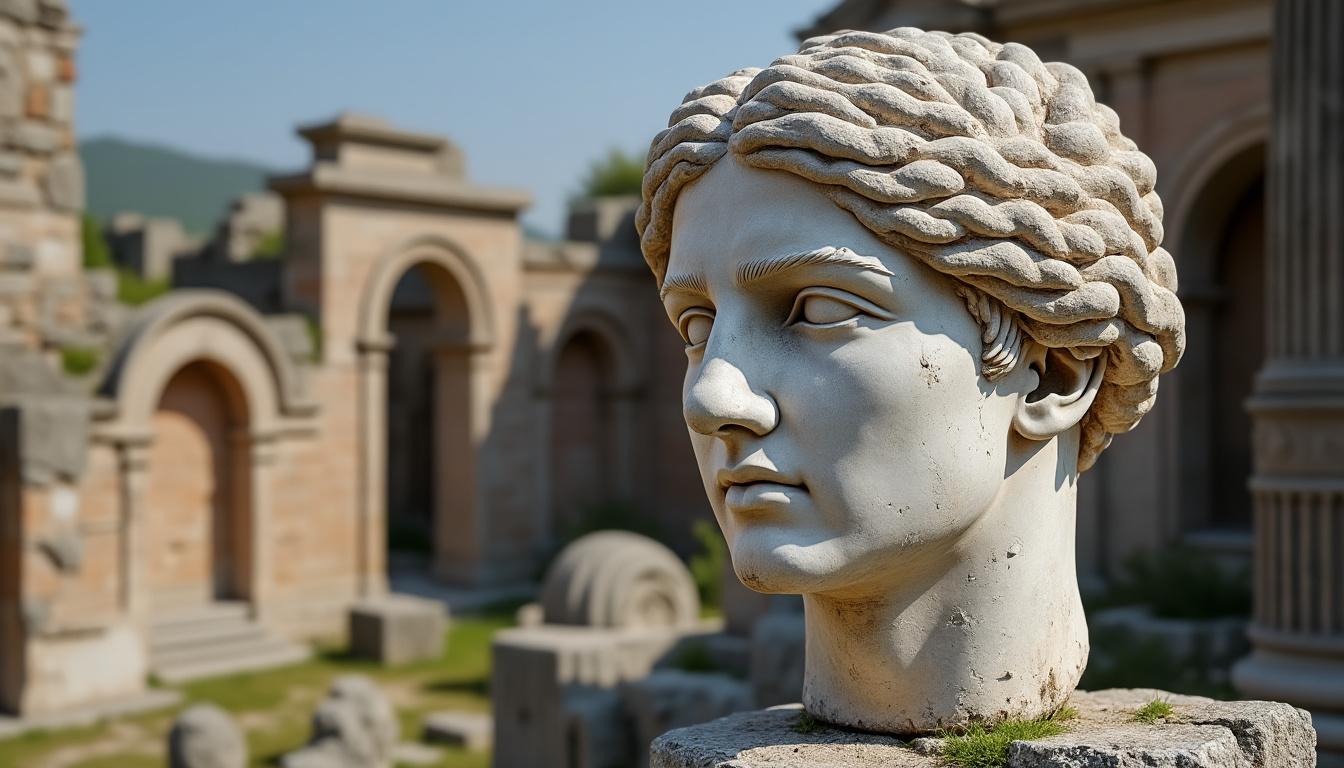
The repatriation of the ancient marble head by the Denver Art Museum to Turkey reconnects a vital piece of history with its rightful home. This artifact, dating back to the 6th century, was excavated in 1934 during archeological digs at a basilica in the ancient city of Smyrna, now İzmir, along Turkey’s Aegean coast. These excavations, carried out by the Izmir Museum Directorate and the Historical Society in the 1930s and early 1940s, were meticulously documented in scholarly publications.
Despite its initial publication, the marble head mysteriously disappeared from Turkey’s national collections for many decades. It was only in 1989 that the Denver Art Museum acquired the piece as a gift from the estate of Marie Thérèse Macy. Macy was the widow of a U.S. foreign service officer who served as consul general in Istanbul during the 1940s. The museum initially held the artifact on long-term loan until formally adding it to its collection in 2005.
Investigations beginning in 2013 marked the first steps toward clarifying the artifact’s provenance. Museum officials reached out to Turkish authorities to inquire about its status, initiating a dialogue that eventually led to verification of the piece’s absence in Turkish collections. Following formal requests by Turkish cultural authorities in 2025, the Denver Art Museum officially deaccessioned the marble head in September and completed its repatriation in December.
This timeline underscores the complexities often involved in ensuring the rightful ownership of cultural artifacts excavated and displaced many decades ago. It also illustrates how transparent museum practices and collaboration with source countries are vital for resolving such issues.
Technology and International Collaboration Driving Artifact Repatriation
Recent advances in technology, coupled with strengthened international partnerships, have transformed how institutions like the Denver Art Museum approach artifact repatriation. Turkey, for instance, has developed innovative tools leveraging artificial intelligence to track Turkish cultural assets appearing in auctions, marketplaces, and social media platforms globally. This proactive stance aids in identifying items of Turkish origin and facilitates official claims for repatriation.
Moreover, the partnership between Turkish cultural officials and American law enforcement agencies reflects a growing global commitment to combat antiquities trafficking. The Manhattan District Attorney’s specialized antiquities trafficking unit took a prominent role in recovering numerous looted works, such as those returned in December 2025, which totaled 43 relics valued at over $2.5 million. Examples include Roman and Greek sculptures, underscoring the scale and value of illegal artifact trade.
The Denver Art Museum’s repatriation of the sixth-century marble head must be understood within this broader framework. It embodies how museums and judicial bodies can collaborate effectively, leveraging both technology and legal mechanisms to address decades-old illicit acquisitions. Such processes demand rigorous provenance research, transparency, and responsiveness, qualities increasingly embedded in museum operations today.
Best Practices for Provenance Research and Museum Operations
- 🔍 Thorough documentation and provenance tracing before acquisition
- 🤝 Ongoing communication with source communities and governments
- 🛑 Willingness to repatriate artifacts when rightful ownership is established
- 🔗 Integration of AI tools and technology for asset identification
- 📚 Publication and sharing of provenance research for transparency
These practices not only enhance the credibility and ethical standing of museums but also facilitate smoother international cultural exchanges. The Denver Art Museum has demonstrated these commitments while reforming its reputation in recent years.
Rebuilding Trust: Denver Art Museum’s Shift Toward Ethical Collection Management
The Denver Art Museum has faced scrutiny over its collection acquisition history. Investigations uncovered ties to illicit art trade involving Southeast Asian antiquities. Notably, the association with art dealer Douglas Latchford and consultant Emma C. Bunker led to the acquisition of objects suspected to be looted. Responses by the museum have included removal of controversial donor names and the return of artifacts to Vietnam, Thailand, and Cambodia.
Against this backdrop, the museum’s recent repatriation of the ancient marble head to Turkey signals a significant commitment to redressing prior oversights. It highlights an evolving institutional culture focusing on historical preservation balanced with ethical responsibility.
Such shifts are essential for safeguarding relationships with source countries and Native American tribes, whose cultural patrimony museums hold. In 2026, the Denver Art Museum exemplifies an institution aiming to be a leader in museum collaboration for the benefit of cultural heritage preservation and shared global history.
Tableau: Summary of Denver Art Museum Repatriation Milestones and Related Actions 🏛️
| Year 📅 | Action Taken 🔧 | Relevant Parties Involved 🤝 | Significance 🌟 |
|---|---|---|---|
| 1934 | Excavation of marble head in Smyrna | Izmir Museum Directorate, Historical Society | Discovery and initial documentation of artifact |
| 1989 | Acquisition by Denver Art Museum via gift | Marie Thérèse Macy estate | Introduction of object into U.S. collections |
| 2013 | Initial inquiry to Turkish authorities | Denver Art Museum, Izmir Museum | Start of provenance verification |
| 2025 | Official repatriation request & deaccession | Denver Art Museum, Turkish government | Formal return process |
| 2026 | Completion of repatriation ceremony | Denver Art Museum, Turkish cultural officials | Artifact restoration to rightful ownership |
The Broader Impact of Artifact Return on Cultural Heritage Preservation
The repatriation of artifacts like the ancient marble head reveals a larger narrative about global cultural heritage preservation and responsible stewardship. For countries like Turkey, which possess over 20 UNESCO World Heritage sites, reclaiming missing artifacts is a crucial part of restoring and safeguarding their identity and history.
Turkey has already repatriated more than 13,000 objects in the last two decades, reflecting a concerted effort to reclaim endangered cultural heritage. This ongoing return process includes collaboration with international museums and governments, as well as technological innovation for tracking and identifying artifacts.
Through repatriation, museums not only correct historical wrongs but also foster mutual respect and create dynamic relationships with source communities. This approach encourages shared access to cultural narratives, supports tourism, and enhances educational initiatives globally.
Key Benefits of Artifact Repatriation for Heritage and Tourism
- 🎯 Restores historical integrity and national ownership
- 🖼️ Enriches museum collections at the origin site for local education
- 🌍 Enhances international cultural understanding and empathy
- 🛡️ Strengthens cultural heritage protection laws and enforcement
- 📱 Supports the use of smart tourism technologies for accessible storytelling
Modern museums can utilize applications like Grupem to smartly integrate audio guides and augmented experiences that make recovered heritage accessible on a global scale, demonstrating how technology supports these cultural endeavors.
How Smart Technologies Support Ethical Museum Practices and Visitor Engagement
In the age of digital engagement, smart tourism and audio technologies play a pivotal role in enhancing cultural heritage experiences while supporting ethical museum practices. Platforms like Grupem enable museums to offer accessible, multilingual audio guides that provide contextual history without dependence on physical infrastructure. This is especially vital when repatriated artifacts return to their country of origin, where storytelling and interpretation are central.
The Denver Art Museum repatriation initiative can benefit from such technology by presenting the history of the marble head through immersive audio content accessible on smartphones. This increases visitor engagement while ensuring accurate, respectful narratives are shared directly from source communities.
Moreover, technology supports museums in provenance research and digital documentation, strengthening transparency and aiding in the detection of illicit artifacts. This integration enhances trust between institutions and communities, aligning with the values of historical preservation and cultural respect.
Smart tourism tools therefore represent a bridge connecting visitors, museums, and cultural heritage custodians, furthering education and ethical artifact management worldwide.
What is artifact repatriation and why is it important?
Artifact repatriation refers to the return of cultural objects to their country or community of origin. It is essential for restoring historical justice, preserving cultural heritage, and strengthening international cultural cooperation.
How do museums verify an artifact’s provenance before repatriating it?
Museums conduct extensive provenance research through historical records, excavation documents, and consultation with source countries to ensure rightful ownership before agreeing to repatriate artifacts.
What role does technology play in repatriation efforts?
Technology, including AI tools and digital documentation, helps identify looted artifacts on sales platforms and supports transparent provenance tracking, enabling efficient and responsible repatriation.
How can smart tourism tools enhance visitor experiences with repatriated artifacts?
Smart tourism platforms allow museums to deliver engaging, accurate, and multilingual audio tours on mobile devices, improving accessibility and storytelling around repatriated artifacts.
What benefits does repatriation bring to source countries?
It restores national heritage, enhances museum collections locally, supports cultural tourism, and fosters international respect and cooperation in cultural heritage management.
