
Controversy surrounds the British Museum’s recent decision to omit the term ‘Palestine’ from several select exhibits related to the Middle East. This omission has ignited intense political debate and discussions regarding museum politics, representation, and the management of cultural heritage in globally significant institutions.
Peu de temps ? Voici l’essentiel à retenir :
- ✅ The British Museum has updated some display panels to remove certain references to ‘Palestine’ for historical accuracy and perceived neutrality issues.
- ✅ The decision sparked backlash from scholars and activists who view the omission as erasure of Palestinian cultural and historical identity.
- ✅ Museum officials emphasize the ongoing use of UN terminology and a commitment to factual, non-political representation in exhibits.
- ✅ A petition with thousands of signatures challenges the omission, highlighting the inconsistency and political pressures involved.
Reassessing Historical Terminology in the British Museum’s Middle East Exhibits
The British Museum recently undertook a review of terminology used in its ancient Middle East galleries, particularly focusing on the use of ‘Palestine’ in reference to historical regions, peoples, and cultural contexts. This review was initiated well before the recent public controversy, driven by curators’ desire to ensure precision and clarity in the labeling of artefacts and maps dating back millennia.
The key concern lies in the retrospective use of the term ‘Palestine’. UK Lawyers for Israel, a pro-Israel group, argued that applying a single name like ‘Palestine’ retroactively across thousands of years creates a false continuity and ignores historical nuance. They suggested this labeling might mislead museum visitors into assuming uninterrupted cultural or territorial identity since ancient times.
In response, the museum clarified that changes to some panels were part of ongoing updates and were not triggered by lobbying efforts. The institution emphasized the adoption of historically relevant terms, such as ‘Canaan’ for the southern Levant in the later second millennium BC, reflecting modern academic consensus. This strategy seeks to balance educational clarity while respecting complex historical evolution.
Such decisions highlight how museum politics increasingly influence curatorial choices, particularly when exhibits intersect with contentious modern geopolitical issues. The British Museum must navigate a delicate path: delivering accurate, accessible narratives while avoiding perceptions of bias in politically sensitive representations.
For professionals in the cultural sector, this case exemplifies the challenges of maintaining cultural heritage integrity amid external pressures and evolving historical scholarship. Institutions are tasked with continuously reviewing their content to ensure it reflects current understandings without compromising inclusivity or educational value.
More detailed background on the controversy and the museum’s approach can be found in coverage by Museums Journal and Standard.
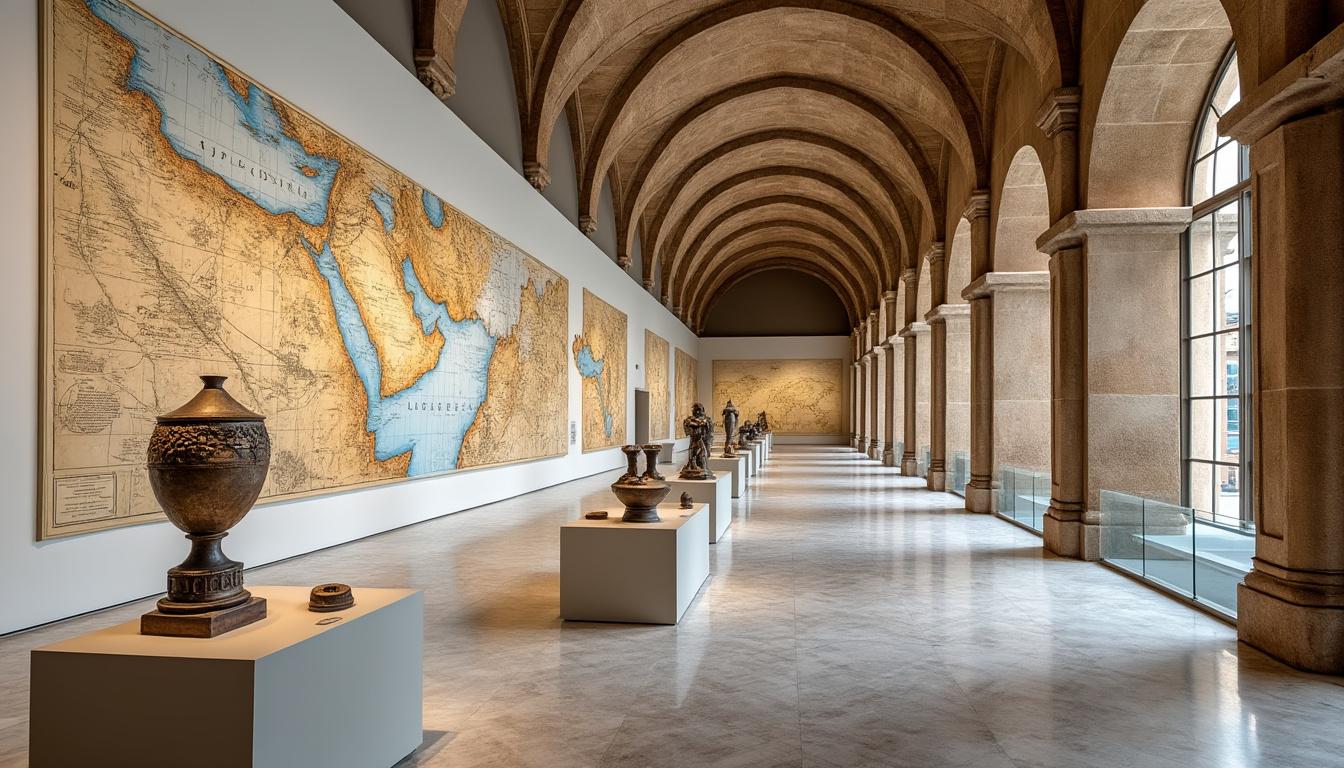
Understanding the Implications of Terminology Omission in Museum Exhibits
The decision to omit the term ‘Palestine’ from certain museum labels transcends mere linguistic preference; it has far-reaching ramifications for representation and public memory. Museums are not neutral spaces devoid of context—they play an active role in shaping narratives around cultural identity, history, and geopolitical perceptions.
Omitting names or terms perceived as politically charged can unintentionally represent erasure from collective historical consciousness. This has sparked objection from academics, activists, and Palestinian communities who view such modifications as minimizing historical Palestinian presence in the region. A petition demanding restoration of the term has amassed over 7,360 signatures, signaling broad public engagement with the issue.
Critics emphasize that if terminology changes stem from concerns about modern political connotations, consistency would require parallel scrutiny of other territorially founded names. For instance, the term ‘Britain’ is a political construct that remains untouched in the museum’s galleries, underscoring potential inconsistency and political influence behind curatorial decisions.
In a sector increasingly leveraging technology and digital mediation to engage diverse audiences, museums face the challenge of presenting complex histories without appearing partisan. This is where tools like smart audio guides and interactive digital exhibits can help interpret sensitive content with nuance, offering visitors context and encouraging critical engagement.
Adopting technological innovation in tours and exhibits enriches the visitor experience, allowing layered storytelling that addresses historical controversies responsibly. It can also reinforce the museum’s commitment to transparency and open dialogue about its curatorial choices in politically charged contexts.
Official Responses and the Role of Curatorial Discretion in Controversial Historical Narratives
The British Museum has acknowledged modifications to a small number of display panels but asserts these changes stemmed from routine updates and scholarly assessment rather than external pressure. Its spokesperson highlighted that the term ‘Palestine’ remains in use elsewhere within the galleries, particularly on maps showing modern political boundaries adhering to United Nations designations such as Gaza and the West Bank.
Director Nicholas Cullinan reportedly expressed frustration over media reporting that he deemed a “complete misrepresentation.” He stated that curators undertook thoughtful consideration when amending wording, aiming to reflect accurate historical and ethnographic terminology without political motivations. This distinction between accuracy and political influence is critical for institutional credibility.
The museum’s approach includes:
- Utilizing historically supported regional names (e.g., Canaan for the southern Levant in the late second millennium BC) 🚩
- Adhering to international standards for modern political territories on contemporary maps 🌍
- Preserving references to ‘Palestinian’ culture and ethnography where appropriate to maintain cultural recognition 🏛️
This framework offers a pragmatic balance, illustrating how curatorial discretion operates within the broader institutional goals of education, inclusivity, and factual integrity in a highly sensitive geopolitical context.
Balancing Educational Integrity with Sociopolitical Sensitivities in Smart Tourism
As museums grapple with contested histories, the integration of digital and audio technologies becomes increasingly important for mediating complex narratives. The controversy at the British Museum underscores the necessity for smart tourism tools that facilitate nuanced exploration without imposing contentious labels unilaterally.
Platforms like Grupem offer professionals in museum, tourism, and cultural heritage sectors the ability to craft engaging audio tours with dynamic content adaptable to evolving historical interpretations. This flexibility allows museums to respond quickly to scholarly research, community input, and political sensitivities, enhancing visitor understanding and satisfaction.
Key advantages of smart audio guides in navigating such debates include:
- 🎧 Providing multiple perspectives within a single visit to acknowledge diverse views.
- 📱 Enabling real-time updates to content as historical consensus evolves or controversies emerge.
- 🌐 Offering multilingual support to widen accessibility and inclusivity.
- 🔍 Enhancing contextual depth through supplementary materials such as images, maps, and expert interviews.
In the case of exhibits related to Palestine and the Middle East, these technologies equip museums to contextualize sensitive topics thoughtfully and transparently. They prevent oversimplification that can arise from static signage and open avenues for visitors to engage critically with history rather than accepting one-dimensional narratives.
Leveraging such innovations not only enriches visitor experience but aligns cultural institutions with modern standards for accessibility and user-centric storytelling, crucial in today’s digital-first tourist expectations.
A Framework for Transparent and Inclusive Representation Amidst Political Debate in Museums
In politically sensitive environments like the depiction of Palestine in museum exhibits, establishing a clear, transparent framework for representation is vital. This framework should embrace academic rigor, community engagement, and evolving political realities while safeguarding educational integrity.
Proposed best practices for museums facing similar challenges include:
| 🔑 Key Principle | 🎯 Practical Implementation | 🌟 Benefits |
|---|---|---|
| Engage Diverse Stakeholders | Form advisory panels with historians, local communities, and political experts | Ensures multifaceted perspectives and legitimacy in exhibits |
| Adopt Dynamic Labeling | Use digital displays enabling timely content updates | Keeps information accurate and contemporary without permanent text changes |
| Maintain Clear Communication | Provide explanatory notes about terminology decisions and historical context | Enhances visitor understanding and trust in curatorial transparency |
| Prioritize Educational Value | Focus on factual accuracy and cultural heritage preservation | Preserves the museum’s role as an impartial educational resource |
| Implement Inclusive Storytelling | Incorporate voices and narratives from affected communities | Fosters empathy and comprehensive understanding |
Such approaches guard museums against being perceived as politicized arenas while acknowledging the complexities embedded in the presentation of historical and cultural narratives. For implementers, these measures enhance institutional resilience and audience engagement in sensitive contexts.
For further reading and expert discussions on museum management and controversial interpretations, consider Grupem’s insights on the British Museum’s recent actions and broader debates in decolonizing museum loans.
Why did the British Museum remove the term ‘Palestine’ from some exhibits?
The British Museum updated certain panels to reflect historical terminology more accurately, noting that the term ‘Palestine’ may not be meaningful in specific ancient contexts and can carry political connotations.
Has the British Museum removed all references to Palestine?
No, the term ‘Palestine’ is still used in other parts of the museum, especially in modern political maps and where it’s relevant as a cultural or ethnographic identifier.
What has been the public response to the omission?
The removal has sparked significant backlash, including petitions signed by thousands, with critics arguing the omission amounts to erasure of Palestinian cultural heritage and historical presence.
How can museums manage politically sensitive content effectively?
Museums can adopt transparent policies, involve diverse stakeholders, use dynamic labeling technologies, and integrate smart audio guides to provide nuanced context and multiple perspectives.
What is the role of smart tourism technologies in museum controversies?
Smart tourism tools help museums present complex narratives dynamically, updating content as research and social contexts evolve, thus fostering balanced visitor understanding.
