
Peu de temps ? Voici l’essentiel à retenir :
✅ The Betty Brinn Children’s Museum in Milwaukee is preparing for an upcoming relocation that aims to nearly double its current size.
✅ The museum’s expansion focuses on enhancing family activities and educational exhibits, reinforcing its role in child development.
✅ Strategic planning for the relocation emphasizes community involvement and technological integration to elevate visitor experience.
Strategic Advantages of the Betty Brinn Children’s Museum Relocation in Milwaukee
The announcement of the Betty Brinn Children’s Museum’s relocation signals a significant transformation within Milwaukee’s cultural landscape. This move is strategically designed not only to accommodate a growing number of visitors but also to enhance the museum’s offerings in family activities and educational engagement. The new location plans to nearly double the museum’s space, creating room for innovative exhibits and expanded programs.
This expansion aligns with contemporary trends in smart tourism, where visitor engagement hinges on interactive, technology-driven exhibits. The relocation facilitates the implementation of advanced audio guides and immersive technologies, optimizing the educational content tailored for child development. Institutions that intelligently integrate technology respond better to the shifting demands of today’s families, who expect seamless, informative, and engaging experiences.
Moreover, the move opens opportunities for Milwaukee to strengthen its position as a hub for children’s cultural education. The Betty Brinn Children’s Museum has been a vital part of the community, offering interactive environments that stimulate curiosity and learning. The relocation promises to reinforce this role by creating more space for exhibits that support cognitive, social, and emotional growth in children.
Planning such an expansion also involves logistical and operational challenges that the museum addresses with precision. These include preserving existing collections, minimizing exhibition downtime during the transition, and maintaining accessibility for the diverse community it serves. The museum’s leadership has committed to a transparent process involving community consultation and collaborations with educational experts and technology partners.
This phase in the museum’s evolution represents a benchmark for similar institutions aiming to innovate while staying accessible and educational. It exemplifies how smart tourism concepts can be effectively applied to create valuable learning environments.
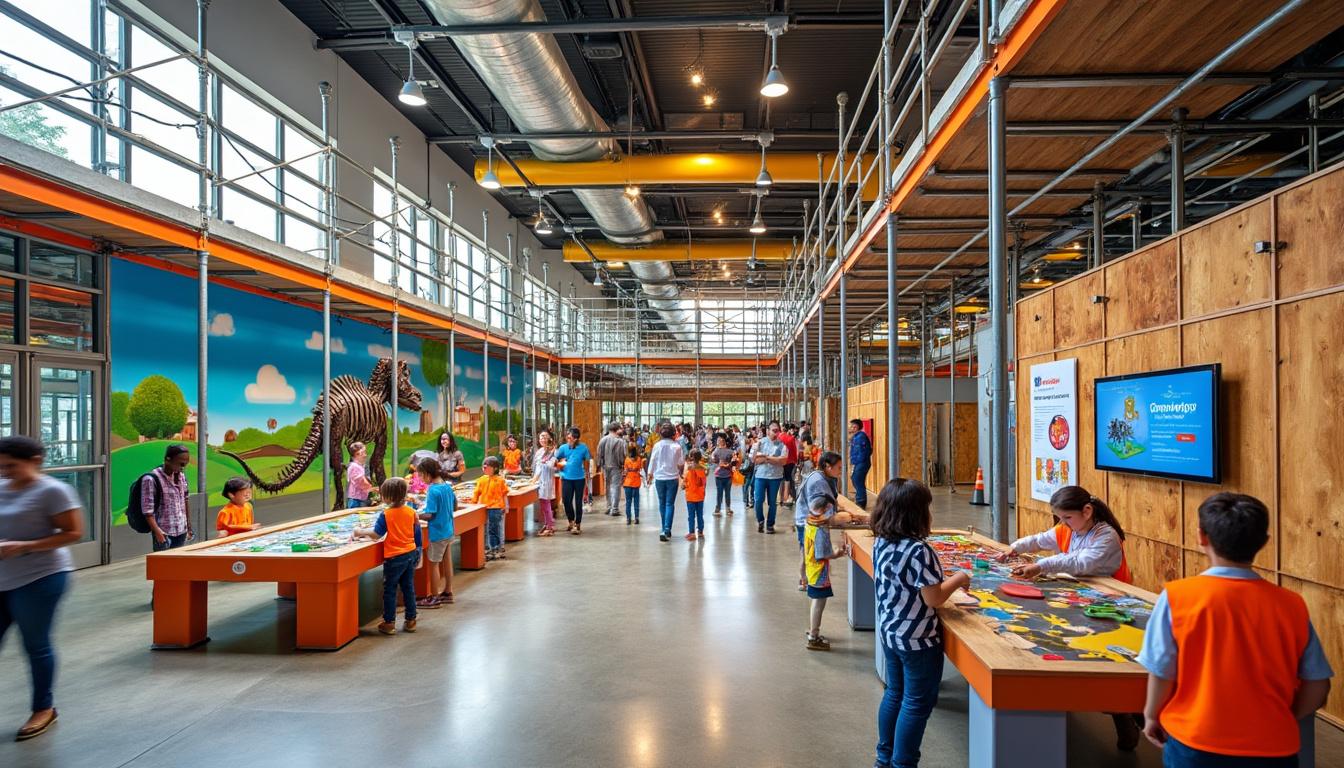
Enhancing Family Activities and Child Development through Expanded Educational Exhibits
One of the core motivations behind the relocation and expansion of the Betty Brinn Children’s Museum is to amplify its impact on child development through enriched family-oriented activities and educational exhibits. The new space will allow curators to design larger and more interactive installations that cater to various developmental stages and learning styles.
Educational exhibits in children’s museums are instrumental in promoting skill acquisition such as problem-solving, critical thinking, and social interaction. The Betty Brinn Children’s Museum’s upcoming move will integrate these educational principles while also incorporating smart technological tools. For example, state-of-the-art audio guides, available through mobile applications like Grupem, can provide personalized storytelling and information, enhancing the learning journey.
Expanding family activities includes offering multi-sensory experiences, STEM-focused exhibits, and immersive simulations, which provide children with real-world contexts. Such experiences nurture creativity and encourage exploration, key elements recognized in child development best practices. The relocation enables the introduction of larger-scale exhibits, such as the anticipated Northwoods and storybook-themed displays, which were received positively during previews in previous years.
Furthermore, programs planned in the new facility will emphasize inclusive and accessible designs to accommodate children with diverse needs. This inclusivity is crucial to fostering an environment where every child can thrive educationally and socially. The relocation thus supports not only physical enlargement but also programmatic enhancement to maximize developmental benefits for families in Milwaukee and surrounding communities.
To summarize, the museum’s future location aims to be a dynamic learning center where family engagement and child development merge through thoughtful, technology-supported exhibits and activities. The benefits extend beyond entertainment into lifelong educational value.
Community Engagement and Museum Expansion: A Model for Sustainable Cultural Development
Relocation projects in cultural institutions often present a unique opportunity to deepen community ties, and the Betty Brinn Children’s Museum’s move is no exception. With expansion comes the responsibility to ensure the museum remains tightly woven into Milwaukee’s social fabric.
The upcoming relocation initiative has been designed with extensive community engagement. Interactive town halls, surveys, and focus groups have gathered input from local families, educators, and stakeholders. This approach ensures that the expanded facility reflects the needs and aspirations of the community it serves.
Moreover, the museum plans to host community events that mark milestones in the relocation process, fostering a sense of ownership and anticipation. For example, the annual Noon Year’s Eve celebration, a highly popular event drawing hundreds of families, will continue alongside new initiatives designed to welcome visitors at the new site. Maintaining such events guarantees continuity amid change and sustains audience loyalty.
By almost doubling its space, the museum can also incorporate versatile venues for workshops, performances, and guest presentations. This flexibility supports collaborations with local artists, experts, and cultural organizations, reinforcing the institution’s position as a vibrant community platform. The museum expansion becomes a catalyst for socio-cultural vitality, with increased economic and educational ripple effects throughout Milwaukee.
This community-centered model aligns strongly with sustainable cultural development principles, highlighting the importance of adaptive reuse of space, inclusivity, and technology integration to serve broader educational missions sustainably.
Technical and Logistical Considerations for a Successful Museum Relocation
Executing a relocation of this scale demands meticulous technical and logistical preparation, especially when the focus is on maintaining exhibit integrity and visitor experience. The Betty Brinn Children’s Museum team has engaged in a comprehensive multi-year master planning process to address these challenges effectively, ensuring a smooth transition.
Key logistical aspects include cataloging and safely transporting interactive exhibits and rare collections used for educational purposes. Preservation protocols must minimize risk and accommodate delicate educational technologies embedded in exhibits. Coordinating these activities involves collaboration with conservation experts and specialized movers.
In parallel, the technical setup at the new museum site requires integration of cutting-edge smart tourism solutions. This encompasses installing high-quality wireless networks, augmented reality capabilities, and robust audio systems tailored for family-oriented tours. These systems leverage the latest innovations in audio guide technology, akin to those promoted on platforms such as Grupem, improving accessibility and engagement.
The planned increase in physical space also necessitates efficient navigation design, ensuring visitors can explore exhibits intuitively without overcrowding. This is supported by digital wayfinding tools and mobile accessibility solutions, allowing families to customize their visit routes and receive adaptive content depending on interests and age groups.
Successfully mitigating disruption during relocation also involves the strategic scheduling of public access, with temporary closures minimized to maintain the museum’s strong visitor base. Staff training on new technologies and exhibit protocols is underway to guarantee knowledgeable guidance and smooth operation from day one.
Ultimately, this stage of the museum’s development exemplifies a professional approach to complex cultural project management where technology and logistics intersect to support enhanced visitor experiences.
Key Features and Expectations from the Betty Brinn Children’s Museum Upcoming Move
The transition to the new, expanded site will feature an array of enhancements aimed at improving visitor engagement and educational impact. Families can expect:
- 🎨 Enlarged interactive play zones designed with child development principles.
- 📱 Integrated audio guide systems delivering personalized educational content.
- 🌐 Improved accessibility through digital wayfinding and mobile app support.
- 🎭 Versatile spaces for performances and community workshops.
- 🎉 Continued popular community events with expanded capacity and programming.
To offer a clearer view of the new museum’s planned features versus the current facility, the following table summarizes key points:
| Feature 🏛️ | Current Facility | New Location (Upcoming Move) |
|---|---|---|
| Size 📏 | ~40,000 sq. ft. | ~80,000 sq. ft. (Nearly double) |
| Interactive Exhibits 🧩 | 15 | 30+ (Including new Northwoods and storybook-themed exhibits) |
| Audio Guide Integration 🎧 | Limited | Full mobile and on-site support with smart technology |
| Community Event Spaces 🎤 | 1 main hall | Multiple versatile venues |
| Accessibility ♿ | Basic ADA compliance | Enhanced universal design and digital wayfinding |
Visitors and Milwaukee residents are encouraged to follow updates to the relocation process on the official website, where planning progress and event announcements are shared regularly. This move not only preserves the museum’s legacy but actively invests in Milwaukee’s cultural future, providing an exemplary model of innovative museum expansion.
Discover more details about the museum’s exhibits and events through reliable sources such as Betty Brinn Children’s Museum official site and informative local media reports like the latest exhibit announcement.
Why is the Betty Brinn Children’s Museum relocating?
The relocation aims to expand the museum’s space to nearly double its current size, allowing for enhanced family activities, educational exhibits, and technological integration to better serve the Milwaukee community.
How will the relocation impact visitor experience?
Visitors can expect larger, more interactive exhibits, improved accessibility features, technology-supported educational content, and expanded community event spaces that enrich the overall museum visit.
What measures are in place to ensure accessibility at the new museum?
The new facility incorporates universal design principles, digital wayfinding, and inclusive programming to ensure all children and families, including those with diverse needs, can fully participate.
Will the relocation affect popular events like the Noon Year’s Eve celebration?
Popular events, including Noon Year’s Eve, will continue at the new location with enhanced capacity and programming to accommodate more families and elevate the community experience.
How is technology integrated into the museum’s future plans?
The museum plans to implement smart audio guides, mobile apps, augmented reality, and digital navigation tools to create more immersive, personalized, and accessible visits.
