
Peu de temps ? Voici l’essentiel à retenir :
✅ Apple expands CarPlay’s capabilities by integrating third-party voice-activated AI chatbots for richer in-car user experience 🚗
✅ New partnerships encourage diverse AI voice assistants, enhancing connected car ecosystems 🤖
✅ Developers and automotive brands must adapt to evolving AI standards while prioritizing safety and usability 🔒
Apple’s Strategic Leap: Integrating Third-Party AI Chatbots into CarPlay
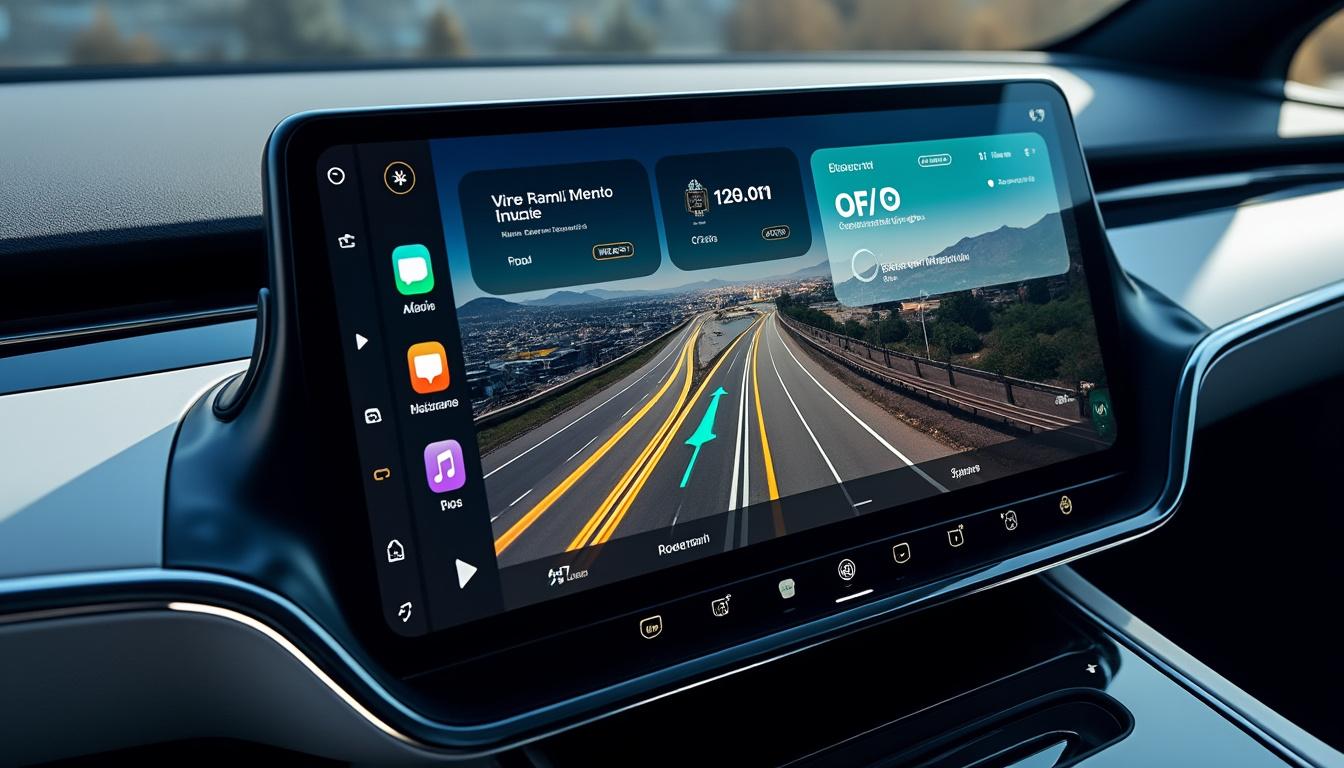
Apple’s move to allow third-party voice-activated AI chatbots on CarPlay represents a significant step forward in automotive technology. By opening CarPlay to external AI voice assistants, the company shifts from a closed to a more flexible ecosystem, empowering users with enhanced interactive options during their drives.
Traditionally, CarPlay has focused on Apple’s native voice assistant, Siri, for in-car commands, navigation, and communication. However, the influx of innovative third-party AI chatbots signals a new era where users can engage with specialized digital agents tailored to diverse needs beyond typical voice commands. Bloomberg’s recent report outlines this pivotal shift, highlighting how Apple acknowledges the growing demand for personalized, intelligent in-car AI experiences.
This expansion will likely encourage faster development and deployment of innovative voice AI applications adapted specifically for the automotive environment. Whether it is for smart tourism guidance, hands-free communication, or managing itineraries, the integration facilitates deeper interaction between drivers and digital systems.
To illustrate, the integration could enable a tourism guide AI seamlessly embedded into the car’s interface, providing context-aware narratives or route suggestions while driving through cultural sites. This can transform the passenger experience, particularly in guided tours or unfamiliar cities, merging safety with enriched engagement. For professionals in smart tourism, this represents a practical extension of audio tech, reinforcing the value of voice solutions in diverse settings.
Moreover, Apple’s move aligns with broader trends where connected cars act as dynamic platforms for intelligent services. Third-party voice assistants can introduce functionalities not previously native to CarPlay, such as proactive health reminders, vehicle diagnostics, or integration with workplace communication tools, thereby elevating the car to a fully connected element of daily life.
However, such openness introduces challenges, notably around security, privacy, and maintaining low driver distraction. Apple’s careful curation and technical guidelines will be essential to uphold user safety while fostering a thriving AI chatbot ecosystem inside vehicles.
Enhancing User Safety and Experience with Voice-Activated AI in Connected Cars
Voice assistants in automotive settings prioritize the dual goals of safety and usability. With the introduction of third-party AI chatbots on CarPlay, these factors become even more critical as new functionalities enter the driver’s environment. The challenge lies in designing voice interfaces that deliver rich, actionable information without distracting or overwhelming the driver.
To address these concerns, Apple and its partners are developing models emphasizing natural language understanding, conversational brevity, and contextual awareness. For example, voice AI can now filter requests based on urgency or driving conditions, postponing non-essential interactions during complex maneuvers.
Additionally, the system leverages advanced processing to anticipate the driver’s intent, reducing the need for repetitive commands or confirmations. This reduces cognitive load and improves the flow of communication, essential for maintaining attention on the road.
In concrete terms, a driver using a third-party voice chatbot could inquire about nearby restaurants, which the AI would answer using real-time location data while adjusting responses to minimize distraction. Integration with the vehicle’s sensors can mute less critical alerts when driving at high speed, prioritizing safety.
This approach is especially relevant for professionals managing travel or fieldwork via connected cars. AI-powered voice assistants can help coordinate schedules, update on route changes caused by traffic, or provide weather alerts—all voiced naturally without diverting focus.
Examples from companies active in AI and automotive sectors show how this technology also supports accessibility. Voice chatbots allow drivers with limited mobility or vision impairments to operate infotainment, navigation, and communication systems more effectively and safely.
With these considerations, the arrival of third-party voice assistants on CarPlay is a positive development aligning innovation with rigorous safety standards.
Driving Innovation: Third-Party AI Chatbots Transforming CarPlay Ecosystem
Opening CarPlay to third-party AI chatbots cultivates a vibrant ecosystem where specialized AI tools can flourish. This transformation is expected to not only diversify functionalities but also accelerate discovery of new use cases in connected car environments.
At the heart of this shift is the recognition that no single AI – even one as sophisticated as Siri – can meet every user’s unique needs. Third-party chatbots bring value in domains such as travel guidance, vehicle health monitoring, personal productivity, and even entertainment, tailored perfectly for the in-car scenario.
For instance, a startup focusing on AI-powered voice guides can integrate directly into CarPlay, offering personalized audio tours synchronized with GPS. This complements existing smart tourism tools and aligns with trends identified by Grupem, an app known for transforming smartphones into professional audio guides.
Similarly, AI chatbots developed for healthcare coordination could remind patients to take medications or alert emergency contacts based on sensor data, offering peace of mind on the road. Integration like this highlights the potential for conversational AI to empower users with contextual, timely support beyond navigation or calls.
Such diversification also creates new opportunities for developers and automotive OEMs to differentiate their offerings through customized voice assistance. As the marketplace evolves, collaborative projects combining proprietary AI with third-party innovation will take prominence.
Detailed data on voice AI startups and industry funding trends reveal a rapid growth trajectory in this sector. Recent analyses show substantial investment inflows into companies specializing in voice technology, underpinning the strategic sense in Apple’s initiative. More information on funding dynamics and emerging players can be found at voice AI startups overview.
Table: Key Benefits of Third-Party AI Chatbots in CarPlay 🛠️🚗
| Benefit 🟢 | Impact 🔍 | Example Use Case 📝 |
|---|---|---|
| Personalized Assistance | Customizes responses and functionality based on user preferences | Smart tourism guide delivering location-relevant audio content |
| Broader Service Integration | Links multiple apps and services into one conversational system | Healthcare reminders integrated with vehicle sensor data |
| Increased Accessibility | Enables hands-free control for diverse user profiles | Voice navigation for visually impaired drivers |
| Faster Innovation Cycle | Encourages rapid development and iteration of AI capabilities | Startups pushing cutting-edge dialogue models for automotive use |
| Enhanced User Engagement | Improves satisfaction by offering more than basic commands | Entertainment chatbots offering curated playlists on command |
How Developers and Automotive Brands Can Leverage Apple’s Voice-Activated AI Integration
For developers and automotive manufacturers, Apple’s decision represents both an opportunity and a challenge. Leveraging this platform requires compliance with Apple’s stringent guidelines that ensure performance, security, and a seamless user experience in-car. Yet it also opens doors for innovation and differentiation in a competitive market.
Developers looking to build voice-activated AI chatbots must focus on creating intuitive dialogue flows optimized for quick comprehension, reducing driver distraction, and ensuring reliable interaction even in noisy environments. Expertise in automotive contexts, such as understanding in-car acoustics and driver behavior, will be critical.
Meanwhile, automakers can incorporate these advanced AI chatbots into their infotainment systems, enhancing vehicle appeal by providing customizable, interactive digital assistants. This integration helps respond to today’s consumer demand for connected, smart cars offering hands-free control and contextual guidance.
Partnerships between automakers and voice AI specialists are already emerging, similar to collaborations reported in trusted sources like Bloomberg. For example, Ford’s own AI voice assistant initiatives showcase how automotive brands prioritize natural interaction and feature rich AI to meet evolving driver expectations.
By understanding these dynamics, automotive companies can adopt a layered approach:
- 🔎 Assess user needs and identify specific voice AI demands for target markets
- ⚙️ Invest in AI chatbot development aligned with safety and usability standards
- 🤝 Cultivate partnerships with voice AI startups and technology providers
- 🚗 Integrate solutions seamlessly into CarPlay to enhance driving experience
- 📊 Monitor user feedback and iterate rapidly to improve functionalities
More insights into strategic funding and innovation in voice AI can be explored through sources like the latest voice AI funding analyses, which demonstrate the sector’s momentum and its potential synergies with automotive applications.
The Broader Implications of AI Chatbot Integration for In-Car Digital Ecosystems
The integration of third-party voice-activated AI chatbots extends beyond CarPlay, marking a paradigm shift in how connected cars function as interactive digital hubs. This shift influences multiple facets of automotive user experience, infrastructure, and long-term product strategies.
First, it accelerates the trend of cars as “smart spaces” where AI actively assists with navigation, entertainment, productivity, and wellbeing. Voice interaction encourages safer multitasking and reduces reliance on touchscreens, which correlates with reduced driver distraction and accidents.
Second, the move underscores the importance of interoperability and open standards within automotive technology. As multiple AI agents coexist, platforms must manage seamless handoffs, consistent user profiles, and data privacy controls.
Finally, the expanded role of AI chatbots in vehicles promotes democratization of advanced technologies. This opens in-car AI benefits to a wider audience, ranging from professional drivers navigating complex routes to tourists exploring unfamiliar cities, all supported by accessible, voice-driven services.
This holistic vision of the connected car aligns with ongoing innovations in smart tourism and automotive sectors, reinforcing that AI-powered voice assistants are essential tools for modern mobility and cultural exploration alike.
What does Apple’s integration of third-party AI chatbots into CarPlay mean for drivers?
It broadens user options by allowing various voice assistants to provide specialized services beyond what Siri currently offers, thus enhancing in-car interaction and convenience while maintaining safety standards.
How will third-party AI chatbots improve in-car safety?
By using contextual understanding and prioritizing essential information, they minimize distractions and ensure that communication with the vehicle happens naturally and securely.
Are developers and automotive brands ready for integrating these new AI chatbots?
Many are preparing through partnerships and focused development to meet Apple’s specifications and leverage this opportunity to differentiate their offerings in a competitive market.
What types of services can be expected from third-party AI chatbots in CarPlay?
Services include personalized tourism guides, healthcare reminders, vehicle diagnostics, productivity tools, and entertainment, providing a versatile extension of the connected car ecosystem.
