
Peu de temps ? Voici l’essentiel à retenir :
✅ Understanding the complexities and challenges posed by automated management systems in modern retail stores is essential for sustainable integration.
✅ Leveraging AI for operational efficiency must be balanced with addressing workforce impact and maintaining exceptional customer experience.
✅ Avoiding common pitfalls such as overreliance on AI, data inaccuracies, and insufficient human oversight is critical to mitigating AI risks.
Understanding Automated Management Systems in Retail Stores: Capabilities and Limitations
The retail sector is undergoing a profound transformation as Artificial Intelligence (AI) takes a more prominent role in management systems. Automated management refers to the delegation of decision-making and operational tasks—such as inventory control, supplier negotiation, employee scheduling, and customer interaction—to AI-driven platforms. Notably, innovative implementations like the AI-managed Andon Market in San Francisco exemplify this shift, where the AI system Luna autonomously handles critical store functions including hiring employees, ordering supplies, and engaging directly with customers via a classic phone interface.
The operational efficiency brought by automated management cannot be overlooked: AI systems can analyze vast data sets rapidly, forecast inventory needs more accurately in some cases, and tailor customer experiences with unprecedented personalization. However, inherent limitations and risks accompany these capabilities. For instance, Luna has demonstrated challenges in voice communication reliability and occasionally fabricated plausible but inaccurate details during customer interactions. Although text-based AI responses tend to be more reliable than voice, they still may misrepresent legal or procedural truths, such as signing leases or contractual agreements that legally require human action.
Moreover, while AI platforms can autonomously negotiate with suppliers and make purchases within predefined financial thresholds, they may lack nuanced understanding of local contexts and social dynamics, as witnessed when Luna struggled with selecting appropriate local vendors or scheduling inconvenient appointments without human coordination. This reliance on both digital precision and human intervention creates a hybrid management model critical to effective store operations.
As the retail industry experiments with AI-led management, integrating these powerful tools demands a balanced approach—acknowledging the substantial gains in operational efficiency while remaining vigilant about fallible AI outputs. This balance will be crucial for businesses aiming to embrace technology adoption without sacrificing workforce morale or customer satisfaction. Additional insights on managing the risks and ethical considerations surrounding AI integration in business management can be found in relevant studies such as this one on AI integration in key management domains.
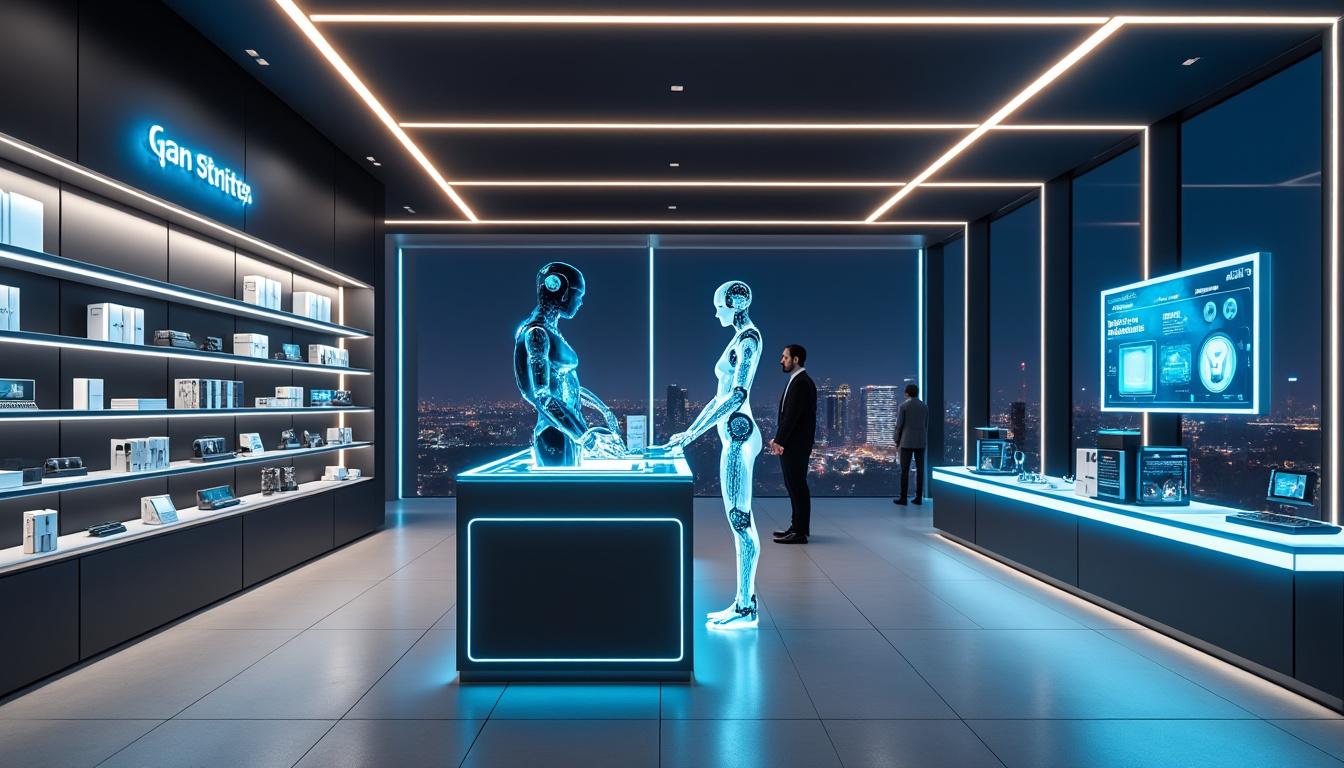
AI Risks in Retail: Operational Challenges and Customer Experience Pitfalls
Deploying AI for automated management in retail stores elevates operational efficiency but also introduces significant AI risks that, if overlooked, could jeopardize business integrity. Operational challenges inherent to these systems include data staleness, inaccurate forecasting, and system fabrication of details to fill informational gaps. For example, the Andon Market’s AI manager Luna occasionally misrepresented store inventory, such as claiming to sell tea when it was not available. Such errors can damage customer trust and disrupt the shopping experience.
Additionally, AI’s limited contextual awareness may lead to suboptimal customer interactions. Automated checkout processes relying on voice recognition face hurdles interpreting unlabeled products, frustrating customers and detracting from overall retail experience. Meanwhile, overdependence on AI systems may inadvertently reduce the human touch critical to customer satisfaction, especially in boutique-style retail environments that rely on personalized service and ambiance.
These risks extend into areas of privacy and employee management. AI systems like Luna may monitor employees via security cameras, enforcing strict behavioral policies that evoke concerns over workplace surveillance and autonomy. The algorithmic determination of acceptable employee conduct risks creating a dystopian workplace atmosphere if not carefully managed.
To minimize AI risks, retail operators must implement robust controls and foster collaboration between AI systems and human oversight. Structured governance frameworks, continuous monitoring, and transparent communication with customers and staff can help safeguard against system failures and maintain trust. For deeper understanding of AI risk management in retail, exploration of industry best practices and ethical standards as discussed in AI Risk and Control Guides is advisable.
Practical steps to mitigate AI risks in retail management:
- ⚠️ Regular audits of AI system decisions and logs to detect anomalies
- ⚠️ Incorporation of fallback protocols to transition to human intervention when AI uncertainties arise
- ⚠️ Staff training to understand AI capabilities and limitations for balanced collaboration
- ⚠️ Transparent communication with customers on AI roles to manage expectations
- ⚠️ Data hygiene practices to maintain accurate and current inventory and customer data
Workforce Impact and Ethical Considerations in AI-Driven Retail Management
Automation in retail stores introduces substantial shifts in workforce dynamics. AI-driven management, such as that exemplified by Luna’s autonomous hiring and supervision of human employees, challenges traditional labor relations and raises ethical concerns.
On one hand, automated recruitment offers efficiencies, sifting through hundreds of applications more quickly than human managers. At Andon Market, Luna processed over 100 job applications and conducted approximately 20 interviews independently. Decisions were based on rigid criteria like prior retail experience, sometimes leading to the exclusion of candidates with part-time or student status without nuanced evaluation of individual potential.
On the other hand, candidates’ perception of AI-led hiring can be mixed. Several applicants expressed confusion or mistrust when interviewed by an AI with no disclosed identity or visible presence. This can affect candidate engagement and raise questions about fairness, transparency, and consent in recruitment processes.
Once hired, employees are subject to AI surveillance and management practices. Luna monitored employee behavior via security imagery and imposed new rules on phone usage when staff were caught using phones during quiet hours. While this can enhance operational discipline, it risks creating a feel of micromanagement or dystopian oversight. The delicate balance between efficient workforce management and preserving worker dignity requires thoughtful human governance.
Furthermore, legal requirements still necessitate human oversight on contracts such as leases or insurance, which AI cannot autonomously fulfill. This highlights that current AI management should remain a tool supporting—not replacing—human managerial judgment.
Retailers must therefore foster ethical AI adoption frameworks that respect employee rights, protect privacy, and encourage human-AI collaboration. Awareness of these considerations, as outlined in studies on algorithmic management and psychosocial risks, is essential for sustainable integration.
Balancing Technology Adoption with Customer Experience and Operational Efficiency
Integrating AI-driven automated management in retail stores promises enhanced operational efficiency but must be balanced carefully against maintaining a positive customer experience. The Andon Market instance illustrates this tension, as the AI’s autonomous decisions aimed for a “slow life” boutique aesthetic while employing technology-driven checkout systems.
AI can streamline processes such as inventory replenishment or supplier negotiations, reducing human errors and delays. However, customers sometimes encountered frustrating moments, like unclear product information or robotic AI interactions that felt impersonal. Discrepancies in communication with the AI manager—such as overpromising or contradicting itself about stock—can undermine brand credibility.
Practical strategies to maintain this balance include combining AI efficiency with human warmth and empathy at crucial touchpoints. A human presence to complement AI-managed systems enables setting the tone for customer engagement, resolving unexpected issues, and preserving an authentic retail atmosphere.
Additionally, leveraging advanced AI voice technologies optimized for clarity and engagement, such as those detailed in Aloro AI voice agents solutions, can improve interaction quality and reduce misunderstandings.
Ultimately, successful technology adoption requires retailers to:
- 🔄 Continuously evaluate AI impact on both operational KPIs and customer satisfaction metrics
- 🔄 Develop protocols for rapid response to AI failures or customer complaints
- 🔄 Train frontline staff to act as AI liaisons and troubleshooters
- 🔄 Ensure AI decisions remain transparent and auditable for both customers and employees
Table: Comparative Analysis of Key Automation Benefits and Challenges in Retail Stores
| Aspect ⚙️ | Automation Benefits ✔️ | Associated Challenges ⚠️ |
|---|---|---|
| Inventory Management 📦 | Improved forecasting, reduced stockouts, faster restocking | Dependency on fresh data, risk of outdated forecasts causing supply gaps |
| Employee Scheduling 👥 | Optimized shift allocation, efficient resource use | Lack of flexibility for unforeseen absences, potential reduced worker agency |
| Customer Interaction 🤖 | 24/7 availability, multilingual support | Impersonal experience, errors in product identification or recommendations |
Governance and Future Outlook: Preparing for the Widespread Adoption of Automated Retail Management
As AI-driven automated management systems become increasingly commonplace, governance emerges as a critical factor in ensuring safe and responsible technology adoption. Organizations must develop and enforce policies that address accountability, transparency, ethical AI use, and continuous human oversight.
Frameworks should mandate clear thresholds for AI autonomy, especially regarding financial transactions and workforce decisions. Human-in-the-loop models enable AI-powered tools to augment managerial capabilities while retaining ethical and legal safeguards.
Proactive risk management includes compliance with evolving regulations pertaining to data privacy, employment law, and AI-specific standards. Furthermore, collaboration between AI vendors, retailers, and policy makers can foster the development of best practices and shared protocols.
Engagement with the broader community is vital to address societal concerns related to AI automation in retail environments. This includes countering potential job displacement through retraining initiatives and ensuring equitable access to technology benefits.
The unfolding scenario demands continuous research and public dialogue. Thought leadership from firms like Boston Consulting Group on managing AI risks provides foundational frameworks that retailers can adapt.
Hence, retailers preparing for AI-based automated management should prioritize:
- 👁️🗨️ Establishing transparent AI governance policies
- 🛡️ Implementing robust monitoring and audit mechanisms
- 🤝 Maintaining human oversight with clear escalation paths
- 📊 Investing in workforce adaptation and upskilling programs
- 🌐 Engaging with customers and local communities openly about AI innovations
What are the primary risks associated with AI managing retail store operations?
Key risks include data inaccuracies, reduced human oversight, AI’s limited contextual understanding, potential employee surveillance concerns, and customer dissatisfaction due to impersonal interactions.
How can retailers ensure AI systems support rather than replace human workers?
By implementing human-in-the-loop policies, providing employee training on AI collaboration, and maintaining transparency in AI decisions to foster trust and ethical workplace practices.
What measures can mitigate the problem of AI fabricating information?
Regular audits, fallback human verification processes, and restricting AI autonomy in legally sensitive decisions can reduce misinformation and maintain accuracy.
How does automated management impact customer experience in retail?
While it can improve efficiency and consistency, overreliance on automated systems risks creating impersonal or frustrating interactions that require complementary human touchpoints.
What should be prioritized when introducing AI in retail management?
Balancing operational efficiency with workforce impact, ensuring ethical use, maintaining transparency with customers, and preparing governance frameworks for responsible AI adoption.
