
Des Moines Children’s Museum Plans a Temporary Move to Urbandale
The Des Moines Children’s Museum has identified a temporary location at 4093 NW Urbandale Drive while work continues on its future permanent home in West Des Moines. The relocation follows the sale of Valley West Mall and a notice requiring tenants to leave, creating an immediate need for an alternative space.
The organization has operated at the mall since 2017 and expanded into a larger unit there in 2019. That history matters: moving an established children’s attraction involves more than transporting furniture, because familiar play environments, school relationships, and family routines all move with it.
According to WHO 13’s report on the temporary relocation, the published timetable placed the move during the week of October 26, with a hoped-for reopening on November 2. Those dates describe the announced schedule, not confirmation that the temporary venue opened as planned.
For anyone planning a visit in 2026, the practical distinction is between an announced destination and a currently operating attraction. A saved map listing, an older event announcement, or a previously purchased membership does not establish today’s opening hours.
Why the Des Moines Children’s Museum relocation needs clear visitor information
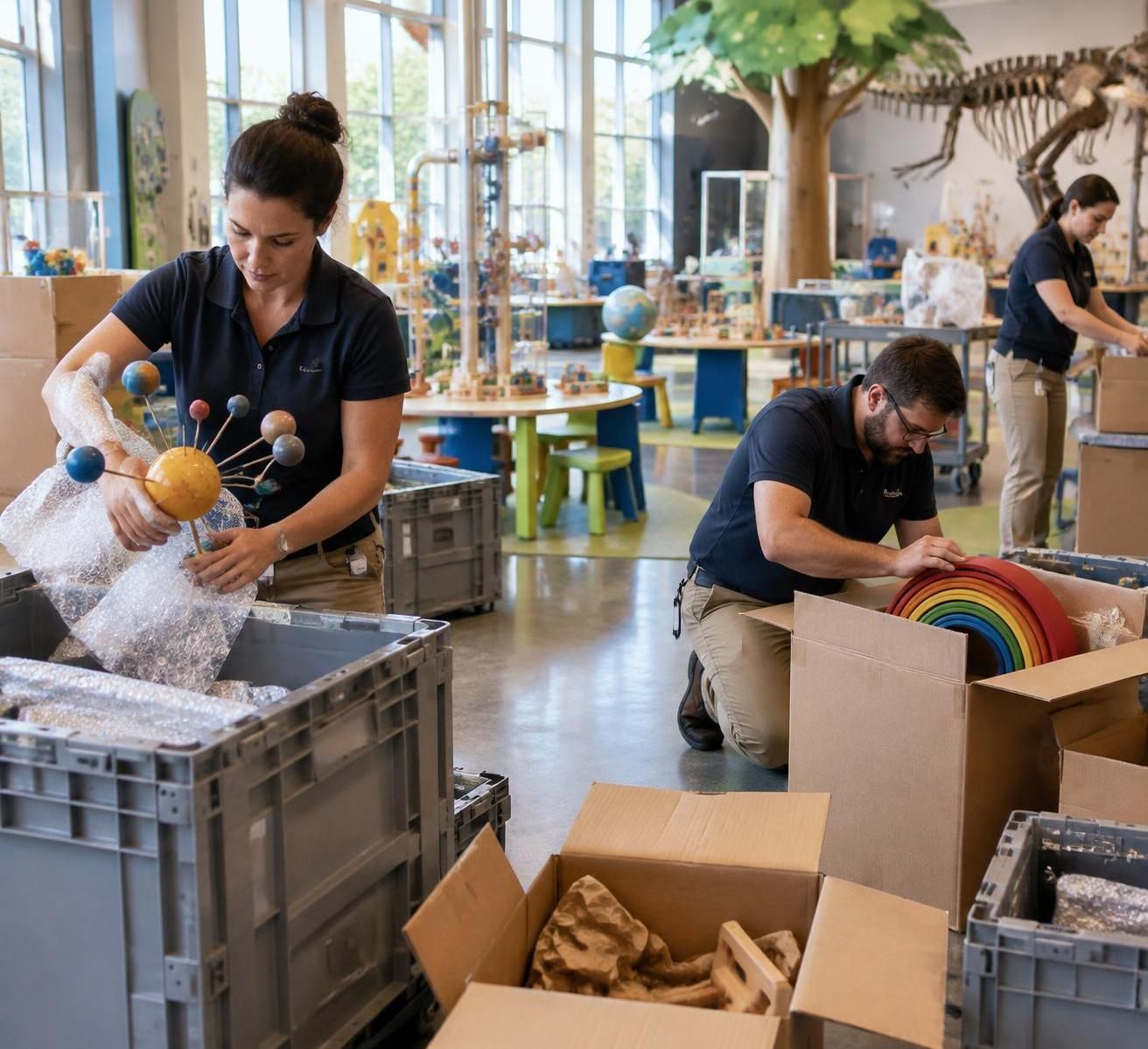
A rapid departure creates several overlapping tasks: packing learning materials, checking equipment, preparing the replacement premises, and explaining the interruption to visitors. If communication falls behind the physical work, families can arrive at the former entrance even when the move itself is progressing successfully.
Consider a hypothetical caregiver, Maya, who usually takes two young children to the mall on weekday mornings. Her immediate questions are practical: Which address should she enter into navigation, is the building open, and will the activities suit both children?
Answering those questions in one clearly dated update is more useful than publishing several enthusiastic announcements without operational details. A strong notice separates confirmed information, reopening targets, and details still awaiting announcement, allowing readers to make decisions without interpreting promotional language.
- 📍 Temporary destination: 4093 NW Urbandale Drive, Urbandale.
- 🏗️ Future permanent address: 1200 12th Street, West Des Moines.
- 📅 Before traveling: Check the latest official opening notice, hours, and admission arrangements.
- ♿ For specific access needs: Ask about entrances, restrooms, circulation space, and available accommodations.
The museum’s moving-week announcement identifies the Urbandale address and acknowledges the organizations helping make the arrangement possible. It is a useful reference for the move, while subsequent official updates should guide actual travel decisions.
For tourism offices and community partners, consistency is equally important. Directory entries, event calendars, school newsletters, and accommodation recommendations should distinguish the former site from the interim address rather than simply replacing one location without explanation.
A short transition label can prevent considerable confusion: “Temporary venue; check current opening information before visiting.” The first measure of a successful museum move is whether a family can confidently find the right door.
Planning Family Activities Around the Temporary Location
A change of building alters the entire visit, from the journey and arrival routine to the amount of time children can comfortably spend exploring. For families, the most useful relocation information therefore concerns the experience on the ground, not just the new street address.
Do not assume that arrangements at Valley West Mall automatically transfer to Urbandale. Parking access, nearby facilities, stroller storage, food policies, and admission procedures may differ, and the supplied announcements do not establish those details for the temporary venue.
That distinction helps caregivers prepare without creating unrealistic expectations. A smaller selection of well-presented activities can still support a rewarding outing, but families need to understand what is actually available before promising children their favorite station.
What families should check before the Des Moines museum move affects a visit
Start with operating status, then check practical requirements. If a child needs a quieter arrival, step-free access, or space for an adaptive stroller, a direct question about the relevant route is more useful than relying on a general description such as “family-friendly.”
For the hypothetical Maya, preparation might mean checking the current notice the evening before departure and again before leaving home. She could explain to her children that the destination is a different building and that some familiar activities may not be present.
This small conversation gives children a realistic frame for the visit. Instead of treating every difference as a disappointment, they can approach the setting as a place to investigate, while the adult keeps a flexible plan for breaks or an earlier departure.
| Visit detail | What the supplied announcements establish | What to confirm before traveling |
|---|---|---|
| 📍 Interim address | 4093 NW Urbandale Drive | Public entrance and arrival instructions |
| 📅 Reopening | November 2 was the announced target | Actual opening status and current hours |
| 🎟️ Admission | No detailed interim arrangements provided | Prices, reservations, and membership use |
| 🧩 Activities | A temporary operating space was announced | Available experiences and age suitability |
| ♿ Accessibility | No detailed access specification provided | Routes, restrooms, and individual accommodations |
School groups face additional considerations because transport bookings and adult-to-child supervision arrangements are harder to change at short notice. Teachers should obtain confirmation of group availability, arrival procedures, and the activities relevant to their learning objectives before committing to a trip.
A useful booking exchange describes the group rather than simply requesting a date. For example, specifying children’s ages, the number of accompanying adults, and any communication or mobility requirements allows staff to assess whether the proposed visit fits the available setting.
Community calendars should also avoid presenting the interim venue as an exact replacement for the former attraction. Clear descriptions help families compare suitable family activities without assuming identical facilities, capacity, or programming.
Why does this level of detail matter? For a caregiver managing transport, meals, and a child’s energy, a preventable surprise can outweigh an otherwise enjoyable activity. Accurate information reduces that burden and lets the visit focus on exploration.
A successful family outing begins with reliable expectations, not an assumption that every part of the previous experience has moved unchanged.
Protecting Children’s Education During the Facility Transition
The educational challenge of a facility transition is to preserve the quality of play while the surroundings change. A temporary setting does not need to reproduce every feature of a larger venue, but it does need a coherent approach to discovery, supervision, and participation.
For operators facing a comparable move, the starting point is an inventory of learning functions rather than a list of objects. Which activities encourage experimentation, which support imaginative storytelling, and which allow younger visitors to practice movement or coordination?
This approach helps distinguish essential experiences from installations that are difficult to transport or safely reinstall. The museum’s supplied announcements do not identify the final selection of museum exhibits for Urbandale, so specific play stations should not be advertised as available without confirmation.
How temporary museum exhibits can preserve meaningful learning
Consider an illustrative construction activity using large, age-appropriate building pieces. Its educational value comes from comparing shapes, testing balance, negotiating shared materials, and trying again when a structure falls, not from the size of the surrounding room.
A staff member can extend that experience with a focused prompt: “What could make the base more stable?” The question encourages observation without turning open-ended play into a formal lesson or requiring a screen to explain the answer.
For Maya’s hypothetical family, siblings may approach the same materials differently. A younger child might explore stacking and movement, while an older child creates a bridge and tests its span; good activity design leaves room for both.
Temporary layouts also demand careful attention to circulation. Popular stations can produce queues, and a narrow route between activities can make supervision harder or limit access for visitors using mobility equipment.
One practical response is to observe how people use the room after opening and adjust movable elements accordingly. Repeated congestion at a single point suggests a layout problem that additional signage alone may not solve.
Using audio thoughtfully during the Des Moines Children’s Museum transition
Sound deserves the same attention as floor space. Children’s venues naturally include conversation and active play, so adding continuous spoken content can increase competing noise rather than improve interpretation.
Audio should be optional, brief, and connected to a clear visitor need. A short caregiver explanation about an activity’s learning purpose may be more useful than a long narration intended to hold a young child’s attention.
For institutions assessing smartphone-based guidance, Grupem is one option to consider alongside their own accessibility, connectivity, and support requirements. This is a general technology consideration, not an indication that the Des Moines Children’s Museum has adopted the application.
A sensible trial would use one short explanation, provide an equivalent text version, and observe whether caregivers can access it without interrupting play. If the process requires repeated troubleshooting, the tool is adding work rather than helping the audience.
Any shared listening arrangement should also preserve adult awareness of children and staff instructions. Technology is most useful when it supports the social interaction already happening, rather than becoming the main task.
Across physical activities and digital interpretation, the same test applies: does the intervention help visitors explore with greater confidence? Continuity in children’s education depends on purposeful experiences, not on reproducing every feature of the previous building.
Community Engagement Can Keep the Museum Move Practical
The temporary arrangement reflects the importance of local relationships when a cultural organization faces a compressed timetable. In the supplied reporting, interim executive director Ashlen Sheaffer credits the Denny Elwell Company, the Denny and Candy Elwell Foundation, and the City of Urbandale with helping the museum continue serving its community.
That acknowledgment identifies concrete support behind the relocation without establishing the full financial or contractual terms. Those details should not be inferred from expressions of thanks, and the temporary arrangement should not be described as a particular lease or donation structure without documentation.
Community engagement is most effective when goodwill becomes a specific, manageable task. An organization preparing to move may need professional transport, materials handling, communications assistance, or financial contributions, but each request should match an identified operational need.
How local partners can support the Des Moines Children’s Museum relocation
For businesses and residents, the first step is to consult the institution’s current requests rather than arrive with unsolicited goods. Extra furniture, toys, or equipment can create sorting and storage work when staff are already managing limited time and space.
A useful offer describes a capability and a realistic commitment. For example, a transport company could identify the vehicle size, available dates, and insurance arrangements it can provide, allowing the receiving team to assess whether the offer fits its plan.
Volunteering also requires coordination. Handling learning equipment, working around children, or entering a site under preparation may involve training, screening, supervision, or restrictions that do not apply to an ordinary public visit.
The same discipline applies to information sharing. A neighborhood association can help by circulating the correct address and a link to current official updates, while avoiding unconfirmed claims about opening dates or admission policies.
For the hypothetical Maya, this might be the difference between receiving an outdated screenshot in a parent group and finding a dated notice that answers her actual travel questions. Responsible sharing turns community enthusiasm into useful visitor support.
Funding the museum transition without confusing operating and capital needs
Relocation expenses and permanent-site development are related but distinct. Packing, transport, inspections, and short-term operations can create immediate costs, while building work and long-lived installations belong to a different planning horizon.
Donors benefit when an appeal explains which category their contribution supports and whether restrictions apply. A general statement about helping the move should not imply that a particular donation automatically funds construction, programming, or an individual exhibit.
For cultural-sector professionals, Grupem’s overview of federal grants for Iowa museums provides related reading when reviewing the wider funding landscape. It should not be taken as evidence that this institution has received an award or qualifies for a specific program.
Before pursuing an opportunity, teams should check applicant eligibility, allowable costs, matching requirements, and reporting obligations. The same Iowa museum funding resource can serve as a starting point for questions, with current program documents governing any application.
Local partnerships and formal funding serve different purposes, but both require clarity about responsibility and timing. A generous offer becomes genuinely useful when it removes a bottleneck rather than creating another task for the team.
The strongest community response combines practical help, accurate information, and respect for the organization’s stated priorities.
The Permanent West Des Moines Home Offers Room for a Different Visitor Experience
The Urbandale stop is separate from the planned permanent home at 1200 12th Street in West Des Moines, on the former Des Moines Golf and Country Club site. The permanent location was announced in September 2025, and earlier coverage described an anticipated opening in 2026.
That projected year is a planning reference, not evidence of completed construction or public access. The supplied relocation report states that work continues, so visitors should rely on a specific opening announcement rather than interpret the earlier forecast as a guaranteed date.
The property offers more than 13,000 square feet on the main level and a lower level of approximately comparable size, together with more than seven acres outdoors. Those dimensions create possibilities, but they do not establish how much space will ultimately be available to visitors or which activities will occupy it.
What the larger Des Moines Children’s Museum site could support
Additional floor area can help separate experiences with different requirements. Active physical play, focused construction, and quieter exploration do not always work well immediately beside one another, especially when sound travels freely across an open room.
For planning teams, the opportunity is therefore not simply to fit more installations into the building. It is to arrange activities so that families can understand the layout, supervise children effectively, and find an appropriate pace.
Imagine Maya arriving with one child eager for energetic play and another who prefers a calmer activity. A legible layout with nearby alternatives would make that visit easier, while a larger but confusing arrangement could increase the effort required from the caregiver.
Outdoor land introduces another set of possibilities, including nature observation, seasonal activities, or open-ended movement. These are potential uses, not announced program commitments, and each would require suitable design, staffing, maintenance, and safety arrangements.
Iowa’s changing weather makes that operational planning particularly important. Shade, drainage, surfaces, indoor alternatives, and procedures for poor conditions influence whether outdoor space becomes dependable learning infrastructure or an occasional extra.
How the temporary museum location can inform the permanent experience
An interim venue can reveal practical lessons if feedback is gathered systematically. Questions about arrival, queues, seating, sound levels, and activity duration can identify problems that are easy to overlook when attention centers on individual installations.
A short caregiver survey should ask about observable experiences rather than broad satisfaction alone. “Was it easy to locate a restroom?” produces more actionable information than an undirected invitation to rate the entire outing.
Staff observations matter too. Repeated requests for directions, difficulty storing strollers, or congestion around a popular activity can indicate design priorities for the permanent property without requiring a complicated analytics system.
Digital tools should follow the same evidence-led approach. A mobile orientation page or optional audio explanation is worth considering when it solves a demonstrated problem; it should not be added simply because a new building creates an opportunity to install technology.
Accessibility must remain part of that evaluation from the beginning. Routes, interpretation formats, seating, and sensory conditions work together, and none can be assessed adequately through a floor-area figure alone.
For families tracking progress, the important distinction remains practical: the temporary address supports continuity, while the permanent project represents a separate development with its own readiness milestones. More space becomes meaningful when it produces easier navigation, inclusive participation, and richer opportunities to learn through play.
Where is the Des Moines Children’s Museum’s temporary location?
The announced temporary address is 4093 NW Urbandale Drive in Urbandale. Check the museum’s latest official updates for current opening status, hours, and arrival instructions before traveling.
Why is the museum leaving Valley West Mall?
The move follows the sale of Valley West Mall and a notice requiring tenants to vacate. The Urbandale arrangement provides an interim destination while work continues on the planned permanent home.
Is November 2 a confirmed reopening date?
November 2 was described as the hoped-for opening date in the supplied relocation announcement. That target does not establish actual operating status; subsequent official notices should guide visit planning.
Where will the permanent museum be located?
The planned permanent address is 1200 12th Street in West Des Moines, at the former Des Moines Golf and Country Club site. Earlier coverage anticipated a 2026 opening, but a specific public opening announcement is needed before planning a visit there.
Will all previous exhibits and membership arrangements be available in Urbandale?
The supplied announcements do not establish the full exhibit selection, admission terms, or membership arrangements at the temporary venue. Ask the museum directly about any activity, benefit, or accommodation important to your visit.
