
1. Freebeat Singing Photo: Shorten the Route from Finished Music to a Singing Character
Freebeat Singing Photo is the most direct option in this comparison when you already have a song and a character image. Its role is to create the visible performance rather than compose the music. That distinction matters: an AI singing voice generator produces sound, while a performance tool gives that sound a recognizable face, synchronized mouth movements, and a scene.
The ordering here reflects workflow fit, not independently measured rendering speed or a universal quality ranking. The supplied product information includes promotional material, and the syndicated workflow comparison is identified as a paid placement. Treat its performance claims as vendor-supplied information rather than independent benchmark results.
Compare AI character singing tools by the asset you already have
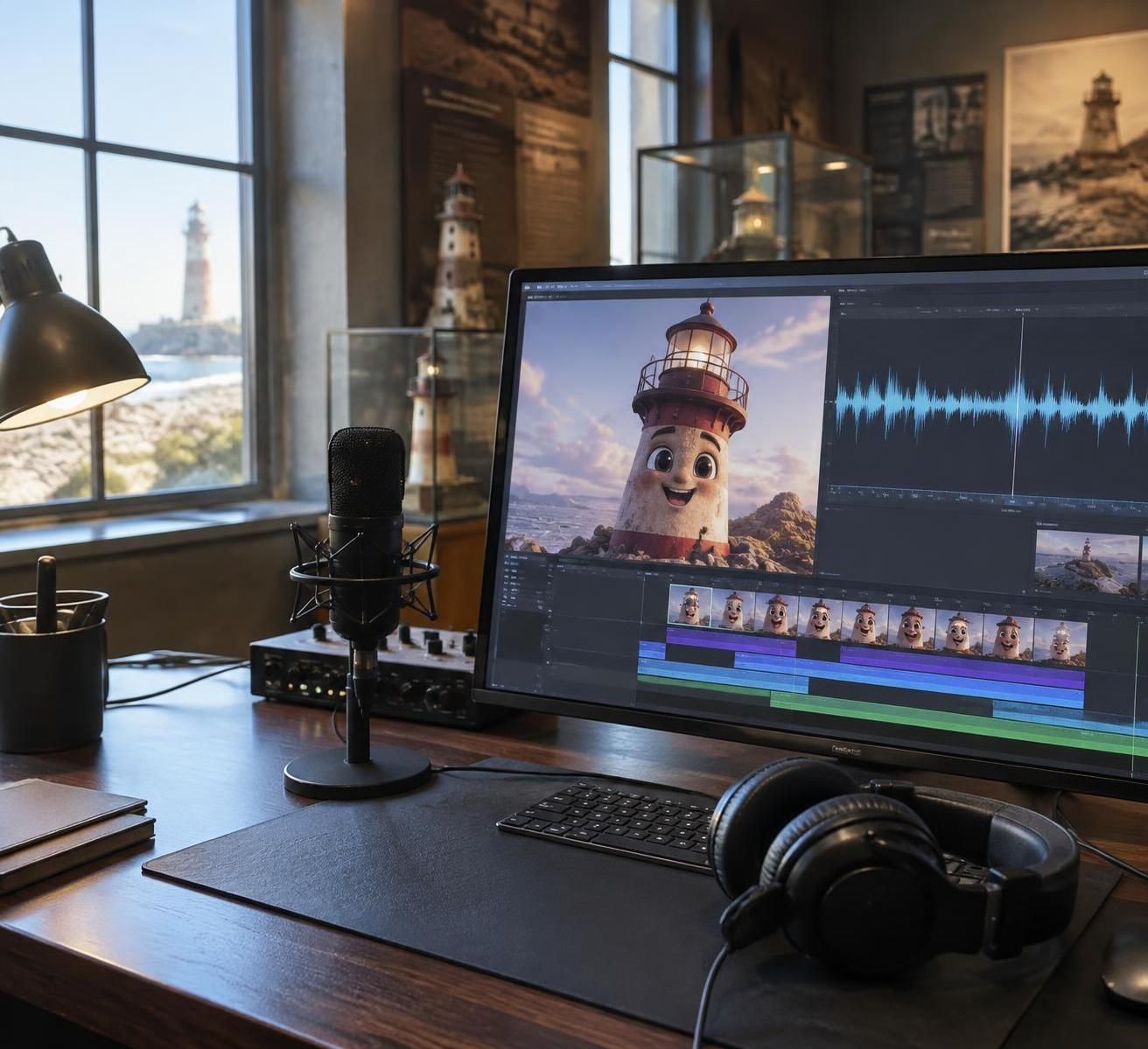
Consider a hypothetical heritage museum creating a singing lighthouse mascot called Lumi. Its team already owns an illustrated character and has commissioned a short musical refrain. Recreating either asset would add work without improving the visitor experience; the missing component is a convincing animated performance.
Freebeat’s described image-and-song workflow addresses that gap. Its supplied product description includes Solo, Duet, and Pet modes, scene presets, custom scene direction, and animated lyrics. The practical benefit is fewer handoffs between animation, synchronization, and editing applications, provided the generated result meets the project’s requirements.
| Tool | Best starting point | Main contribution | Remaining work |
|---|---|---|---|
| 🎬 Freebeat Singing Photo | Image and finished song | Staged singing performance | Review synchronization and export |
| 🎭 Hedra | Portrait and recorded audio | Expressive character close-up | Assemble wider sequences |
| 🧑🎤 Zoice | Reusable character concept | Avatar-centered production | Verify singing and staging requirements |
| 🎵 Suno | Lyrics or musical direction | Complete song generation | Add visible character animation |
| 🎼 ACE Studio | Lyrics and melody | Editable singing performance | Arrange audio and animate character |
| 🎧 Udio | Lyrics or musical direction | Alternative complete-song workflow | Add visible character animation |
Evaluate music-aware animation instead of mouth movement alone
A character can appear synchronized at the syllable level while still looking disconnected from the song. A cheerful chorus needs different movement from a quiet verse, and a scene change that interrupts a sustained note can weaken the illusion. Useful synchronization includes musical phrasing, not merely jaw movement.
Freebeat describes analysis of rhythm, energy, and song structure to guide movement and editing. Its promotional material also gives numerical claims about language coverage, synchronization accuracy, and identity stability. Those figures should not replace a sample using your own language, illustration style, and musical arrangement.
For Lumi, a sensible pilot would use a short passage containing both a sustained vowel and a quick lyrical phrase. Review the mouth, eyes, facial proportions, and scene continuity. A front-facing mascot with a clear mouth is a more informative starting point than a heavily stylized profile with a scarf covering its face.
Measure efficiency as total time to an approved clip, including failed attempts, manual corrections, downloading, and review. Subscription price alone cannot reveal that cost, particularly when credits, export resolution, or regeneration allowances differ between plans.
For museum deployment, animated lyrics should also be checked against the approved script rather than accepted automatically. Keep essential information available as readable text, and test the exported file on the actual display or visitor device. The strongest reason to choose Freebeat is therefore not an unverified headline metric: it is the possibility of completing the missing visual layer with fewer production handoffs.
2. Hedra: Prioritize an Expressive Singing Close-Up
Hedra is a practical candidate when one expressive face matters more than a complete music-video sequence. Its described workflow combines a character image, supplied audio, and performance direction. That makes it particularly relevant to a chorus portrait, a short emotional passage, or a character addressing visitors through song.
For Lumi’s museum, imagine a display beside a historic rescue boat. Instead of producing a fast-cut promotional video, the team wants the mascot to sing a brief refrain about returning safely to shore. A restrained close-up could support the emotional tone better than elaborate staging.
Match AI singing animation to the emotional purpose of the scene
Viewers notice more than lip alignment. An inappropriate smile during a solemn line, restless head movement during a held note, or an unfocused gaze can make an otherwise technically synchronized performance feel wrong. The evaluation therefore needs to include expression, stillness, and the timing of emotional changes.
Direction should describe observable behavior. “Gentle expression, limited head movement, steady gaze, restrained gestures” gives a clearer production target than “make this moving.” Keep the first test simple so that you can distinguish a problem with the source image from a problem with the requested performance.
The audio deserves equal attention. Reverberation, overlapping singers, and prominent backing vocals can complicate the relationship between one face and the soundtrack. Where the workflow supports it, a clean lead-vocal reference can make evaluation easier, while the approved mix remains the final listening experience.
Test close-up quality before building a longer character video
Start with a passage that includes closed-mouth consonants, open vowels, and a pause. These expose different weaknesses: inaccurate mouth closures, unnatural sustained shapes, and movement that continues after the singer stops. Review at normal playback speed before examining individual frames.
For a public-facing installation, inspect the output at its intended display size. A minor facial distortion that disappears on a phone may become obvious on a large museum screen. Conversely, an expression that looks subtle on a desktop monitor may be unreadable on a small visitor handset.
A simple review sheet can keep decisions consistent:
- 👄 Mouth timing: Do visible syllables follow the lead vocal rather than percussion?
- 🎭 Expression: Does the face support the lyric’s meaning without exaggerated movement?
- 🧩 Identity: Do the eyes, mouth, and facial proportions remain recognizable?
- 📱 Delivery: Does the exported clip remain clear on the intended screen?
Hedra’s place in this AI vocal software comparison is therefore on the performance side, not the composition side. A successful animated portrait does not automatically supply scene planning, multiple camera angles, background continuity, or a finished soundtrack. Those remain separate production decisions.
When comparing demonstrations, distinguish a selected promotional example from a repeatable workflow. Record how many attempts your own passage requires, whether the same image behaves consistently, and how much editing follows generation. A visually impressive first example is useful evidence of possibility, but not proof of production reliability.
For Lumi’s rescue-boat display, the acceptance criterion could be one calm, credible performance with no distracting facial changes. That is more meaningful than demanding constant motion or cinematic complexity. Choose Hedra when the emotional credibility of a single singing portrait is the main deliverable.
3. Zoice: Build Around a Reusable Virtual Performer
Zoice is worth evaluating when the recurring character is the central asset. Its supplied description combines custom avatar creation with voice and video tools. The relevant question is not simply whether it can produce an attractive first clip, but whether the same performer can support a repeatable content programme.
Lumi might appear in seasonal museum campaigns, school activities, accessibility explainers, and short musical announcements. Creating a new face for every release would weaken recognition and increase review work. A reusable avatar workflow offers value when it preserves approved visual characteristics and reduces setup across successive projects.
Assess virtual singer tools against a character production brief
Before choosing a platform, define what must remain stable. For an illustrated lighthouse mascot, that might include the shape of the lantern, the position of the eyes, the colour palette, and the absence of human teeth. A technically polished output can still be unsuitable if it changes those identifying features.
Also separate spoken presentation from singing. A platform that handles narration convincingly may respond differently to sustained vowels, rapid lyrical passages, or notes extending across several seconds. Custom avatar capability is not, by itself, evidence of musical performance quality.
Request or generate a singing-specific sample using material you are entitled to upload. Include the actual illustration rather than a generic human portrait, because face geometry affects the result. If the system cannot preserve the mascot’s design, a reusable workflow has little operational advantage.
The same principle applies to voice consistency. Character voice synthesis should support a recognizable identity without locking the team into an inappropriate delivery style. A school activity may require warmth and clear diction, while a commemorative programme needs restraint; both should remain recognizably the same fictional performer.
Reduce repeat-production costs without creating platform dependency
A useful asset library contains more than a profile image. Store approved scripts, pronunciation notes, reference audio, colour specifications, export settings, and consent documentation. This gives future producers a clear starting point and prevents the avatar from drifting as different staff members prepare content.
For the museum, a simple naming convention could connect each clip to its script version and approved audio mix. That becomes important when a lyric changes after historical review or a translation needs correction. Regenerating from an outdated soundtrack can undo an otherwise careful approval process.
Check what remains usable if a subscription ends. Export availability, output licensing, stored avatar access, and the treatment of uploaded voice recordings can affect the long-term value of the system. These are procurement questions, not merely technical details.
Voice permissions require particular care. Character voice cloning should use a consenting performer or a voice asset licensed for that purpose. A contract should address permitted uses, retention of recordings, access controls, and whether the resulting model can be used beyond the original project.
For a tourism organization, keep creative production separate from visitor delivery. An application such as Grupem belongs in the broader audio-guiding workflow; it should not be confused with a singing-animation engine. Prepare approved media first, then verify the relevant delivery platform’s supported formats and playback requirements.
Zoice’s strongest potential advantage is cumulative: fewer repeated setup decisions across a series. Evaluate it over several representative clips rather than one showcase performance. A reusable performer becomes efficient only when identity, permissions, and production settings remain manageable from one release to the next.
4. Suno: Generate the Song Before Animating the Character
Suno addresses the missing-song problem rather than the missing-video problem. It can generate a complete musical track from a prompt or supplied lyrics, including vocals and accompaniment. For a team without a finished composition, that can remove several early production steps, although editorial review remains essential.
Suppose Lumi’s museum has approved a message about coastal safety but has no melody or arrangement. The team needs a short, memorable refrain that children can understand in a noisy family gallery. A text-to-singing AI workflow can help explore musical directions before resources are committed to animation.
Write prompts around visitor needs, not vague musical adjectives
A useful brief identifies audience, language, duration target, mood, instrumentation, and the words that must remain intelligible. “Bright acoustic refrain for primary-school visitors, clear lead vocal, limited backing harmonies, no long instrumental opening” is more actionable than “an exciting museum song.” It also gives reviewers concrete criteria.
Do not expect every instruction to be followed precisely. AI vocal generation can produce an appealing melody while changing a word, repeating a phrase, or stretching a place name awkwardly. Every generated lyric needs comparison with the approved script, especially where safety guidance or historical interpretation is involved.
Proper nouns deserve a separate check. A local harbour name may look straightforward in writing but receive an unsuitable pronunciation in song. Rewriting a line, adding pronunciation guidance where supported, or selecting another take can be more efficient than trying to repair a fundamental articulation problem later.
Keep the character’s vocal identity distinct from a famous performer’s identity. Specify qualities such as warm, light, restrained, or theatrical rather than requesting an imitation of an identifiable artist. Voice-related features and upload permissions should be checked against the current product terms before production begins.
Approve the audio before spending animation credits
A complete track can sound finished before it is ready for public use. Listen for unnatural syllables, abrupt transitions, inconsistent vocal tone, and accompaniment that masks important words. Test through ordinary phone speakers as well as headphones, since visitors may not encounter the music under studio conditions.
For the museum’s first pilot, compare a small number of deliberately different arrangements rather than generating many near-identical versions. One acoustic, one lightly orchestral, and one rhythm-led approach can reveal which treatment suits the audience. Keep the lyric stable so the comparison remains meaningful.
Once the selected track is approved, export it using the formats and rights available under the applicable plan. Confirm whether commercial use, downloadable files, and any other required features are included. A playable preview is not necessarily the same thing as a production-ready, licensed asset.
The next step is a visual tool such as Freebeat or Hedra, depending on the required staging. Some platforms advertise link-based music imports, but supported sources and account requirements should be verified before the workflow is scheduled. Keeping an authorized local master also helps avoid broken dependencies.
Suno is efficient when composition is the bottleneck, not when exact note-by-note control is essential. Approving lyrics, diction, and arrangement before animation prevents a small audio correction from forcing the entire character performance to be regenerated.
5. ACE Studio: Design a Character Singing Voice with Detailed Musical Control
ACE Studio is the more targeted option when you already know what the character should sing. Its described workflow starts with lyrics and a melody or MIDI, then supports editing of the vocal performance. That makes it relevant when musical precision matters more than generating a complete song from a short prompt.
For Lumi, imagine an education team that has commissioned a simple melody designed for children to repeat. The notes and words are fixed, but hiring a singer for every language or revision is difficult. An editable AI singing workflow can help develop the vocal track while preserving the composition’s structure.
Use character voice synthesis where musical decisions must remain editable
Lyrics alone do not define a performance. Note lengths, consonant placement, breaths, vibrato, and emphasis affect both intelligibility and personality. A deliberately cheerful mascot might need clean attacks and modest expressive variation rather than the dramatic phrasing appropriate to a theatrical solo.
ACE Studio’s supplied description emphasizes control over pitch, phrasing, pronunciation, breath, and expression. The benefit is not that every adjustment becomes automatic. It is that a producer can correct a specific musical problem without asking a complete-song generator to reinterpret the whole arrangement.
Consider a two-syllable place name placed across three notes. A prompt-based track may distribute the syllables unpredictably, while a note-oriented workflow allows the producer to inspect the assignment directly. That control is especially valuable for educational material, where a memorable but incorrect pronunciation undermines the content.
Synthetic vocals still need musical supervision. Excessively even timing can sound mechanical, but exaggerated expression can obscure the words. The appropriate balance depends on the use: an atmospheric installation and a participatory school activity have different listening demands.
Distinguish singing synthesis from singing voice conversion
Singing voice conversion generally changes the vocal identity of an existing performance while retaining aspects of its timing and delivery. A synthesis workflow instead constructs a sung performance from musical instructions and lyrics. The distinction affects both the required source material and the permissions attached to it.
If a project begins with a human guide vocal, establish whether that recording may be processed and whether the intended voice model is authorized. A fictional character does not remove the rights of the person whose performance or vocal identity supplies the input. Document consent before recordings enter the production pipeline.
Where custom singer models are offered, check eligibility, training requirements, storage terms, and permitted uses. The supplied description identifies custom voice development as an option, but availability can depend on the current service and account arrangement. Do not make a procurement decision on a feature name alone.
For Lumi’s multilingual material, evaluate each language independently. A voice that handles one language convincingly may need different pronunciation work in another, and translated lyrics rarely fit an existing melody without adaptation. Use a qualified language reviewer rather than relying only on automated transcription.
ACE Studio also leaves other production tasks visible. Instrumental arrangement, mixing, loudness management, and character animation may still require separate tools or specialists. This is not necessarily inefficient: separating these stages can make revisions more predictable when the project demands precision.
Archive the lyric version, melody file, vocal settings, and approved export together. That allows a future factual correction to be made without reconstructing the entire performance. Choose ACE Studio when repeatable musical control is worth more than the shortest possible route to a first draft.
6. Udio: Compare a Second Song-Generation Route Before Committing to Production
Udio provides another route from musical direction or lyrics to a complete song. Its role in this comparison resembles Suno’s: it helps create the audio rather than a visible singing character. The practical reason to evaluate both is that the same brief can produce different arrangements, vocal textures, and phrasing.
For Lumi’s museum, the first generated song might be catchy but too dense for a gallery with competing sound. A second service could produce a clearer arrangement without requiring the team to abandon the lyric. That is a useful comparison only if both candidates are judged against the same visitor needs.
Make an AI music production comparison fair and measurable
Use the same approved lyric, intended audience, language, and broad musical direction. Keep a record of prompt changes and the number of attempts needed to obtain an acceptable result. Otherwise, one platform may appear better simply because it received more production attention.
Score intelligibility, lyrical accuracy, musical suitability, editing effort, and the ability to obtain a usable file under the relevant terms. Avoid treating personal preference as a technical finding. A richer arrangement may win a headphone comparison while losing in a reverberant exhibition space.
Current download options and commercial conditions are particularly important for generative music services. Confirm that the selected plan permits the required export and use before building a visual sequence around a track. A workflow is not complete if the final audio cannot be delivered in the necessary form.
Choose on total approval effort, not the appeal of the first ten seconds. Listen through the full piece for repeated lines, unexpected structural changes, and endings that do not suit the planned clip. A strong opening can conceal later problems that become costly after animation.
Apply rights and accessibility checks to every AI singing release
The ethics of a synthetic performance are separate from its technical quality. A recognizable imitation of a deceased or living singer can create legal, reputational, and audience-trust concerns even when the underlying song is newly generated. The applicable rules vary by jurisdiction and by the assets involved.
Grupem’s discussion of the viral AI Saiyaara and Kishore voice example provides a relevant starting point for thinking about recognizable vocal identity. For an institutional project, the safer creative direction is an original character voice supported by clear permissions rather than an ambiguous celebrity imitation.
The same case of AI-generated musical reinterpretation also offers a useful staff discussion prompt: would visitors understand who actually performed the material? Clear disclosure can prevent a fictional mascot’s entertainment role from being confused with an authentic historical recording or a human artist’s participation.
Accessibility needs its own approval pass. Supply accurate lyrics or captions, avoid making sung material the only source of essential information, and consider whether music will interfere with adjacent exhibits. For guided experiences, test listening comfort and speech clarity under realistic visitor conditions.
A short asset register should identify the lyric author, composition source, image ownership, voice permissions, platform terms, and final approval date. That documentation helps future teams reuse the material responsibly instead of guessing which permissions applied to an old export.
Udio is therefore most useful as a deliberate alternative in the audio-development stage. Once a track passes the musical, rights, and accessibility checks, move it into the chosen animation workflow rather than continuing to generate alternatives without a clear improvement target. The efficient stopping point is an approved, usable asset—not an endless collection of promising drafts.
Which AI tool is most efficient for making a character visibly sing?
When you already have a finished song and a suitable character image, Freebeat Singing Photo is the most direct workflow described here. Hedra is a useful alternative for an expressive close-up. Compare both using your own material and count revisions as part of the production time.
Which tools generate the singing audio rather than the animation?
Suno and Udio generate complete musical tracks from prompts or lyrics. ACE Studio focuses on editable singing performances built around lyrics and musical input. Their audio still needs a separate visual workflow if the character must appear on screen.
Can an illustrated mascot or fictional character be animated singing?
Often, provided the chosen platform supports the image style. Begin with a clear face and unobstructed mouth, then test sustained notes, quick syllables, and pauses. Check that the design remains recognizable throughout the clip.
Is permission required to clone a character’s singing voice?
A fictional character does not automatically authorize the use of a real person’s voice. Obtain the necessary consent and licenses for source recordings, vocal identity, music, and artwork, and check the platform’s terms for the intended use.
How should a museum or tourism organization evaluate a pilot?
Use a short approved passage and assess lyrical accuracy, intelligibility, facial consistency, synchronization, accessibility, export suitability, and total revision effort. Test the result on the actual visitor device or display before commissioning a longer sequence.
