
AI-Powered Voice Test Research Points to a New Route for Type 2 Diabetes Screening
An AI-powered voice test could help identify people who should receive a conventional blood test for type 2 diabetes. The research describes a screening approach based on approximately 20 seconds of recorded speech, rather than a method that directly measures blood glucose.
Researchers trained a speech model using 63,283 recordings from 21,129 people in the United Kingdom and United States. They then evaluated its ability to distinguish between participants with and without the condition using remotely collected recordings of people reading passages from Aesop’s fables.
The reported results showed that participants who said they had type 2 diabetes received higher risk scores in approximately 80% of the relevant comparisons. That finding supports further investigation, but it should not be translated into the claim that a phone recording gives every individual an 80%-accurate diagnosis.
Why blood-test validation matters for diabetes detection
A separate evaluation involved 801 participants who completed home HbA1c blood tests. HbA1c reflects average blood glucose over approximately two to three months, giving researchers a clinical reference against which to assess the audio-based scores.
In this subgroup, the model’s reported discrimination was approximately 75%. At the evaluated screening threshold, it identified 82% of participants classified as having the condition by the blood-test results, while producing a 47% false-positive rate among those without it.
This distinction is important because self-reported health status is an imperfect benchmark. Someone who has never received a diagnosis might describe themselves as unaffected despite having elevated glucose levels, while another participant may report an established diagnosis that is already being treated.
Comparing recordings with laboratory measurements therefore makes the research more informative. However, a subgroup of 801 people does not settle how the system will perform across every age group, language, recording environment, or healthcare setting.
How the larger study builds on earlier voice research
The concept follows earlier work from Klick Labs. A report on the 2023 voice-analysis study described research involving 267 participants and more than 18,000 recordings, with 14 acoustic characteristics differing between people with and without type 2 diabetes.
That earlier model combined short speech samples with information such as age, sex, height, and weight. Its reported accuracy figures of 89% for women and 86% for men belong to that particular study design; they should not be substituted for the results of the larger investigation.
The newer work is notable for its broader training dataset and its comparison with HbA1c measurements. Still, thousands of recordings do not necessarily represent thousands of independent participants: repeated samples from the same person must be handled carefully to prevent overly optimistic evaluation.
Consider Nadia, a fictional museum guide whose irregular working hours make routine appointments difficult. A short recording could potentially help direct her toward testing, but it would not establish whether she has diabetes or determine what treatment she needs.
Research presented at a scientific meeting also requires scrutiny beyond a headline. Before any deployment, healthcare providers need access to the study methods, independent validation, and evidence that the proposed pathway improves care rather than simply generating additional alerts.
The practical advance is a possible new entry point to testing—not a replacement for the blood test that confirms what happens next.
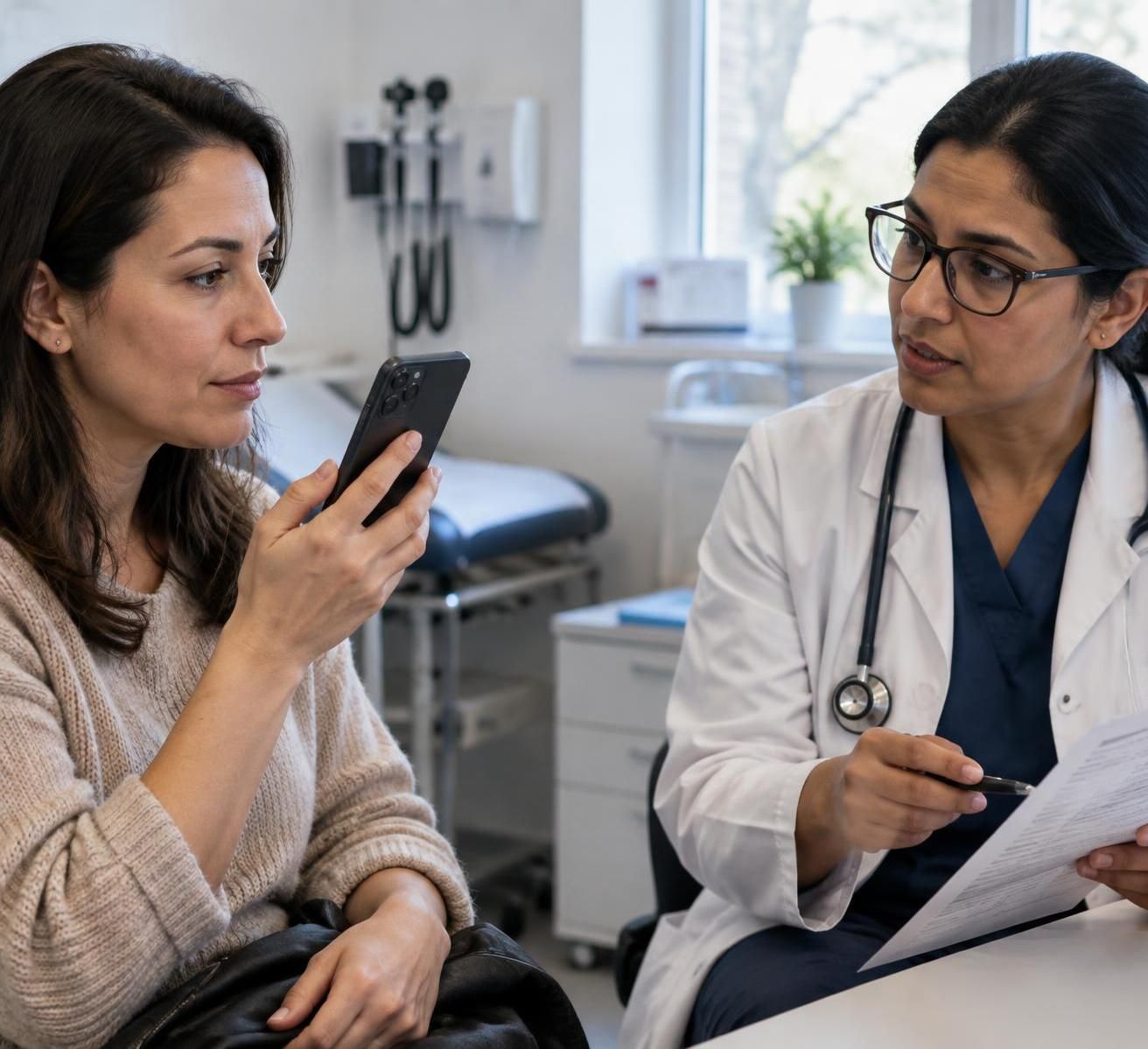
How Voice Biomarkers Could Reveal Patterns Associated With Type 2 Diabetes
Voice biomarkers are measurable features of speech that may correlate with a biological state or health condition. They are not words that reveal a diagnosis, and the system is not simply listening for someone to mention thirst, fatigue, or another symptom.
Instead, speech analysis can examine characteristics such as pitch, timing, intensity, and variations in how the voice is produced. A machine-learning model searches for combinations of these features that differ between the groups represented in its training data.
Human speech involves coordinated breathing, vocal-fold vibration, muscle control, and nervous-system activity. Changes affecting these processes can alter the acoustic signal, sometimes in ways too subtle or inconsistent for a listener to recognize reliably.
Speech analysis detects associations, not a glucose measurement
Researchers have proposed several possible connections between diabetes and vocal changes, including effects involving nerve function, muscle performance, and tissue characteristics. These explanations remain distinct from demonstrating exactly which mechanism produces a particular model’s prediction.
A system might detect a meaningful health-related pattern without isolating its biological cause. It could also learn signals associated with age, body size, medication use, or another condition that occurs more frequently among participants with the target disease.
That is why Artificial intelligence does not turn a microphone into a glucose sensor. The recording is an indirect source of evidence, while a blood test evaluates a clinically relevant biological measurement.
For Nadia, a long day delivering guided tours may leave her voice strained. If a model has not been evaluated under comparable conditions, it may be difficult to separate a health-associated signal from temporary vocal fatigue or changes in speaking technique.
Why consistent recording conditions strengthen the evidence
A standardized reading passage helps control differences in vocabulary and sentence structure. Asking everyone to read the same material makes it easier to compare acoustic patterns without the content of the conversation becoming the dominant variable.
Nevertheless, the recording chain introduces its own variation. A smartphone microphone, a headset, and a telephone connection can each alter the sound, while background noise and audio compression may obscure subtle features.
This creates a useful connection with professional audio practice. Clear capture, an appropriate microphone distance, and a quiet space matter in both digital guiding and clinical research, although the consequences of a poor recording are very different.
For a museum audio guide, distortion may reduce comfort and comprehension. In a screening pathway, the same distortion could affect a risk score, making recording-quality checks a clinical safeguard rather than merely a production preference.
Machine learning also needs testing across accents, languages, and speaking abilities. A reading task that works well for fluent English speakers may be less accessible to someone with limited literacy, a speech impairment, or difficulty understanding the instructions.
Imagine that Nadia records the passage beside a busy museum entrance, then repeats it in a quiet office. If the resulting scores differ substantially, the service needs a validated policy for rejecting unsuitable recordings or requesting another sample—not an assumption that either result is definitive.
Published descriptions of the earlier approach, including this explanation of short voice recordings and diabetes research, provide useful context. They do not establish that every microphone, speaking task, or consumer application can reproduce the reported performance.
A useful acoustic marker must remain informative when the speaker, device, and environment change within the conditions the service claims to support.
Understanding AI Voice Test Results Without Confusing Screening With Diagnosis
The most consequential question is not whether the algorithm produces a score. It is whether that score helps healthcare teams identify people who benefit from further testing, while keeping missed cases and unnecessary referrals within acceptable limits.
Several measurements describe different aspects of performance. Sensitivity concerns how many people with the condition are flagged; the false-positive rate concerns how many people without it are also flagged.
A discrimination measure, meanwhile, describes how effectively scores separate groups across possible thresholds. It does not automatically tell an individual the probability that they have the condition, nor does it establish how often a particular referral decision will be correct.
What the reported numbers mean in practice
| Reported finding | Practical interpretation | Important safeguard |
|---|---|---|
| 📊 Approximately 80% discrimination in the self-reported evaluation | Scores distinguished the reported groups better than chance. | Do not present this as an 80% chance of a correct personal diagnosis. |
| 🧪 Approximately 75% discrimination in the HbA1c subgroup | The model retained a signal against a blood-test reference. | Check the full methods, participant selection, and uncertainty around the estimate. |
| 🔎 82% sensitivity at the evaluated threshold | Most blood-test-defined cases were flagged. | Some affected participants were missed, so a low score cannot rule out disease. |
| ⚠️ 47% false-positive rate at that threshold | Nearly half of participants without the condition were flagged. | Positive screens require follow-up, not diagnostic labeling. |
The trade-off becomes clearer with a hypothetical example. Suppose a service screens 1,000 adults, and 100 actually have type 2 diabetes according to the reference test.
If the reported sensitivity and false-positive rate transferred unchanged to that population, around 82 affected people would be flagged and 18 would be missed. Among the remaining 900 adults, approximately 423 would also receive a positive screen.
That would produce roughly 505 positive results, of which 82 would represent people with the condition. In this illustration, only about 16% of positive screens would be true positives; this is a calculation based on an assumed prevalence, not an observed result from the study.
Why prevalence and referral capacity change the value of screening
Would the same tool be more useful in a higher-risk population? Potentially, because the proportion of positive results that represent genuine cases depends partly on how common the condition is among those tested.
However, selecting a higher-risk group can also change model performance. A service cannot assume that results from one research sample transfer unchanged to older adults, people with multiple chronic conditions, or a different community.
The research reported weaker performance among Black participants and among people with heart disease, high blood pressure, or obesity. Researchers suggested that limited representation and overlapping vocal changes could contribute, but those explanations require further investigation.
For Nadia, an alert should therefore mean “arrange the recommended assessment,” not “you have diabetes.” A reassuring result should also leave room for established risk factors, symptoms, and a clinician’s judgment.
The operational burden matters as much as the mathematics. If a practice receives hundreds of additional referrals without enough blood-test appointments, a convenient recording may create a bottleneck rather than improve timely access.
The right threshold is the one supported by evidence and a workable follow-up pathway—not simply the one that produces the most impressive headline.
Using Non-Invasive Screening to Connect More People With Blood Testing
Non-invasive screening can reduce the effort required to begin a health assessment. A short spoken task avoids needles at the first step, but a positive result still needs a clinically appropriate confirmation process.
The intended use is triage: identify people who may benefit from established testing and make that next step easier. It is not to prescribe medication, alter an existing treatment plan, or decide that someone no longer needs routine monitoring.
Researchers highlighted missed opportunities in existing pathways, citing estimates that around 30% of type 2 diabetes cases in the United Kingdom remain undiagnosed. They also pointed to attendance of roughly 40% among eligible adults invited to NHS Health Checks.
Those figures should be understood as contextual estimates, not universal rates for every local service. In England, the NHS Health Check generally targets eligible adults aged 40 to 74 at five-year intervals; eligibility and arrangements elsewhere differ.
A realistic patient journey from recording to clinical review
Nadia’s situation illustrates the potential benefit. She works weekends, changes venues frequently, and postpones appointments that require several separate calls, so a supported remote assessment could reduce one practical barrier.
A responsible pathway would explain the purpose before collecting any audio. It would tell her what the result can and cannot establish, how the recording will be handled, and whether participation is optional.
- 🎙️ Capture a suitable sample: provide a clear reading task, an accessible alternative where validated, and checks for excessive noise.
- 📋 Apply clinical context: consider relevant symptoms and established risk factors rather than relying on the acoustic score alone.
- 🧪 Arrange confirmation: connect flagged participants with an appropriate blood test and explain the next step plainly.
- 👩⚕️ Review the findings: ensure a qualified healthcare professional interprets results within the relevant clinical guidance.
- 🔁 Support follow-through: track whether appointments are completed and offer help with access barriers.
The final item is particularly important. A technically successful referral has little value if the person cannot book an appointment, reach the clinic, or understand the message explaining why testing matters.
Early diagnosis depends on what happens after the alert
Early diagnosis offers an opportunity to discuss treatment and reduce longer-term complications through appropriate care. A recording contributes to that goal only if it reaches people who would otherwise remain untested and successfully connects them with follow-up.
A well-designed service would measure completed blood tests, confirmed new cases, time to assessment, and differences in uptake between population groups. Download counts and the number of generated scores would be insufficient indicators of clinical benefit.
Accessibility also requires alternatives. People who cannot read the passage, lack a compatible device, have difficulty speaking, or prefer not to share a recording should retain a straightforward route to conventional assessment.
Clear messaging prevents the process from becoming intimidating. “Your result suggests that a blood test would be useful” is more proportionate than presenting a warning screen that appears to announce a confirmed disease.
People with concerning symptoms should seek medical assessment regardless of any automated result. A low-risk score must not delay care for persistent thirst, frequent urination, unexplained weight loss, or other symptoms that warrant attention.
The benefit comes from fewer barriers to appropriate care, not from replacing one appointment with an isolated digital score.
Making Voice-Based Health Technology Safe, Private, and Fair
Health technology built around speech collects more than a set of acoustic measurements. A recording can contain an identifiable voice, spoken content, background conversations, and clues about the environment in which it was made.
That makes consent and data handling central to the service design. People should understand whether the original recording is retained, whether derived features are stored, who receives the result, and whether their data may be used to train future models.
Consent to complete a screening task should not be treated as automatic permission for unrelated research or commercial reuse. Where additional use is proposed, the explanation should be specific, understandable, and separate from the immediate care pathway.
Separate clinical screening from everyday audio services
For tourism and cultural organizations, the boundary is especially important. A guided-tour application captures or delivers audio for interpretation and communication, which does not make it an appropriate channel for inferring a visitor’s health status.
An organization using an audio-guide service such as Grupem should not repurpose recordings for medical analysis simply because the technical input is speech. Clinical screening requires a different purpose, governance framework, evidence base, and consent process.
Return to Nadia’s museum. Her employer might reasonably offer information about voluntary health checks, but it should not analyze her tour narration to estimate diabetes risk or use a score in staffing, insurance, or employment decisions.
The same principle applies to visitors. A museum ticket, tour booking, or recorded accessibility request is not an invitation to assess someone’s metabolic health; useful innovation respects the purpose for which the data was provided.
What healthcare buyers should request before adopting an AI-powered voice test
Healthcare organizations need more than a polished demonstration. They should request independent validation, a clearly defined intended use, appropriate regulatory assessment, and evidence that the model works with the devices and populations they plan to serve.
Published performance should include subgroup results and uncertainty estimates, not only an overall score. Lower performance in an underrepresented group is a reason to improve evaluation and safeguards, rather than an acceptable detail to hide in supporting material.
The vendor should also document what happens when a sample is unsuitable. Silence, heavy noise, a failed upload, or speech outside the supported language range should produce an explicit quality outcome, not a seemingly precise health assessment.
Operational testing needs to include ordinary failures. For example, a weak mobile connection should not create duplicate referrals, and a person who stops halfway through the reading task should receive clear instructions rather than an unexplained risk label.
A useful pilot would compare the assisted pathway with existing care. It would examine additional confirmed cases, unnecessary testing, participant anxiety, staff workload, and whether uptake improves among people who previously missed screening opportunities.
Readers exploring the scientific background can consult Klick’s description of its voice-to-diabetes research. As research-provider material, it is best considered alongside the published study methods and independent clinical assessment.
Security measures should match the sensitivity of the information. Controlled access, appropriate encryption, documented retention periods, and procedures for deletion reduce exposure, while transparent communication helps people make an informed choice about participation.
Model updates require oversight too. A revised version may alter referral rates or performance across groups, so deployment should include version tracking, ongoing monitoring, and a route for clinicians and participants to report problems.
A convenient interface is valuable only when the evidence, privacy protections, and follow-up service are equally dependable.
Can an AI-powered voice test diagnose type 2 diabetes?
No. The research supports investigation as a screening or triage tool. A positive result indicates that conventional testing may be appropriate; diagnosis requires clinical assessment and validated tests such as HbA1c or plasma glucose measurements.
How long does the voice recording take?
The larger study described an approximately 20-second reading task. Earlier Klick Labs research used recordings lasting about six to ten seconds. These are different study protocols, not interchangeable instructions for a proven consumer test.
Does a low-risk voice result mean that diabetes is ruled out?
No. The HbA1c subgroup evaluation reported 82% sensitivity at the assessed threshold, meaning some affected participants were missed. Symptoms, established risk factors, and recommended clinical testing remain relevant regardless of an automated score.
Why can a voice screening tool produce false positives?
Acoustic patterns can overlap with other health conditions, and recording conditions may affect the signal. The evaluated HbA1c subgroup had a 47% false-positive rate at the reported threshold, so positive screens must lead to confirmation rather than diagnostic labeling.
Can any smartphone app safely offer this screening?
A smartphone can capture speech, but that alone does not establish clinical reliability. A service needs a validated model, a defined intended use, appropriate regulatory assessment, privacy safeguards, accessible instructions, and a reliable pathway to confirmatory testing.
