
Cleveland Museum of Art MIX Series Brings Island Vibes to Cleveland
🎵 The essential detail: the Cleveland Museum of Art will host MIX: Island Vibes on September 4, 2026, turning its monthly adults-only evening into a focused celebration of Reggae, Jamaican sound-system traditions, gallery exploration, and social connection. The program places local musician Carlos Jones at the center of a night designed to move between live sound, DJ culture, food, drinks, and art.
Rather than presenting music as an isolated concert, the MIX Series uses the museum setting to create a broader cultural experience. Guests can listen to a Live Performance, visit collection galleries, meet friends, and discover how rhythm, visual art, and place can reinforce one another. This approach is especially relevant for cultural institutions seeking to attract audiences who may not normally plan a traditional museum visit.
The Island Vibes edition is built around more than five decades of reggae and related Jamaican styles. Its programming acknowledges the international influence of landmark recordings released in 1976, including Bob Marley and the Wailers’ Rastaman Vibration and Bunny Wailer’s Blackheart Man. These records helped amplify roots reggae far beyond Jamaica while maintaining a message shaped by social consciousness, spirituality, identity, and community.
For visitors, this context makes the evening more meaningful than a themed party. Reggae is not simply a relaxed soundtrack associated with summer. It is a musical language formed through bass-heavy arrangements, offbeat guitar patterns, vocal harmonies, dub experimentation, and lyrical storytelling. The genre also carries a long history of migration, resistance, and cultural exchange. A museum program that frames those elements carefully can make Caribbean Culture more accessible without reducing it to decoration.
Attendance information, schedules, and event details should be checked through the museum’s official MIX: Island Vibes event page. This is particularly useful for visitors coordinating transport, accessibility needs, ticketing, or group arrangements. Cultural venues increasingly need to make practical information easy to find, since an enjoyable experience starts well before a guest enters the building.
For tourism professionals and event organizers, the format provides a useful model. A recognizable museum can host a contemporary Music Festival atmosphere without abandoning its educational role. The key is to connect the entertainment to a credible cultural narrative, give audiences clear choices, and avoid overwhelming the visitor journey with unnecessary complexity.
- 🎶 Live music: a duo performance featuring Carlos Jones opens the evening.
- 🎧 DJ programming: DJ Maxafari moves through reggae, dancehall, dub, ska, and adjacent sounds.
- 🖼️ Gallery access: guests can combine the social event with time in the Cleveland Museum of Art collections.
- 🍹 Themed refreshments: food, cocktails, beer, and wine are available for purchase.
- 🤝 Shared discovery: the setting supports both local audiences and visitors looking for a distinctive Cleveland night out.
Consider a fictional visitor named Maya, arriving after work with two colleagues. One comes primarily for Carlos Jones, another wants to see the museum galleries, and the third is curious about Jamaican music but has little previous knowledge of the genre. The MIX format accommodates all three without forcing them into the same path. They can meet at the performance, pause for refreshments, explore art, and reconvene for the DJ set.
That flexibility is central to modern cultural programming. A successful event does not assume every guest has identical expectations. It builds multiple points of entry while keeping the experience coherent. Island Vibes works because the music, museum environment, and social format all support one clear Cultural Celebration.
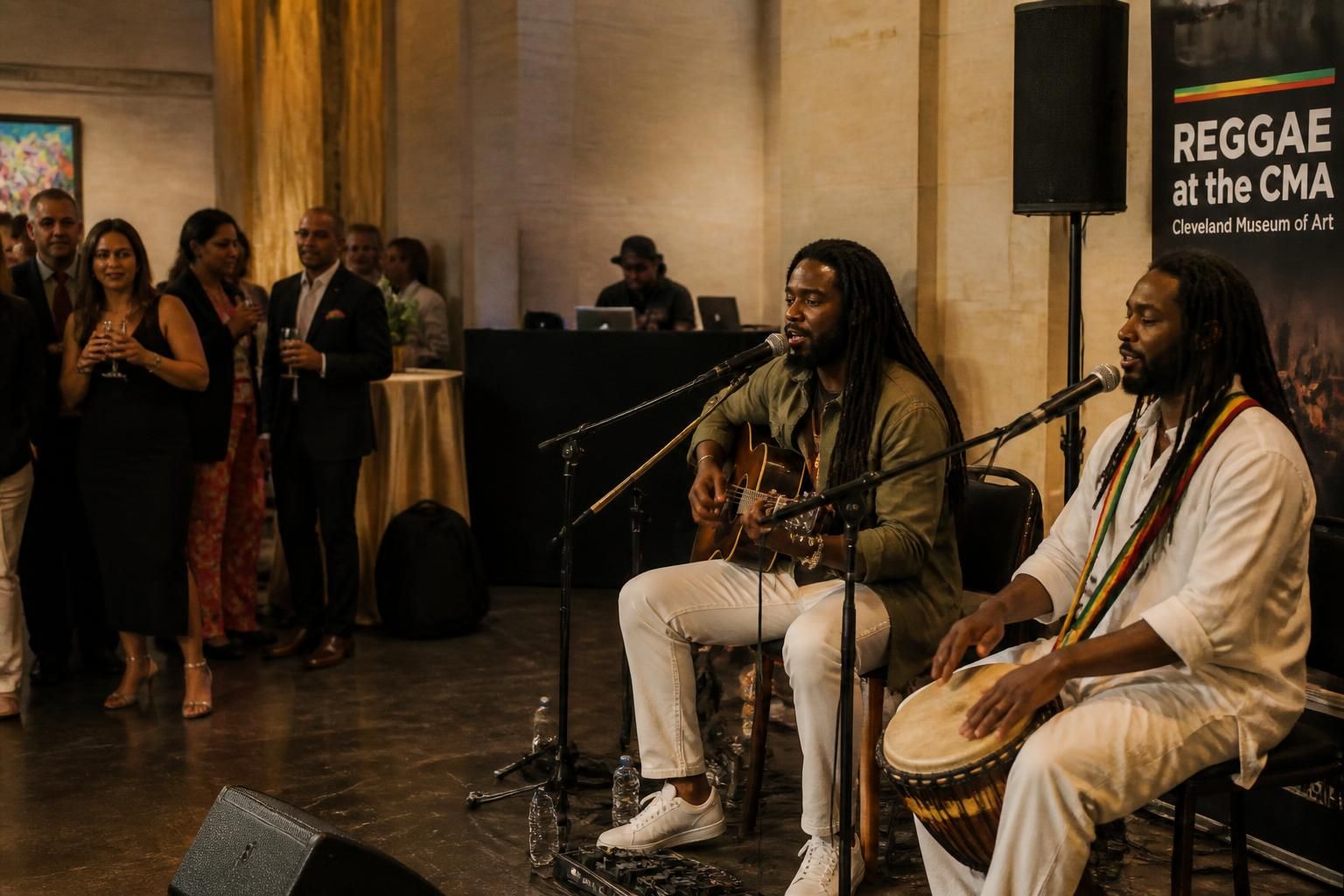
Carlos Jones Gives the MIX Series a Distinct Cleveland Reggae Voice
Carlos Jones brings a locally rooted perspective to Island Vibes. Often associated with Carlos Jones and The PLUS Band, he has long been recognized in the Cleveland area for bringing reggae-based performance into community venues, festivals, and cultural gatherings. His participation gives the event an important sense of place: this is not a generic island-themed evening imported into a museum calendar, but a program anchored by a musician connected to the city’s own live-music ecosystem.
The opening duo set, scheduled for the early part of the evening, creates a different relationship with the audience than a large-stage festival performance. A duo arrangement can reveal the structure of a song: the pulse of the rhythm, the conversation between guitar and voice, and the space around the lyrics. In a museum context, that clarity matters. Visitors who are new to reggae can hear details that might be masked in a louder, more crowded environment.
🎤 A Live Performance is most effective when it offers both energy and proximity. Carlos Jones’s role serves this balance. Guests have an artist who can establish a warm, participatory atmosphere, while the scale of the performance leaves room for listening, conversation, and movement through the venue. For a cultural institution, this is a practical way to make an evening feel alive without sacrificing the usability of public spaces.
His appearance also demonstrates why local artists should not be treated as secondary to a theme. When a museum invites a regional performer with genuine credibility, it creates a reciprocal benefit. The artist gains access to new audiences, while the institution gains knowledge of local cultural networks and audience preferences. Visitors may discover an artist they want to follow after the event through the Carlos Jones & The PLUS Band page, extending engagement beyond one evening.
Reggae’s global history makes that local connection particularly valuable. The music grew from Jamaican traditions, yet its influence has expanded through diaspora communities, independent venues, radio, record shops, festivals, and collaborative artists around the world. Cleveland’s music scene is part of that larger circulation. A performance by Carlos Jones makes that relationship audible: Caribbean-rooted styles can be honored while also reflecting the city in which they are being played.
For organizers, artist briefing is essential. The performer, DJ, hospitality team, floor staff, and visitor-services team should share a basic understanding of the evening’s rhythm. Guests need to know when live music starts, where they can move between spaces, what food and beverage options are available, and how to find accessible routes. These small operational decisions determine whether a creative concept feels seamless or fragmented.
Audio delivery deserves equal attention. Museum architecture often includes stone, glass, high ceilings, and open circulation areas that can create reflections and competing noise. A compact duo set benefits from careful speaker placement, moderated volume, and clear sightlines. Event teams can use smartphone-based audio coordination tools to communicate internally, confirm timing, and quickly relay updates without relying on disruptive radio traffic in guest-facing spaces.
A useful operational checklist is straightforward: test the microphone before doors open, identify a quiet backup area for guest assistance, verify performance transitions, and make event updates visible on the museum’s digital channels. These measures do not make the evening less spontaneous. They protect the conditions that allow spontaneity to feel effortless.
Carlos Jones is not only a performer on the schedule; he is the human link between the Cleveland Museum of Art, the city’s reggae community, and visitors seeking a credible Art and Music experience.
Island Vibes Connects Reggae History, Caribbean Culture, and Museum Interpretation
Island Vibes draws attention to a pivotal era in reggae’s international recognition. In 1976, roots reggae became more visible to global audiences through recordings that combined memorable melodies with political, spiritual, and social themes. Bob Marley and the Wailers’ Rastaman Vibration and Bunny Wailer’s Blackheart Man remain meaningful reference points because they illustrate the creative breadth of the period rather than a single commercial sound.
Understanding this history helps visitors engage with the event respectfully. Caribbean Culture cannot be reduced to beach imagery, tropical cocktails, or a generic “vacation” mood. It includes distinct national histories, languages, spiritual practices, foodways, artistic traditions, and musical innovations. Jamaica’s contribution to global music is particularly far-reaching, from ska and rocksteady to reggae, dub, dancehall, and the remix practices that influenced electronic music and hip-hop production.
DJ Maxafari’s role makes that range easier to hear. A set that includes reggae, dancehall, dub, and ska can show how styles relate while preserving their differences. Ska’s faster rhythms and horn-led arrangements emerged before reggae’s more spacious groove. Dub transformed recorded tracks through studio manipulation, using echo, reverb, bass, and fragmented vocals as compositional tools. Dancehall developed later with new rhythms, vocal approaches, and digital production methods.
For visitors unfamiliar with the terminology, the most useful approach is not a technical lecture. It is a guided listening experience. When a DJ moves from a classic roots selection into a dub version, attendees can notice the bass becoming more prominent or the instrumental space widening. When the set shifts toward dancehall, they can hear how rhythm and vocal delivery evolve. The learning happens through the body as well as through information.
| 🎵 Style | 🔎 Listening cue | 🏛️ Value within Island Vibes |
|---|---|---|
| Ska | Fast tempo, horn lines, upbeat offbeat rhythm | 🎺 Places reggae within its earlier Jamaican musical lineage |
| Roots Reggae | Deep bass, steady groove, reflective lyrics | 🌍 Connects the event to the 1976 historical focus |
| Dub | Echo, reverb, instrumental space, studio effects | 🎛️ Highlights Jamaica’s influence on recording technology |
| Dancehall | Digital rhythms, energetic vocals, modern club momentum | 🔥 Brings the musical story forward for contemporary audiences |
The museum environment adds another layer. Visitors can move from sound to objects, architecture, and visual storytelling. That physical movement changes the way an evening is experienced. Rather than standing in one venue for several hours, guests can alternate between concentration and conversation. This rhythm is valuable for people who find conventional concerts too intense, as well as for guests who want a more social cultural outing.
Accessibility should be considered part of interpretation, not an afterthought. Clear event schedules, readable signage, seating opportunities, informed staff, and practical wayfinding help a wider audience take part. Digital tools can support this work when they provide concise information instead of creating another barrier. A QR code, for example, is useful only if it leads to a mobile page that is quick to load, simple to navigate, and available in readable formats.
Music programming is also an opportunity for museums to build stronger local partnerships. A venue could work with community radio presenters, Caribbean cultural associations, music educators, and neighborhood businesses to expand the conversation around an event. The goal is not to overprogram one night, but to ensure that the Cultural Celebration has relationships behind it.
🎧 The strongest interpretation at Island Vibes will come from listening closely: to the history in the records, the skill of the performers, and the connections between Jamaican innovation and global musical culture.
How the Cleveland Museum of Art Turns Art and Music into a Social Visitor Experience
The Cleveland Museum of Art’s MIX Series offers a useful example of how established cultural institutions can widen participation without diluting their identity. Evening events can reduce a common barrier: some potential visitors see museums as formal spaces with strict behavioral expectations. By adding music, food, conversation, and later hours, the venue signals that curiosity does not require specialist knowledge.
This matters for destination management as well as local cultural life. A traveler planning a weekend in Cleveland may look for an event that combines a recognizable attraction with a specific local experience. Island Vibes offers both. The museum is a major cultural landmark, while Carlos Jones and the regional reggae audience give the night a local character that cannot be replicated by a standard sightseeing itinerary.
🖼️ Art and Music work best together when neither becomes background decoration for the other. The museum does not need to force every gallery object into a reggae narrative. Instead, it can allow visitors to create their own pathways. Someone may spend 20 minutes viewing works in the collection before returning to the DJ set. Another guest may arrive for the performance, then discover a gallery they had never considered visiting.
That visitor-led movement is a strong UX principle. Give people a clear framework, then let them choose how deeply to engage. In practical terms, event pages should state the performance times, refreshment availability, gallery access, age policy, and entry process. On site, staff should be able to answer simple questions quickly rather than redirecting guests through multiple desks.
There is also a valuable lesson for smaller museums and heritage sites. They do not need a large budget or a famous headline artist to adopt the MIX logic. A local jazz trio, a spoken-word evening, a regional food collaboration, or a listening session tied to an exhibition can create a similar bridge. The priority is alignment: the program must feel connected to the institution’s audience and place.
Imagine a municipal gallery in a smaller Ohio town adapting the model. Instead of attempting to reproduce a full Music Festival, it could invite a local selector, schedule two short performances, and open one exhibition space after normal hours. It could offer a simple mobile page with timetable, parking instructions, and accessibility information. The result would be manageable, welcoming, and easier to evaluate.
Evaluation should go beyond attendance totals. Event teams can track arrival patterns, most-visited spaces, bar and food demand, questions received by staff, and visitor feedback about sound levels or wayfinding. If the institution uses a voluntary post-event survey, it can ask whether guests visited the museum before, how they learned about the program, and which element encouraged them to attend.
Smart tourism tools can make this process more effective. A mobile audio solution such as Grupem can help guides and cultural mediators provide clear commentary to groups using participants’ own smartphones. For museum-adjacent tours or partner activities, this reduces the need for complex hardware distribution while supporting better listening conditions. It is particularly useful when groups move through busy public settings and need clear, controlled communication.
For guests who want to explore more cultural programming after Island Vibes, the museum’s complete calendar of upcoming events provides a direct route to exhibitions, workshops, talks, and performances. This continuity is important: a single successful evening should become an invitation to return, not a disconnected one-off experience.
The MIX Series demonstrates that a museum can remain rigorous and welcoming at the same time, provided every part of the visitor journey is designed with purpose.
Practical Planning for MIX: Island Vibes and Future Cultural Events
Visitors planning to attend MIX: Island Vibes should treat the evening as a flexible cultural outing rather than a conventional seated concert. The event is scheduled for September 4, 2026, and the program includes a Carlos Jones duo set, DJ Maxafari, themed food and drinks for purchase, and access to museum galleries. Reviewing the official listing before departure remains the most reliable way to confirm admission details, timing, and any venue updates.
Arriving with a simple plan improves the experience. Guests may want to identify a meeting point before entering, especially if friends arrive at different times. They can also decide whether the priority is the live set, a gallery visit, the DJ portion, or a balance of all three. This avoids the common mistake of trying to do everything at once and missing the moment they came for.
For group organizers, clarity is even more important. A local hotel concierge, conference planner, or tourism office recommending the evening should share only verified practical information. It is better to provide an official link and a short explanation of the format than to circulate assumptions about schedules or entry. The event can also be positioned as an appropriate option for adults who want an evening experience that combines culture and entertainment.
Visitors with access needs should check the museum’s current guidance before arrival and contact the venue directly when specific assistance is required. Accessibility planning may include routes from parking or public transport, seating availability, restroom locations, quiet areas, and the expected sound environment. A well-designed cultural event recognizes that accessibility is not a niche request; it improves confidence and comfort for a broad range of guests.
Event producers can draw several actionable lessons from this edition of the MIX Series. First, give the evening a clear theme rooted in a real cultural story. Second, work with artists whose connection to the subject and place is credible. Third, provide an uncomplicated information journey, from discovery through arrival and post-event follow-up. Finally, use technology where it reduces friction, not simply because it appears innovative.
- 📅 Check official details: confirm event timing, admission conditions, and venue guidance before making travel plans.
- 🎶 Arrive for the musical moment you value most: the Carlos Jones performance and DJ program serve different listening preferences.
- 🖼️ Leave time for the galleries: this is the advantage that separates MIX from a standard club night.
- 📱 Use mobile information responsibly: save the official event page, but keep screen use brief once the experience begins.
- 🤝 Support local cultural networks: follow performers and explore other regional reggae listings after the event.
Those seeking additional context on Cleveland’s entertainment landscape can review Cleveland entertainment coverage. For professionals programming related events, the museum’s special events calendar is also useful for observing how a major institution presents varied public experiences across the year.
The lasting value of Island Vibes is its practical balance. It honors a significant musical legacy while giving audiences concrete ways to participate: listen, dance, eat, explore, and return. 🌴 A memorable Cultural Celebration begins with a credible story and succeeds when every visitor can find a comfortable way into it.
When is MIX: Island Vibes at the Cleveland Museum of Art?
MIX: Island Vibes is scheduled for September 4, 2026. Visitors should consult the official Cleveland Museum of Art event page for current timing, admission information, and any updates.
Who will perform at the Island Vibes event?
The program begins with a duo set featuring Cleveland reggae artist Carlos Jones. DJ Maxafari will also play reggae, dancehall, dub, ska, and related Jamaican music styles.
Is MIX: Island Vibes only a concert?
No. The evening combines live music, DJ programming, themed food and drinks available for purchase, and access to Cleveland Museum of Art galleries. It is designed as a wider art, music, and social experience.
Why does the event reference reggae music from 1976?
The program recognizes 50 years since influential reggae releases from 1976 helped bring Jamaican roots music to wider international audiences, including Bob Marley and the Wailers’ Rastaman Vibration and Bunny Wailer’s Blackheart Man.
