
San Antonio African American Museum Takes Shape at a Historic Downtown Site
The future San Antonio African American Museum is moving from ambition to a visible downtown reality. Led by the San Antonio African American Community Archive and Museum, widely known as SAAACAM, the project will transform the historic Kress-Grant complex at 311 East Houston Street into a major destination for learning, gathering, research, and cultural exchange.
The location matters as much as the future programming. Houston Street sits at the center of downtown San Antonio’s visitor routes, close to hotels, theaters, restaurants, and civic landmarks. Positioning the museum in this area makes African American History part of the everyday urban experience rather than a story visitors need to search for beyond the city center.
Organizers have presented the project as a significant Museum Development initiative, with an opening planned for 2028. Current plans describe a cultural center of roughly 103,000 square feet, making it one of the largest institutions of its kind in the United States. It is expected to become the nation’s third-largest African American museum, a scale that reflects both the importance of the collection and the breadth of the stories it intends to present.
The building itself carries powerful historical context. The Kress-Grant property operated in a period when public life, shopping, employment, and leisure were shaped by segregation. Reclaiming this Historic Site as a place devoted to Black memory, achievement, and public dialogue gives the redevelopment a meaning that goes beyond renovation. The project does not erase a difficult past; it creates the conditions to interpret it honestly and use it as a foundation for wider understanding.
San Antonio’s African American presence reaches back far earlier than many standard accounts of Texas history suggest. Africans and people of African descent were present during the Spanish colonial period, serving in roles including scouts, translators, guides, soldiers, laborers, and community builders. Their descendants helped shape neighborhoods, faith communities, businesses, military service, education, music, and civic life across the region.
That long timeline is central to the museum’s value. It will allow visitors to encounter African American History as a continuous local story rather than a limited chapter attached only to the twentieth-century civil-rights era. A student visiting from a nearby school, for example, could connect Spanish colonial history to Reconstruction, San Antonio’s Black schools and churches, military service at Fort Sam Houston, and current community leadership within one visit.
Recent public access opportunities have helped residents visualize the scale of the project. A recent sneak peek inside the downtown museum site gave community members a direct view of the building as work and planning continue. These moments are important because cultural institutions become stronger when residents can see that a future museum is not an abstract promise but an evolving shared asset.
For downtown tourism professionals, the museum also expands the kind of itinerary San Antonio can offer. The River Walk, missions, markets, and historic plazas remain essential experiences, yet a complete visitor journey needs multiple perspectives. A museum centered on Community Heritage can help guests understand that the city’s identity was created by overlapping communities whose contributions deserve equal visibility.
🧭 The project’s practical importance can be understood through several connected outcomes:
- 🏛️ It gives San Antonio a permanent home for African American collections, archives, and public interpretation.
- 📚 It creates an educational destination for schools, researchers, residents, and travelers.
- 🎤 It adds flexible venues for performances, lectures, civic meetings, and local celebrations.
- 📍 It strengthens downtown foot traffic while diversifying the stories told along major visitor corridors.
- 🤝 It offers a platform where community-held memories can enter the public record with care and context.
The institution’s mission is not limited to displaying objects behind glass. SAAACAM has built its work around collecting, preserving, and sharing the stories of African Americans in San Antonio and the surrounding area. Visitors can follow the organization’s wider work through the SAAACAM’s official museum and archive resources, which document an ongoing grassroots approach to Cultural Preservation.
As construction and fundraising advance, the most important point remains clear: the new center is designed to make local history accessible, visible, and usable. A Cultural Landmark becomes meaningful when its community recognizes its own experiences within its walls.
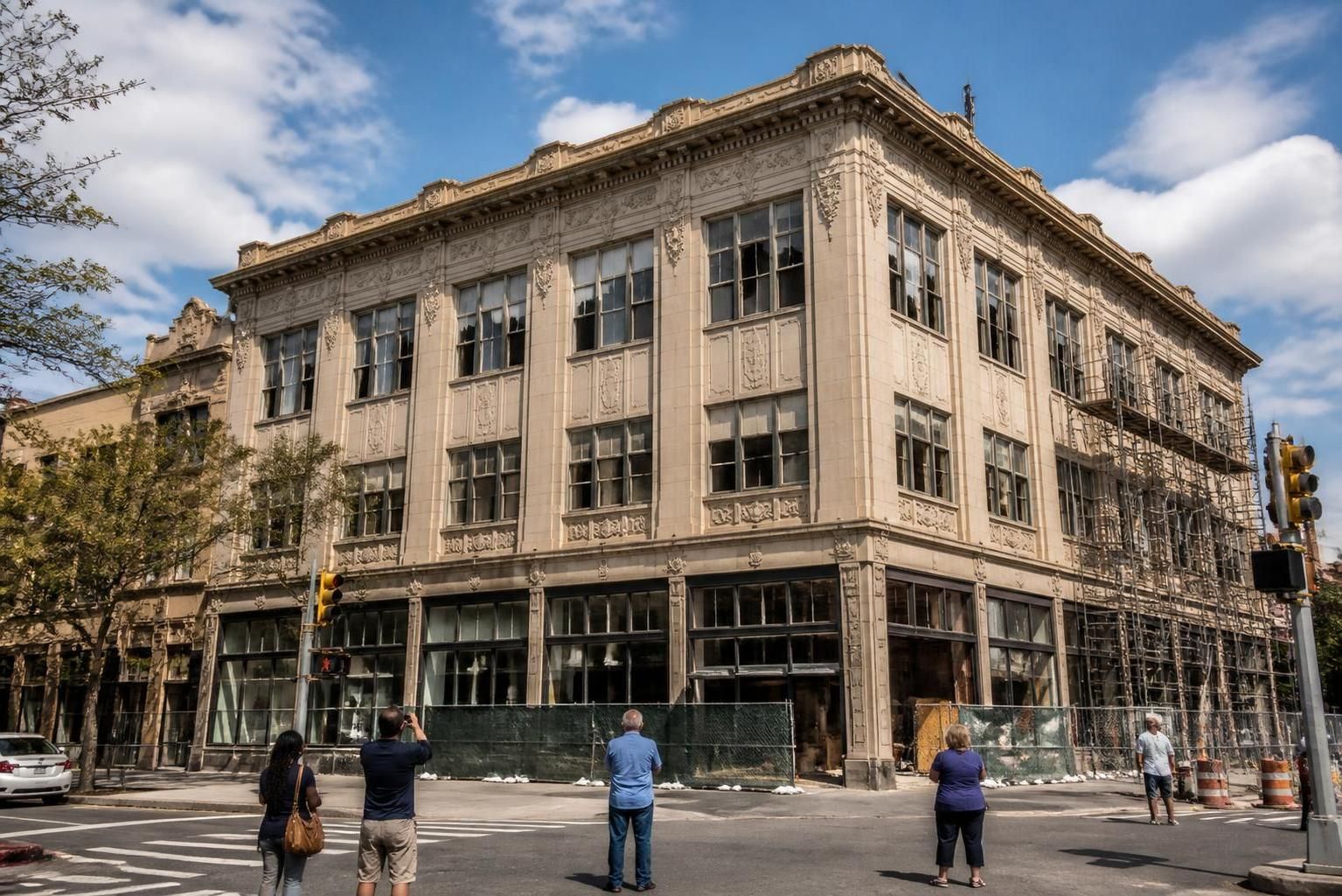
Museum Architecture Can Turn the Kress-Grant Building into a Cultural Landmark
Every major museum project faces a design question: should the building simply hold exhibitions, or should it help visitors understand why the institution exists? In San Antonio, the planned conversion of the Kress-Grant buildings aims to do both. The future African American Museum will occupy a recognizable downtown structure while giving it a new public role rooted in heritage, learning, and community use.
This is why Museum Architecture deserves attention before the galleries open. Historic buildings have constraints: floor layouts, structural systems, street entrances, loading access, lighting conditions, and preservation requirements. Yet those constraints can become strengths when designers use them to create a visitor experience that feels grounded in place rather than interchangeable with any museum in any city.
The planned 103,000-square-foot facility is expected to include a public research library, multi-purpose classrooms, a 400-seat auditorium, exhibition areas, and event spaces. This combination signals that the building will function throughout the day and into the evening. A visitor might arrive in the morning for an archive appointment, while a school group uses classrooms nearby and an evening audience gathers for a concert, film screening, or public conversation.
Such mixed use matters operationally. Museums that only rely on exhibition attendance can struggle to maintain activity outside peak tourist periods. A building designed for education, research, and events can support more frequent community contact. It also creates opportunities for local partnerships with schools, universities, arts organizations, neighborhood associations, and small businesses.
The following table shows how the announced spaces can support different public needs:
| Planned space | Primary public use | Visitor benefit |
|---|---|---|
| 📚 Public research library | Archives, family history, scholarly work, local documentation | Access to verified records and community narratives |
| 🎓 Multi-use classrooms | School programs, workshops, training sessions | Active Heritage Education beyond gallery labels |
| 🎤 400-seat auditorium | Performances, lectures, films, public forums | A venue for shared cultural experiences |
| 🖼️ Exhibition galleries | Permanent and changing displays | Clear, contextual storytelling for diverse audiences |
| 🤝 Event spaces | Community celebrations, meetings, receptions | A flexible civic gathering place downtown |
For an institution of this scale, wayfinding will be especially important. Guests should understand where to begin, how long a visit may take, where to find a quieter research space, and how to access programs without navigating unnecessary barriers. Clear signs, accessible elevators, seating, rest areas, and intuitive routes are not minor details. They determine whether the building feels open to families, older visitors, school groups, and people visiting independently.
Digital visitor tools should complement that physical design. A smartphone-based audio guide can offer multiple routes through the museum: a 30-minute highlights path for downtown travelers, a deeper architecture-focused route, or a family-friendly exploration built around objects and oral histories. This approach lets visitors choose their pace without creating congestion around a single guided-tour group.
Audio also offers practical accessibility benefits. Recorded narration can provide context for visitors who prefer listening to long panels, while transcripts and captions support different access needs. The goal is not to replace human educators. It is to ensure that the museum’s interpretation remains available when a gallery is busy, when a visitor arrives independently, or when a school group needs a tailored route.
A useful example is the hypothetical experience of a family arriving after lunch from the River Walk. The adults may want historical depth, while children respond better to a short story, a sound clip, or a question linked to an object. A well-designed mobile guide could direct them through a 45-minute route, prompt them to look for architectural details that reveal the former department store’s history, and connect that space to the museum’s new civic purpose.
San Antonio’s future institution can also learn from wider museum conversations around representation, collecting, and public access. Readers interested in how national museums are refreshing their programming can explore new Smithsonian exhibitions planned for 2026. The lesson is practical: ambitious content needs equally thoughtful interpretation, whether it is delivered in a flagship gallery, a classroom, or an audio experience.
🏗️ Effective cultural design should prioritize the following principles:
- 🧩 Preserve the legible character of the Historic Site while making new functions easy to use.
- ♿ Build accessibility into routes, content, seating, and digital interpretation from the start.
- 📱 Offer visitor information in formats that work before, during, and after arrival.
- 🗣️ Make room for community voices, not only institutional narration.
- 🌆 Connect indoor experiences with the wider downtown streetscape and nearby cultural venues.
The transformation of the Kress-Grant complex is therefore not simply an expansion of square footage. It is an opportunity to make historic architecture serve a fuller, more inclusive account of San Antonio.
Preserving African American History Through Archives, Research, and Community Heritage
A museum collection is often judged by its most visible artifacts, but its long-term value depends just as much on the records held behind the scenes. The planned San Antonio African American Museum is expected to provide a public research library, giving local residents, students, historians, genealogists, and educators a place to engage directly with source material.
This resource is essential because African American History has frequently been scattered across family homes, church basements, school yearbooks, local newspapers, oral histories, personal photo albums, military records, and documents held by institutions that did not always describe Black life accurately. Gathering these materials requires patient relationship-building. It also requires ethical archival practices that recognize the people represented in the records are not abstract subjects, but families with living connections to the city.
Cultural Preservation begins with trust. A resident may have a box of photographs showing a grandparent’s business, a graduation portrait, a church anniversary program, or a letter written during military service. Those items can add depth to the public record, yet families need to understand how materials will be handled, digitized, credited, protected, and potentially displayed before sharing them.
A well-run archive gives contributors choices. Some may donate original materials. Others may prefer lending items for scanning, preserving ownership while making a digital copy available for research. Oral-history sessions can also preserve stories that have no written documentation, including accounts of neighborhood life, local music venues, school experiences, voting rights, entrepreneurship, and community activism.
Consider a practical scenario. A San Antonio resident brings a 1950s photograph of a family-owned barbershop to an archive day. Archivists record the names of people in the image, the approximate date, the street location, and the story of how the business supported local families. Once digitized and cataloged, the photo can become part of a searchable resource, a classroom activity, a future exhibition, or an audio stop that links a historic business to the present-day neighborhood.
This process changes how heritage is understood. Instead of relying only on official records, the museum can present a layered history built from objects, memories, public documents, and community knowledge. That approach is particularly important in a city whose Black past includes early Spanish colonial presence, military history, religious institutions, political organizing, artistic production, and generations of families who shaped San Antonio’s social and economic life.
Research access also has a direct educational purpose. A high-school teacher may use digitized primary sources to help students compare newspaper coverage with oral testimony. A university student may investigate the role of Black civic organizations in urban development. A visitor researching family history may find a starting point for conversations with relatives. These are different uses, but all show why archives should be designed as active public infrastructure rather than storage rooms.
For museum teams, clear metadata is just as important as digitization. Every scanned item should be connected to reliable details: creator when known, date range, place, subject, description, rights information, and any cultural guidance provided by the donor community. Without these elements, a digital archive becomes difficult to search and easy to misinterpret.
Smart audio technology can extend that archival work into the visitor experience. Imagine a gallery display featuring a historic photograph and a short listening option. Instead of a generic narration, visitors could hear a carefully edited excerpt from an oral history, paired with a transcript and context explaining when the recording was made. This adds emotional clarity while respecting the source and avoiding the temptation to oversimplify.
🎧 Practical digital interpretation can support archival material in several ways:
- 🔊 Short audio clips can bring oral-history excerpts into galleries without overwhelming visitors.
- 📝 Transcripts and translations can make spoken records easier to access and study.
- 🗺️ Location-based content can connect archival stories to streets, schools, churches, and businesses across San Antonio.
- 🔎 QR-linked object records can offer deeper documentation for visitors who want to continue researching.
- 👨👩👧 Family-friendly listening tracks can explain complex history in age-appropriate language.
These tools must remain secondary to curatorial integrity. Not every object needs a screen, and not every story needs a dramatic soundtrack. The best digital layer gives visitors choice: more context when needed, silence when reflection matters, and accessible formats when reading a long wall text is not practical.
The museum’s archive-centered mission also aligns with broader public interest in preserving African American objects and records. For further context on the importance of documented material, readers can review this overview of African American artifacts in museum collections. The core lesson applies locally: collecting is only the beginning; accurate description, respectful access, and community accountability make records useful over time.
A living archive does not merely hold the past. It gives residents the tools to recognize, question, and carry their Community Heritage forward.
Heritage Education and Public Programming Can Keep the New Museum Active Year-Round
The planned museum will be measured not only by opening-day attendance, but by how consistently it serves San Antonio after the initial excitement. The inclusion of classrooms, a research library, event areas, and a 400-seat auditorium creates the conditions for year-round programming. That is a strong foundation for Heritage Education because learning can happen through exhibits, performances, workshops, archives, and conversations rather than through a single format.
For schools, the institution can offer structured visits tied to Texas history, social studies, visual arts, literature, music, and civics. A practical program does not need to be complicated. Teachers need clear booking information, age-appropriate learning objectives, bus access guidance, estimated visit times, and materials they can use before and after the trip.
A fourth-grade class, for example, might explore how individuals and communities contribute to a city’s development. Students could examine copies of historical photographs, listen to an age-appropriate oral-history excerpt, identify details in a building map, and discuss how museums decide which stories to preserve. A high-school group could take a more analytical route focused on segregation, civic participation, local institutions, and the use of primary sources.
Public programming should also make room for adults who may not normally visit museums. An evening film series, genealogy workshop, neighborhood-history talk, local artist conversation, or small-business heritage event can make the building relevant to different audiences. The auditorium has particular potential because it can bring together a substantial audience without separating performance from historical context.
Programming becomes more effective when it is planned around recurring needs rather than isolated dates. Black History Month is an important period for visibility, yet African American History should be present throughout the calendar. A museum that only becomes active in February risks treating heritage as seasonal. A stronger approach builds monthly themes and reliable community partnerships across the year.
Potential programming strands could include arts and music in spring, family archive workshops in summer, neighborhood history walks in autumn, and civic dialogue or educational forums in winter. This model gives visitors reasons to return while allowing the museum to develop its own annual rhythm.
The project’s public momentum depends on sustained support. Reporting on the museum’s fundraising needs has emphasized the scale of the downtown redevelopment and its approximately $72 million ambition. Those seeking a clearer view of the project’s financial context can consult coverage of the downtown museum’s capital fundraising effort. Transparent communication is essential: supporters should know what donations enable, from preservation work and exhibition design to educational programs and archive care.
Community programming should also account for different visitor rhythms. Downtown travelers may have 60 minutes between other activities. Residents may return regularly for talks or performances. Researchers may need quiet daytime access. Families may prefer weekends and school breaks. Creating separate but connected visitor pathways prevents the museum from forcing every audience into one experience.
📌 A practical annual programming framework could include:
- 🏫 Weekly school visits with guided learning materials and accessible audio support.
- 🧑🏫 Monthly educator sessions focused on using primary sources in classrooms.
- 🎶 Quarterly performances connecting local music, spoken word, and historical interpretation.
- 🗃️ Community archive days where residents can scan photographs and share documented memories.
- 🚶 Seasonal walking routes linking the museum to significant Black history locations across San Antonio.
Audio-guided walking experiences are especially relevant in a city with layered urban history. A museum visit can begin indoors and continue outside through a mobile route that directs visitors toward former neighborhoods, civic landmarks, churches, schools, or cultural sites. The experience should be geographically accurate, respectful of current residents, and clear about which locations are still accessible to the public.
For tourism offices and group organizers, this type of format offers a practical advantage. One guide can manage a larger group while each participant listens through a personal smartphone and headphones. This improves audibility in busy downtown settings and lets the guide focus on conversation, safety, and place-based observation rather than repeating logistical instructions.
Programming must remain responsive rather than fixed. Feedback cards, short digital surveys, attendance patterns, teacher comments, and community advisory input can reveal what is working. If visitors repeatedly ask for more family history support, for example, the research library can add workshops. If school groups need shorter routes, educators can adjust timing without weakening content.
The most durable Cultural Landmark is not a building that opens once; it is a public place that gives people a reason to return, learn, and participate all year.
Visitor Experience Planning for San Antonio’s Upcoming African American Museum
As the 2028 opening approaches, visitor experience planning should be treated as a central part of Museum Development, not an add-on after construction. The new San Antonio African American Museum will welcome residents, school groups, researchers, cultural tourists, event attendees, and people visiting downtown for the first time. Each group arrives with different expectations, time constraints, and accessibility needs.
A successful arrival begins before the visitor reaches 311 East Houston Street. The museum website, mapping information, ticketing guidance, parking details, public transit options, accessibility information, and group-visit instructions should be easy to find and written in direct language. If visitors cannot understand where to enter or how long a visit takes, the quality of the exhibition matters less because friction has already shaped the experience.
For a central-city museum, clear timing options are useful. A visitor may need a 30-minute orientation route before a dinner reservation. Another may want a two-hour gallery visit, while a researcher may reserve a half-day in the library. These choices should be visible from the first planning screen and reinforced through on-site signage.
Smart tourism tools can support this flexibility without making the museum feel overly technical. A simple mobile audio guide can offer a “first visit” route, a deeper African American History route, a family track, and an architecture route focused on the Kress-Grant transformation. Each route should have a realistic duration, a clear starting point, and the ability to pause and resume.
The content itself needs careful pacing. An audio stop of 45 to 90 seconds often works well in a busy gallery because it provides context without creating a queue. Longer interviews, archival recordings, and scholarly commentary can be offered as optional extra material. This respects visitors who want depth while keeping the primary journey manageable.
Accessibility should guide these choices. Audio must have transcripts. Videos should have captions. Text should be readable in varied lighting. Seating should be available where visitors are likely to pause. Routes should clearly identify elevators, restrooms, quieter areas, and accessible entrances. These measures support disabled visitors, but they also improve usability for parents with strollers, older adults, and anyone navigating a new building.
The museum can further strengthen its local relevance through partnerships with guides, hotels, convention organizers, and visitor centers. A hotel concierge needs a concise answer about location, hours, and visit duration. A tour guide needs a reliable group-entry process. A convention planner needs to know whether the auditorium and event spaces are available. These are operational details, yet they determine how easily the institution enters San Antonio’s wider cultural economy.
🗺️ The following visitor journey illustrates the value of coordinated planning:
- 📱 A traveler discovers the museum through a downtown itinerary and checks practical access details online.
- 🚶 They arrive from a nearby attraction and select a 45-minute audio route on a smartphone.
- 🏛️ Clear signage directs them from the entry point to key galleries, the auditorium, and visitor services.
- 🎧 A short audio segment explains the Historic Site and its transformation into a place of Community Heritage.
- 📚 The visitor saves a research-library link or future event to continue the experience after leaving.
This model avoids a common museum mistake: assuming every visitor wants the same route. Some people prefer a guided group tour led by a human expert. Others want quiet, self-directed exploration. A modern museum should make both possible and should ensure that digital tools support, rather than compete with, personal interaction.
There is also an opportunity to connect the institution to related cultural learning beyond Texas. For example, this resource on an African American slavery exhibition and museum interpretation shows how sensitive subjects require clear context, responsible language, and visitor support. San Antonio’s museum will have its own distinct local stories, but the broader principle remains: difficult history must be presented with accuracy, dignity, and adequate space for reflection.
For organizations planning their own group visits, preparation can begin well before opening. Schools can identify curriculum links. Tour operators can develop respectful downtown routes. Cultural associations can propose event partnerships. Families can follow museum updates and consider archive contributions. The center will be strongest when its audience sees itself not only as a consumer of programming, but as a participant in a shared civic resource.
Clear access, thoughtful audio, reliable wayfinding, and respectful interpretation will help the museum become a place visitors can navigate confidently and remember deeply.
Where will the new San Antonio African American Museum be located?
The planned museum will be located at 311 East Houston Street in downtown San Antonio, in the historic Kress-Grant building complex.
When is the San Antonio African American Museum expected to open?
Organizers are planning for a 2028 opening, subject to the progress of construction, fundraising, exhibition development, and operational preparation.
What facilities are planned for the museum?
Plans include exhibition spaces, a public research library, multi-use classrooms, event areas, and a 400-seat auditorium for performances, lectures, films, and community programs.
Why is the Kress-Grant building important to the project?
The historic downtown property reflects a period shaped by segregation. Its transformation into a museum dedicated to African American history gives the site a new role centered on learning, recognition, and community use.
How can residents support Cultural Preservation through the museum?
Residents can follow SAAACAM updates, support the capital campaign, attend public programs, share documented family materials where appropriate, and encourage schools and local organizations to use the future museum as an educational resource.
