
Key takeaways for tourism, cultural, and customer-experience teams:
- 🎙️ Smallest.ai has raised $13 million in Series A Funding, bringing its reported total capital raised above $21 million.
- ⚡ The Startup is focused on reducing voice-response delays, a central issue for real-time Artificial Intelligence conversations.
- 🏛️ For museums, guides, and destination organisations, the news confirms that voice interfaces are becoming more practical for high-volume visitor communication.
- 🔐 Enterprise-grade deployment, including data-control options and compliance standards, matters as much as voice quality.
Smallest.ai Raises $13M Series A to Scale Enterprise Voice Artificial Intelligence
Smallest.ai has secured $13 million in Series A Funding led by Seligman Ventures, with continued backing from Sierra Ventures and 3one4 Capital. Additional participants include Better Capital, Upsparks Capital, Schema Ventures, Tiny VC, DeVC, Mission Street Capital, and angel investors. The round takes the company’s total Funding beyond $21 million, according to reports published in 2026.
The announcement matters because it reflects a clear Venture Capital signal: voice is no longer being treated only as a feature layered onto chatbots. Investors are increasingly supporting infrastructure designed specifically for live spoken exchanges, where speed, timing, tone, interruptions, and reliability all shape the user experience.
Smallest.ai was founded by Sudarshan Kamath and Akshat Mandloi. Its proposition is built around a vertically integrated approach to real-time voice systems. Instead of connecting multiple external services for speech recognition, language generation, text-to-speech, and orchestration, the company develops and operates key layers of its own technical stack.
This distinction is useful for professionals outside the software sector. A traditional voice assistant often works like a relay race: audio is captured, converted into text, sent to a language model, turned back into speech, and then delivered to the caller. Every handover can create delay, cost, or a point of failure. In a short written exchange, a second may feel acceptable. In a phone conversation, even a brief pause can make an automated interaction feel unresponsive or awkward.
For that reason, the latest Investment is not solely about producing more natural synthetic voices. It is about building an operational platform capable of handling actual business conversations. Customer service, appointment booking, financial support, healthcare administration, and contact-centre operations all require systems that can respond consistently under pressure.
A detailed report on Smallest.ai’s ultra-fast voice AI strategy highlights the company’s ambition to make automated speech feel closer to a fluid exchange rather than a sequence of disconnected commands. That goal has relevance well beyond enterprise support. Tourism organisations also manage repeated questions, last-minute changes, visitor orientation, multilingual access, and high-demand periods that are well suited to carefully designed voice automation.
Why this Tech Funding round is relevant beyond contact centres
Voice is an especially important interface in situations where users are moving, driving, walking, carrying luggage, or unable to focus on a screen. This is common in travel and culture. A visitor arriving at a railway station may need directions to a museum. A family exploring a historic district may want to know opening hours, accessibility arrangements, or the nearest public facilities. A group leader may need a quick update about a delayed departure.
In these moments, a spoken response can be more convenient than navigating a dense web page. Yet convenience only exists when the interaction is fast and intelligible. A delayed answer, a poor transcription of a place name, or an overly robotic response can undermine trust immediately.
Consider a hypothetical destination office called Harbor City Tourism. During a summer festival, its phone line receives hundreds of similar enquiries about parking, event schedules, accessible routes, and guided tours. A voice agent could resolve routine questions, route complex cases to staff, and provide answers outside office hours. However, this only works if the system understands local vocabulary, responds quickly, and can retrieve accurate, approved information.
The practical value of this Series A round is therefore the acceleration of voice infrastructure, not simply the headline amount. The next stage of enterprise voice AI will be judged on its ability to perform reliably when many people speak at once, when callers interrupt, and when organisations need clear control over what the system says.
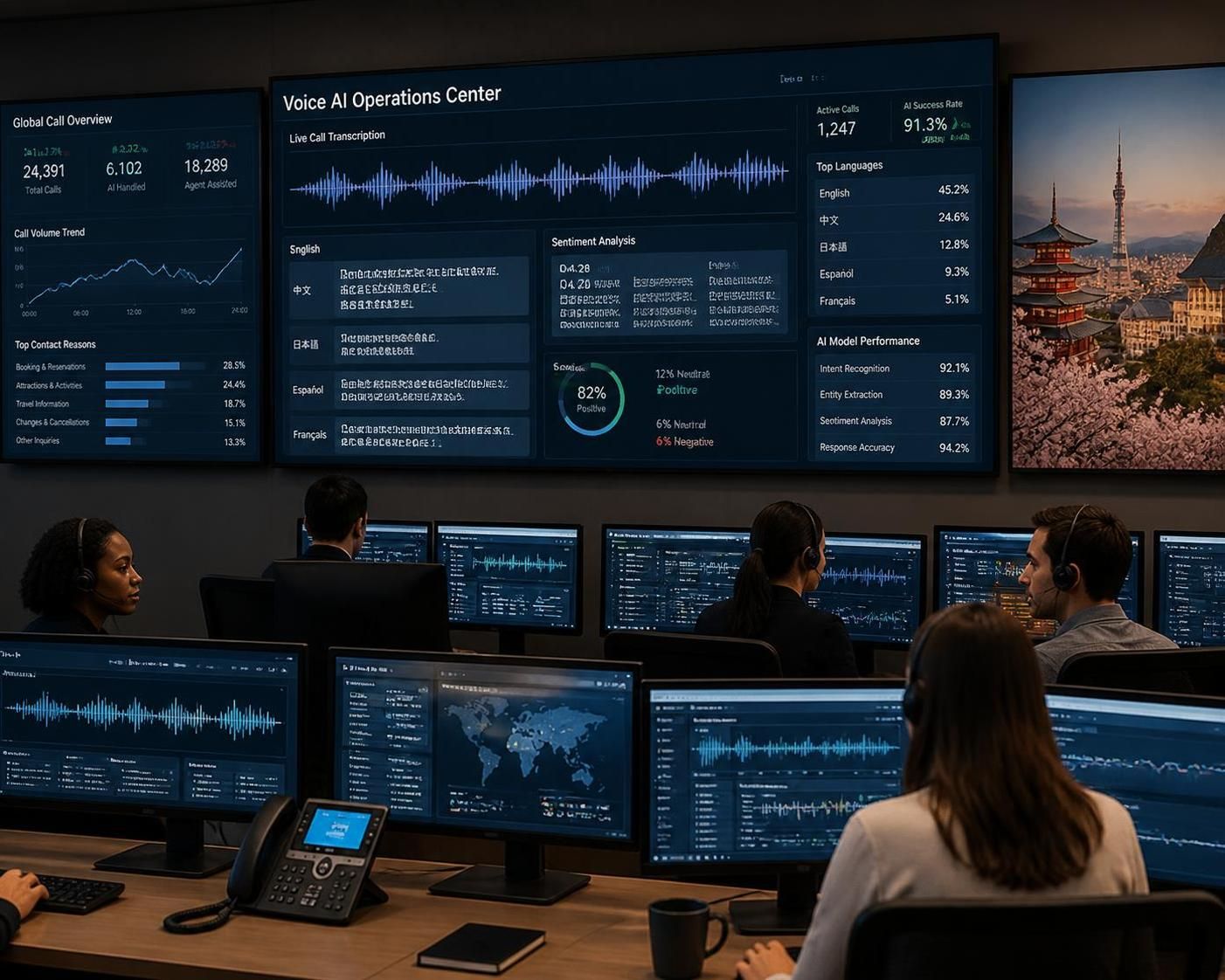
That operational perspective leads directly to the central technical issue Smallest.ai is attempting to solve: latency. In live audio, speed is not an optimisation detail. It is part of the conversation itself.
How Smallest.ai Targets Low-Latency Voice Experiences for Business Communication
Real-time voice Artificial Intelligence has a demanding requirement that text-based tools can often avoid: it must respond at a pace that feels socially natural. Human conversations are full of micro-pauses, interruptions, acknowledgement sounds, corrections, and changes in emphasis. A system that waits too long after each speaker turn creates friction, even if the eventual answer is correct.
Traditional pipelines frequently combine separate speech-to-text tools, large language models, and text-to-speech engines. Each component may be highly capable on its own. The challenge is that passing information from one system to another introduces processing time. According to the company’s stated technical framing, delays beyond roughly 200 to 300 milliseconds can begin to make an exchange feel noticeably less natural.
Smallest.ai’s approach is to unify the conversational pipeline in a shared execution environment. The company controls the models and the infrastructure underneath them, allowing it to optimise the complete route from incoming audio to outgoing speech. This is a different strategy from assembling a voice product entirely from third-party APIs.
| Component | Role in the voice pipeline | Operational relevance |
|---|---|---|
| ⚡ Lightning | Text-to-speech generation | Reported to generate 10 seconds of audio in about 100 milliseconds while using under 1 GB of VRAM. |
| 📝 Pulse | Speech transcription | Delivers an initial transcript in under 300 milliseconds, enabling earlier processing of a caller’s request. |
| 🧠 Electron | Real-time dialogue model | Designed to support reasoning with lower response delays than larger, slower model configurations. |
| 🔊 Hydra | Speech-to-speech processing | Works directly from audio waveforms and can support actions during an ongoing spoken exchange. |
The four-model system is presented as Lightning, Pulse, Electron, and Hydra. Lightning handles speech generation. Pulse is the transcription layer intended to produce an early understanding of what is being said. Electron is a compact language model for real-time dialogue. Hydra takes a more direct speech-to-speech approach, processing incoming audio waveforms rather than waiting for a full text conversion.
Hydra is particularly interesting for conversational design because people rarely speak in perfectly separated turns. A visitor might say, “Is the museum open on Sunday—actually, I mean this Sunday—and is the lift working?” A conventional system may wait for silence, transcribe the full sentence, identify intent, and only then act. A more responsive architecture can begin interpreting the request while the person is still speaking.
This does not remove the need for careful content governance. A fast answer that gives wrong accessibility information is worse than no answer at all. The technology must be connected to verified operational data: current hours, ticketing rules, local transport updates, safety procedures, and available languages. For tourism teams, voice quality and content quality should be treated as one service standard.
Latency affects trust, accessibility, and perceived service quality
A low-latency response has implications beyond efficiency. For older visitors, people using hands-free devices, travellers with low battery levels, and users who are not comfortable navigating mobile interfaces, a fluent voice exchange can reduce cognitive effort. It can also improve accessibility when paired with clear language, adjustable speech speed, appropriate pauses, and reliable escalation to a human adviser.
At the same time, organisations should not assume that every visitor wants to speak with a machine. The best deployment model offers choice. A phone number, a website, a chat channel, a printed QR code, and a professional audio-guide application can coexist. Each channel serves a different moment in the visitor journey.
The strongest voice systems do not replace human mediation; they protect human teams from repetitive demand so they can focus on complex, sensitive, or high-value interactions. With the technical architecture established, the next question is whether it can withstand the volume and compliance expectations of enterprise deployment.
Speed becomes genuinely useful only when it remains dependable at peak demand. That requirement places infrastructure, deployment control, and security at the centre of the Smallest.ai Growth strategy.
Enterprise Voice AI Infrastructure and Compliance Behind Smallest.ai’s Growth
Many voice products perform well in a controlled demonstration but face difficulties in real operations. Enterprise environments rarely offer predictable traffic. A contact centre may receive a sudden rush of calls after a billing notification, a service outage, a marketing campaign, or a major travel disruption. In tourism, the equivalent surge can occur during weather events, strike announcements, popular exhibitions, school holidays, or a change to venue access conditions.
Smallest.ai has developed its own inference infrastructure to manage high-concurrency workloads. In practical terms, inference infrastructure is the computing environment that runs the models when users interact with them. It determines whether an organisation can process a handful of calls or thousands of simultaneous exchanges without experiencing excessive queues, degraded audio, or API rate limits.
The company says it can manage workload queues and allocate computing capacity according to demand. This matters because external API dependencies can make costs and performance less predictable during a traffic spike. An organisation may build a useful pilot, only to find that the service slows down or becomes expensive when demand rises. A vertically integrated stack aims to reduce that exposure by placing models, orchestration, and compute operations under one technical strategy.
Smallest.ai also supports on-premises deployment for customers requiring more direct control over data and infrastructure. This can be important in regulated sectors, particularly healthcare and financial services. It may also be relevant to public-sector cultural institutions that must comply with strict procurement requirements or have policies governing where visitor data is processed.
- 🔐 HIPAA is relevant to US healthcare-related data handling requirements.
- 🇪🇺 GDPR is central for organisations processing personal data connected to European residents.
- ✅ SOC 2 Type II provides assurance around operational controls over time.
- 🛡️ ISO 27001 relates to information-security management systems.
These certifications and standards should not be interpreted as a substitute for an organisation’s own governance. A museum, visitor centre, or tour operator still needs to decide what data is collected, how long recordings or transcripts are retained, which suppliers can access them, and whether callers are clearly informed about automated processing.
For example, Harbor City Tourism could configure a voice assistant to answer general questions without storing full audio recordings. If a caller asks to change a booking, the system could authenticate the individual, transfer the request to a secure booking environment, and hand off unusual cases to staff. This model limits unnecessary data processing while keeping the experience useful.
What tourism and culture organisations should test before deployment
Voice automation should be assessed with real-world scenarios rather than generic scripts. Local place names, regional accents, multilingual questions, noisy public spaces, and interrupted calls all affect performance. Testing must include the vocabulary visitors actually use, not just the terminology used internally by staff.
Teams should also create an escalation policy. If a visitor says they are lost, reports an accessibility issue, or asks about an emergency, the system should not attempt an overconfident response. It should provide approved immediate guidance and route the conversation to the right human channel where necessary.
- 🎧 Test recognition with local names, monuments, transport hubs, and multilingual phrases.
- 📞 Measure response timing during realistic interruptions and overlapping speech.
- 📚 Connect the assistant only to current, validated operational information.
- 👥 Define when automated support must transfer the caller to a staff member.
- 📊 Review call outcomes, unresolved requests, and visitor feedback every week.
The customer-experience implications of the funding round are especially clear in industries where voice remains a primary support channel. Infrastructure quality determines whether voice AI is perceived as an improvement or simply another barrier between a customer and a helpful answer.
Enterprise readiness is not measured by a convincing demo voice; it is measured by secure, accurate, resilient service when demand is highest. That operating discipline also affects the financial logic behind the company’s Investment.
Smallest.ai Cost Efficiency and the Venture Capital Case for Voice AI
The business case for voice automation depends on more than a polished synthetic voice. Organisations need predictable operating costs, measurable service outcomes, and a clear understanding of where automation creates value. Smallest.ai has stated that its optimisation work reduced text-to-speech costs from approximately $0.20 per minute to $0.01 per minute at scale.
That claimed reduction is significant in any high-volume environment. A small difference in price per minute can become material when a platform handles millions of monthly interactions. The company has said that its technology currently powers millions of voice interactions each month and has processed more than one billion minutes of real-time voice AI across more than ten enterprises.
Cost efficiency is one reason the Series A has drawn attention within the wider Tech Funding market. Venture Capital firms are looking for AI companies that can show a route from research to production use. The market has moved beyond enthusiasm for broad demonstrations. Investors increasingly assess whether a Startup can control compute costs, serve large customers, meet security expectations, and create a sustainable margin as volume increases.
Existing investor 3one4 Capital first backed Smallest.ai during its pre-seed stage, when the company was still shaping its research direction. Its continued participation alongside Seligman Ventures and Sierra Ventures suggests confidence in the company’s evolution from technical development into commercial deployment.
For a cultural organisation, the economics should be examined with the same discipline. A voice assistant may reduce pressure on a ticketing team, but it still needs content maintenance, quality assurance, integration work, supervision, and accessibility testing. The relevant question is not “Can AI answer calls?” It is “Which repeatable tasks can be handled reliably, while improving the experience for both visitors and staff?”
Calculating value in real visitor journeys
Take a medium-sized museum that receives 500 phone enquiries a week during exhibition season. Many are routine: opening times, ticket availability, bag policy, parking, school-group access, and directions. If a well-designed voice service resolves a proportion of these enquiries without compromising accuracy, front-desk teams can spend more time supporting visitors who need personal assistance.
The value is not limited to payroll. Faster access to answers can reduce abandoned calls, prevent unnecessary travel, improve preparation for accessible visits, and support visitors outside office hours. However, cost savings should never be measured in isolation from satisfaction. An automated answer that forces callers through a long menu can damage the brand even if it reduces call duration.
Voice AI should also be compared with other audio tools. A real-time assistant is designed for questions and actions. An audio guide is designed for interpretation, storytelling, and location-aware cultural mediation. Both can be useful, but their roles differ. For self-guided tours, a smartphone-based platform such as Grupem can provide structured, professional audio without requiring visitors to borrow dedicated equipment.
For teams tracking the competitive voice landscape, this overview of voice AI funding developments offers useful context on why audio technologies are attracting sustained investor interest. The category includes expressive voice generation, conversational agents, research models, and visitor-facing audio experiences. Each has distinct operational requirements.
The financial lesson is straightforward: lower per-minute processing costs can support scale, but only a carefully designed service model turns technical efficiency into lasting user value. That distinction becomes even more important as voice interfaces move into travel, heritage, and public-facing services.
The next area of Growth will depend on how organisations apply these capabilities to specific journeys rather than deploying voice technology as a generic novelty.
What Smallest.ai’s Series A Means for Smart Tourism and Audio Technology
Smallest.ai’s $13 million Series A led by Seligman Ventures is a useful indicator for smart tourism professionals: the technical foundations for responsive voice interaction are becoming more mature. This does not mean that every destination should immediately launch a conversational phone agent. It means that the evaluation criteria for audio technology are changing.
Tourism boards, museums, guided-tour operators, event organisers, and municipalities can now consider voice as part of a broader service ecosystem. The objective should be to help visitors access reliable information at the moment they need it, through a channel that respects their context. Someone walking through an unfamiliar city has different needs from a visitor reading exhibition material at home or a group organiser managing thirty participants.
A well-planned audio strategy can combine several layers. A website can answer detailed planning questions. Booking staff can handle exceptions. A real-time voice service can resolve urgent routine enquiries. A mobile audio guide can provide immersive, location-specific interpretation during the visit. The value comes from coordination, not from forcing every task into one interface.
Practical use cases for visitor-facing voice services
Consider an outdoor heritage route with several sites spread across a town. Visitors may ask whether a location is open, how long the walk takes, whether a route is accessible with a stroller, or whether a guided tour is available in another language. A voice assistant can provide concise logistical guidance, while a dedicated audio-guide application delivers the curated story of each location.
During a major event, a voice service can also act as a first-response information layer. It can share approved schedule updates, directions to entrances, transport alternatives, and emergency contact guidance. The content must be centrally managed and updated quickly. This is where a unified infrastructure approach is relevant: fast model performance is valuable only if the information source is current.
For guided groups, professional audio tools remain essential. A guide needs to be heard clearly without shouting, especially in noisy streets, large museums, or transport hubs. Grupem allows guides and organisers to turn visitors’ smartphones into an audio receiver system, supporting clearer listening without the logistics of conventional rented receivers. This is a practical example of useful audio innovation: it addresses a concrete service problem without adding complexity for participants.
Voice agents and audio guides can work together. Before the visit, an automated service can answer questions about meeting points and ticket conditions. During the visit, the guide or museum can provide high-quality narration through a dedicated experience. Afterward, the same ecosystem can direct visitors to feedback, future events, or educational content.
Questions teams should ask before selecting a voice AI provider
Procurement should start with the visitor journey, not the technology brand. Teams should identify the top twenty questions they receive, the moments of highest demand, the languages required, the most common failure points, and the cases that must always be handled by humans.
They should then assess response speed, transcription accuracy, language coverage, data location, integration options, pricing structure, human escalation, analytics, and content-update workflows. A provider with impressive demonstrations but limited control over data or operational content may not be suitable for a public-facing cultural service.
It is equally important to include frontline staff in testing. Reception teams and guides understand the questions visitors really ask. Their feedback can reveal whether an AI system uses unnatural wording, fails to recognise local landmarks, or lacks the empathy required in sensitive situations.
Smallest.ai’s Funding round demonstrates that enterprise voice AI is entering a more operational phase: speed, scale, security, and cost control are becoming as important as voice realism. For visitor-facing organisations, the appropriate next step is to map one recurring service problem, test a controlled audio solution, and keep human support available where judgement and care are required.
Who led Smallest.ai’s $13 million Series A round?
Seligman Ventures led the Series A Funding round. Sierra Ventures and 3one4 Capital participated as existing investors, alongside several other venture firms and angel investors.
How much total funding has Smallest.ai raised?
Following the $13 million Series A, Smallest.ai’s reported total funding exceeds $21 million.
What does Smallest.ai build?
Smallest.ai develops real-time enterprise voice Artificial Intelligence infrastructure, including speech generation, transcription, dialogue processing, speech-to-speech capabilities, orchestration, and inference infrastructure.
Why is low latency important in voice AI?
People expect quick turn-taking in spoken conversations. Delays above roughly 200 to 300 milliseconds can make an automated response feel less natural and can reduce trust in the interaction.
Can tourism organisations use enterprise voice AI?
Yes, when it is applied to clear use cases such as opening hours, directions, booking information, event updates, and first-line support. It should be tested with local vocabulary, current information, accessibility requirements, and a reliable human escalation route.
