
⏱️ Short on time? Here is what matters:
- ✅ The Westmoreland Museum achieved a 142% Visitor Attendance surge by treating art as part of a broader social, playful, and locally relevant experience.
- 🎯 Programming such as Art in Bloom, the art maze, and Putt-a-Palooza turned seasonal slow periods into opportunities for Museum Growth and earned revenue.
- 🔊 Immersive storytelling, accessible interpretation, and smart Museum Marketing helped transform a respected collection into a more active Cultural Attraction.
- ⚠️ The lesson is not to replace exhibitions with entertainment: it is to give different audiences a comfortable reason to enter, then help them connect with art.
How the Westmoreland Museum Created a 142% Visitor Attendance Surge
The Westmoreland Museum of American Art in Greensburg has delivered an outcome that many cultural institutions would consider exceptional: a 142% increase in Visitor Attendance over three years. This result is particularly notable in a period when museums across the United States are still working to rebuild audiences, stabilize fundraising, and compete with a growing number of leisure options.
The increase was not driven by one blockbuster exhibition or a single advertising campaign. Instead, the Westmoreland Museum developed a connected approach combining programming, technology, local partnerships, immersive experiences, and family-oriented events. The strategy recognized a practical reality: many residents may value a museum in principle while rarely visiting it in practice.
Silvia Filippini-Fantoni, the museum’s director and CEO, brought an unusual leadership profile to the institution. Her background includes history, international relations, education, and museum technology rather than the more conventional path of art history or curatorial leadership. That perspective shifted the central question from “How can the museum present its collection?” to “How can more people feel that this museum belongs in their lives?”
That distinction matters. A collection can be respected, professionally curated, and historically significant while remaining intimidating or irrelevant to people who do not already see themselves as museum visitors. The Westmoreland Museum identified that local residents considered the building a valuable civic asset, even when they had not crossed its doors. The challenge was therefore not only awareness. It was Public Engagement.
Rather than asking every visitor to arrive with an existing interest in American art, the museum began offering experiences where the social activity, family outing, seasonal event, or local story could be the immediate reason to attend. Art remained central, but it was no longer the only entry point. This is an important distinction for museum teams planning their own Tourism Boost: reducing intimidation does not mean lowering cultural standards.
For example, a family might initially visit because children want to explore an art maze. A couple might attend because a mini-golf installation provides an unusual weekend activity. A local resident may be drawn by an immersive story about the steel industry that shaped western Pennsylvania. Each visitor then encounters galleries, objects, artists, and interpretation in a more relaxed state of mind.
The strategy generated visible short-term gains. After expanded programming, the museum added approximately 10,000 visitors between fiscal years 2023 and 2024. It later exceeded its fiscal-year 2026 attendance target by another 10,000 people. These figures indicate that the model created repeatable demand rather than a brief spike linked to one novelty.
| Measure | Westmoreland Museum outcome | Practical meaning for cultural venues |
|---|---|---|
| 📈 Overall attendance | 142% Visitor Increase in three years | Audience development can come from consistent programming, not only major exhibitions. |
| 👥 FY 2023 to FY 2024 | About 10,000 additional attendees | Regular events can make a measurable contribution to annual footfall. |
| 🌸 Art in Bloom | Approximately 1,500 visitors in 2024 | A well-framed seasonal event can attract a meaningful share of an institution’s yearly audience. |
| 🎨 Interactive gallery work | $75,000 grant awarded for the art maze | Play-based mediation can also strengthen external funding cases. |
The museum’s progress should not be interpreted as a generic formula where any interactive activity will automatically produce a % Surge. The strength of the Westmoreland approach lies in its fit with the local area, available space, seasonal patterns, and institutional identity. In Greensburg, this meant responding to families, regional history, and the desire for affordable shared experiences.
For tourism professionals, the key lesson is simple: attendance grows when a museum creates several valid reasons to visit. Art lovers should continue to find serious exhibitions and calm galleries. New audiences need a lower-pressure invitation that feels useful, enjoyable, and accessible. The next stage of the Westmoreland story shows how programmed events made that invitation concrete.
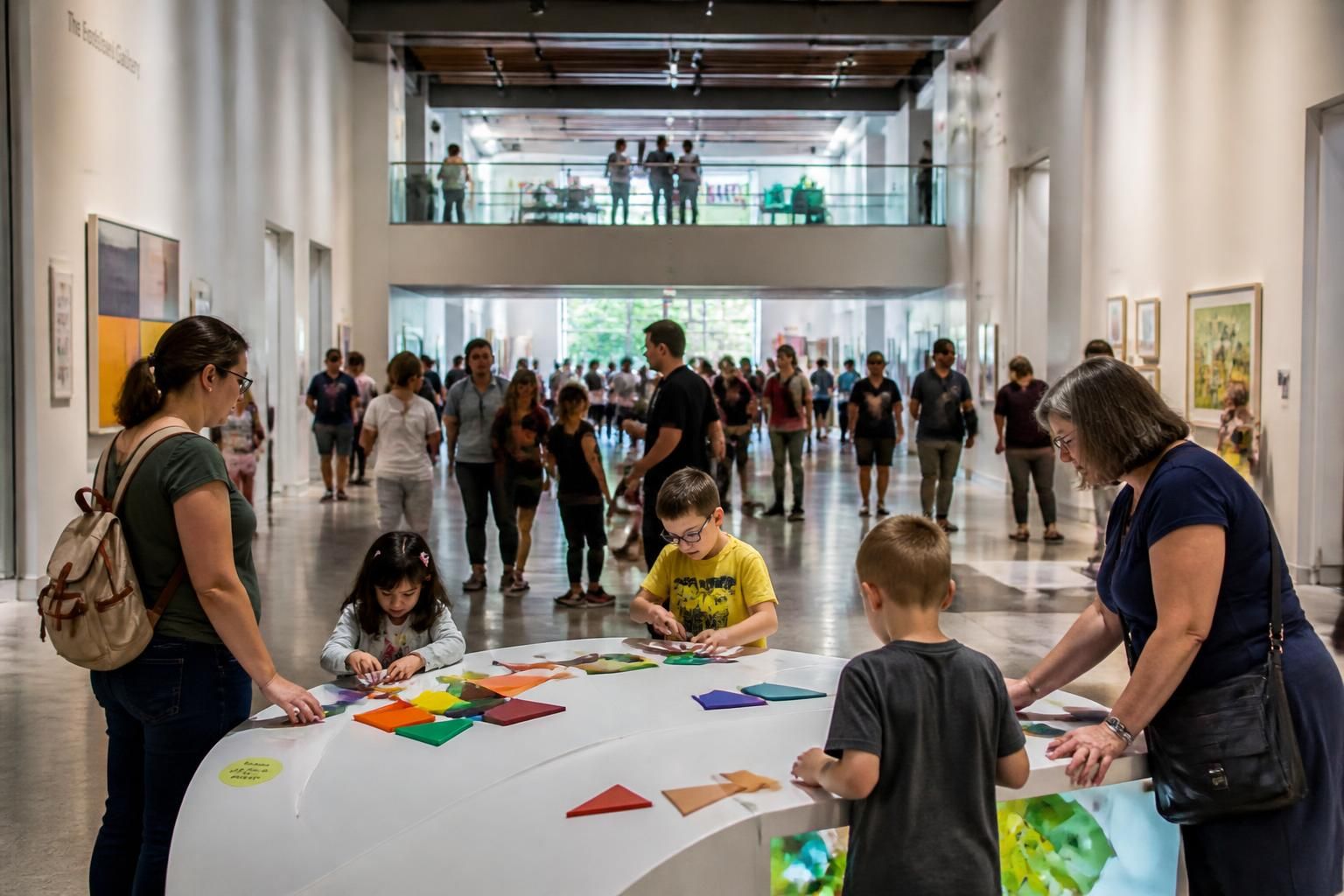
Programming That Turned Museum Growth Into a Year-Round Habit
Programming became one of the Westmoreland Museum’s most effective tools for converting occasional interest into regular participation. The institution did not abandon traditional exhibitions. Instead, it built a fuller calendar that gave visitors reasons to return at different moments of the year. This approach is especially relevant for museums that offer free admission and need alternatives to ticket sales for measuring value and maintaining audience momentum.
One early signal came from the return of Art in Bloom in 2024. The event attracted around 1,500 people, showing that floral design, art viewing, and social programming could bring different communities into the museum. Its impact was not merely numerical. It demonstrated that a carefully designed event can make galleries feel festive without compromising the integrity of the artworks on display.
Art in Bloom works because it creates a clear visual conversation between artistic works and floral interpretation. Visitors do not need specialist vocabulary to engage with colour, scale, form, or contrast. They can discuss what they see naturally, compare interpretations, take photographs, and move through the museum at their own pace. This is a strong model of mediation because it starts with observation rather than instruction.
The Westmoreland team then looked at the museum calendar more strategically. Summer was traditionally quieter, which is common for indoor cultural venues. Families may prioritize pools, parks, travel, sports, and outdoor gatherings. A conventional exhibition alone was unlikely to overcome those patterns. Instead of viewing this period as unavoidable downtime, the museum designed a reason for visitors to choose an indoor cultural outing.
The art maze installed in the cantilever gallery became that reason. The concept emerged after Filippini-Fantoni met a specialist in children’s museum mazes at an art conference. The project involved a measured risk: it was new, playful, and more experiential than a traditional art display. Yet the quieter summer period made it a sensible time to test the idea.
The experiment succeeded. The museum described that season as its busiest summer to date. The maze also received a $75,000 grant from Art Bridges Foundation, which recognized it as an innovative interactive gallery focused on exploration and play. This funding matters because it confirms that audience-centred work can be treated as serious museum practice when it is designed with clear learning and access goals.
Charging for the maze while keeping general museum admission free was also a considered operational decision. It protected the museum’s accessible entry point while creating an additional revenue stream from a premium, time-specific activity. Institutions considering admission models can compare this approach with broader debates around museum admission fees and visitor demand. The most suitable model depends on local expectations, audience profile, and the quality of the added experience.
Why Putt-a-Palooza Supported Exhibition Popularity
Putt-a-Palooza extended the same principle through an art-inspired mini-golf course. The experience gave families an approachable activity while placing them inside a cultural setting. A photograph from the event captures this logic clearly: adults and children share the game, react to each shot, and experience the museum as a place of collective enjoyment rather than silent obligation.
This type of event can improve Exhibition Popularity indirectly. Visitors entering for mini-golf may discover a gallery before or after their game. They may return for a traditional exhibition because their first visit was positive. They may recommend the museum to friends who would not ordinarily consider it. The effect is not always immediate, but it strengthens the institution’s relevance in everyday conversations.
For a museum manager, the planning checklist must remain practical:
- 🧭 Define the audience: families, young adults, local residents, school groups, or visitors from nearby destinations.
- 🎨 Connect the activity to the museum’s visual identity, collection, architecture, or local history.
- 💰 Decide whether the programme is free, donation-based, or ticketed as a premium add-on.
- 📱 Prepare clear digital information covering access, duration, queues, sound levels, and age suitability.
- 📊 Track both attendance and behaviour: repeat visits, gallery dwell time, memberships, donations, and visitor feedback.
Audio technology can further support this type of programme. A smartphone-based audio guide allows visitors to access short explanations at their own pace, without forcing a group tour or adding signage clutter. A mini-golf hole, a floral arrangement, or an immersive installation can each include an optional audio layer that answers a simple question: why is this connected to art?
The strongest programming does not distract from the museum mission; it gives unfamiliar audiences a welcoming route into it. The next element of the Westmoreland model shows how immersion deepened that route by connecting visual culture with sound, memory, and place.
Interactive programming can attract a first visit, but immersion is often what helps visitors remember the experience and share it with others afterwards.
Immersive Exhibitions and Local Stories That Strengthened Public Engagement
The Westmoreland Museum’s attendance momentum was also supported by immersive experiences that combined art, music, visual design, and regional storytelling. This combination is significant because it recognizes that visitors do not separate cultural experiences into rigid categories. They respond to atmosphere, familiarity, emotion, and the opportunity to understand a place through more than a wall label.
Winter Tales, a seasonal immersive exhibition, raised winter visitation to levels the museum had not previously achieved. Winter can be difficult for many institutions: shorter days, uncertain weather, post-holiday spending pressure, and reduced motivation to leave home can suppress visitation. A carefully promoted immersive destination can counter this pattern by making the museum feel timely and distinct.
Seasonality is not just a calendar issue. It is a design issue. A winter installation can use light, sound, projected imagery, and spatial storytelling to create an experience that is different from an ordinary gallery visit. Visitors can perceive it as an event rather than simply an exhibition, which helps Museum Marketing teams build an immediate and specific message.
Steel Valley Visions added a different form of relevance. Drawing on the industrial history of western Pennsylvania’s steel era, the immersive exhibition connected cultural programming to local memory. For residents whose families worked in mills, lived in nearby communities, or were shaped by the regional economy, the subject carries personal meaning. For younger visitors, it provides an accessible way to encounter a history that remains visible in the landscape and civic identity.
Coverage of the project described it as an immersive presentation bringing scenes from the steel era to life. Visitors can explore more detail through this report on Steel Valley Visions at the museum. The important operational point is that local history offered a powerful bridge between an art institution and people who may not initially identify as art museum visitors.
Immersion should not be reduced to projection mapping or large screens. It is an interpretive method. A successful installation asks what a visitor should understand, feel, notice, or discuss after leaving. Sound may evoke machinery in a steel mill. Archival imagery may provide visual evidence. Contemporary art can offer reflection rather than nostalgia. The components should reinforce one another rather than compete for attention.
Smart Audio Design Makes Immersion More Accessible
Audio plays a particularly useful role in immersive galleries because it can guide attention without adding visual overload. However, shared loudspeaker sound can become tiring, inaccessible for people with hearing differences, or disruptive to adjacent galleries. A smartphone audio solution gives visitors control over volume, language, pace, and replay.
For example, a visitor named Maya arrives at Steel Valley Visions with her father, who remembers the region’s industrial past, and her teenage son, who has limited prior knowledge of it. The father can listen to a longer oral-history extract. The teenager can select a concise track explaining how steel transformed communities. Maya can read a transcript while using headphones. One exhibition then serves three needs without forcing every person into the same interpretation path.
This is where practical audio-tour design matters. Tracks should be brief, clearly named, and located at moments where visitors naturally pause. A 45-second soundscape, a two-minute local testimony, or a simple “look closer” prompt can work better than a ten-minute lecture. The aim is not to turn phones into distractions. It is to make them discreet interpretation tools.
Institutions can also use QR codes responsibly. They should be visible but not visually intrusive, supported by printed alternatives, and accompanied by a clear explanation that headphones are recommended. Free Wi-Fi, accessible transcripts, and a no-download option remove common barriers. These small details protect visitor comfort and make a digital layer feel genuinely useful.
The museum’s wider direction is to be, in part, an art museum, history museum, science museum, and children’s museum for its community. That does not imply abandoning specialization. It means acknowledging that a regional institution can create richer points of connection than a single format allows. Research on how museums can work with local communities reinforces the value of designing participation around genuine community needs.
Immersion works when technology serves the story, and the story gives local audiences a reason to see the museum as part of their own cultural landscape. That local relevance must then be supported by equally thoughtful communication before visitors arrive.
Museum Marketing Lessons Behind the Westmoreland Visitor Increase
The Westmoreland Museum’s performance demonstrates that Museum Marketing is not limited to posters, press coverage, or social media posts. It begins much earlier, with the decision to create an experience people can easily describe to someone else. “An art maze,” “an art-themed mini-golf course,” and “an immersive exhibition about steel communities” are clear, concrete invitations. They are easier to understand than broad institutional messaging about cultural enrichment.
Clear framing is especially important for visitors who feel uncertain about museums. Someone may worry that they lack knowledge, that children will be bored, or that they will not know what to do in a gallery. A playful or local-history event reduces that uncertainty. It gives people permission to visit without first proving they are “the right kind” of audience.
This is not a cosmetic point. Perceived belonging influences attendance. If an event image shows only experts standing quietly in front of paintings, a parent planning a Saturday outing may assume the museum is not for their family. If the campaign shows groups exploring, laughing, listening, and creating, it communicates a more inclusive experience. Visual communication should reflect the real audience journey.
The Westmoreland benefited from a strong connection to its immediate community. Filippini-Fantoni noticed early on that local people were enthusiastic about the museum as an asset even when they had not personally visited. That is a valuable starting point for any Cultural Attraction. It means the institution has goodwill, but it must turn goodwill into participation through relevant offers and consistent invitations.
A practical campaign should identify the moments at which people decide what to do. For local families, that may be Thursday evening or Saturday morning. For tourists, it may be a hotel recommendation, a destination website, or a mobile search conducted while nearby. For schools, it may be a term-planning window several months in advance. Each audience needs different information.
| Audience moment | Useful message | Digital action |
|---|---|---|
| 👨👩👧 Family weekend planning | “A creative indoor activity with galleries included.” | Show duration, parking, age range, ticket information, and accessibility. |
| 🏨 Visitor already in the region | “Discover western Pennsylvania through art and local stories.” | Offer map links, nearby attractions, and short audio previews. |
| 🏫 Teacher planning a visit | “Curriculum-linked learning with active participation.” | Provide booking steps, risk information, and downloadable preparation resources. |
| 🎟️ Returning cultural visitor | “A new seasonal experience alongside the permanent collection.” | Use email segmentation and exhibition-specific reminders. |
Digital channels should be coordinated, not duplicated. A museum website must answer practical questions quickly. Social posts should show atmosphere and human activity. Email can convert past visitors into returning audiences. Local media can validate the event for people who trust community reporting. The detailed reporting on how the museum boosted attendance by 142% helped make the institution’s transformation visible beyond its own channels.
Measurement also needs to go beyond total visitor numbers. Attendance is essential, but teams should ask how people heard about an event, whether they entered permanent galleries, whether they returned, how long they stayed, and whether the visit improved their willingness to recommend the museum. Short post-visit surveys, booking data, QR scans, and visitor observations can build a more complete picture.
For an event such as Putt-a-Palooza, a useful metric might be the number of participants who also access a gallery audio trail. For Winter Tales, it could be the share of evening visitors who are first-time attendees. For an art maze, it might be repeat family attendance over the summer. These measures make it possible to improve decisions rather than simply celebrate a large number.
Effective Museum Marketing makes the value of a visit understandable before the visitor has to make an effort to understand the art. Once that first visit has occurred, the museum needs an operational model that protects both accessibility and quality.
A strong message can bring people to the door, but a sustainable Visitor Increase depends on what they encounter once they arrive.
Protecting Traditional Art Experiences While Expanding the Museum Audience
A frequent concern around interactive museum programming is that entertainment may overshadow art. The Westmoreland Museum offers a more balanced example. Its strategy has been to retain traditional exhibitions and serve existing audiences while creating additional experiences for people who might otherwise never visit. This is not a choice between scholarship and accessibility. It is a question of designing multiple routes through the same institution.
Traditional museum visitors still deserve quiet spaces, informed interpretation, careful exhibition design, and high-quality collections care. A museum’s credibility rests on these foundations. At the same time, a first-time visitor should not be made to feel that expertise is a condition of entry. The most resilient museums can hold both standards together.
Consider the difference between two family journeys. In the first, a parent sees a museum as a serious but potentially difficult place, postpones the visit, and ultimately chooses another activity. In the second, the family attends a seasonal mini-golf event, receives a simple gallery map, listens to one short audio story, and notices a painting that connects with the game’s theme. The second journey does not guarantee a lifelong art lover. It does create a positive first association.
This is why the museum’s approach to summer programming is meaningful. Rather than expecting visitors to choose between outdoor recreation and art, it creates playful seasonal experiences that make a museum visit competitive with other leisure choices. The planned exploration of an inflatable art exhibition for a future summer continues that direction. Such a project will need careful development around safety, visitor flow, materials, sound, cleaning, and clear artistic intent.
Operational Principles for Sustainable Museum Growth
For museums, galleries, destination offices, and cultural organizers, the Westmoreland case provides several operational principles. First, use local evidence. Review attendance by month, audience type, weather, school holiday, and event format. The museum identified summer as a weak period and developed an experience specifically for that challenge. That is more effective than copying another institution’s programme without adapting it.
Second, protect accessibility. Free general admission at the Westmoreland Museum lowers the barrier for hesitant visitors. Paid interactive activities can then be positioned as optional enhancements. This layered model can be useful, but it should include concessions, free community sessions, or sponsored access where possible so that paid elements do not create exclusion.
Third, design for different levels of engagement. Some visitors want to spend two hours examining works in depth. Others have 45 minutes with children. A good visitor journey allows both. Clear wayfinding, short labels, seating, family trails, accessible toilets, and optional audio content are not minor extras; they shape whether people feel welcome enough to return.
Fourth, build partnerships that match the programme. A floral event can involve local designers, horticultural groups, and sponsors. A steel-history installation can involve archives, schools, former workers, heritage groups, and musicians. A regional Tourism Boost becomes more credible when museums connect with hotels, restaurants, visitor bureaux, and public transport providers rather than promoting in isolation.
Fifth, treat technology as an operational service. A smartphone guide should be easy to launch, supported by clear instructions, and designed for visitors who have limited data, low battery, or limited digital confidence. Audio tracks should include transcripts. Devices should not be mandatory. The best technology recedes into the background while helping the visitor understand more.
There is also a strategic lesson in the museum’s identity. Filippini-Fantoni’s vision acknowledges that a regional museum may need to operate across several expectations: art, history, learning, children’s activity, and civic gathering. That breadth should not turn into random programming. Every project still needs to answer three questions: who is it for, what does it help them experience, and how does it relate to the museum’s purpose?
Institutions seeking comparison points can review global museum attendance patterns through this overview of the world’s most visited museums. Large international institutions operate at a different scale, but the underlying principle remains relevant: sustained demand comes from a clear visitor proposition, strong communication, and an experience people consider worth repeating.
The Westmoreland Museum’s 142% performance is therefore best understood as a disciplined change in visitor strategy. Programming created urgency. Immersive exhibitions created emotional relevance. Free entry reduced barriers. Paid experiences added value. Technology and interpretation made engagement more flexible. Traditional galleries remained available for the audiences who value them most.
🎯 The practical action is to identify one underperforming period in the annual calendar and design a culturally meaningful, clearly marketable experience that gives local people a new reason to visit.
What caused the Westmoreland Museum’s 142% Visitor Attendance increase?
The increase came from a combined strategy: more frequent programming, interactive family experiences, immersive exhibitions, local storytelling, and a focus on visitors who did not previously see art museums as places for them.
Did the Westmoreland Museum stop presenting traditional art exhibitions?
No. Traditional exhibitions and the core art museum experience remain part of the offer. The museum added playful and immersive formats to attract new audiences without excluding established visitors.
Why did the art maze matter for Museum Growth?
The maze helped the museum address its quieter summer period with a family-friendly experience. It contributed to the museum’s busiest summer and later received a $75,000 grant from Art Bridges Foundation.
How can audio technology support Public Engagement in museums?
Smartphone-based audio guides can provide short, optional stories, accessible transcripts, adjustable volume, and multiple levels of detail. They help visitors explore at their own pace without overcrowding galleries with signage.
Can a free museum charge for certain experiences?
Yes. Keeping general admission free while charging for optional premium experiences, such as an interactive maze or mini-golf course, can preserve access while creating an additional revenue stream.
