
Key takeaway: Speechify’s SIMBA 3.2 is reported as the leading real-time text-to-speech model on the independent Artificial Analysis leaderboard, while also placing jointly second in Voice Arena’s blind listener assessments. For tourism, cultural mediation, and voice-enabled services, the result matters because it shifts attention from impressive demos to deployable voice quality, responsiveness, and operating cost.
What this means in practice:
- 🎧 Independent evaluation matters: benchmark positions are more useful than vendor-only claims when selecting a speech engine.
- ⚡ Real-Time Performance changes user experience: a voice response that arrives promptly is essential for interactive guides, kiosks, and accessibility tools.
- 💶 Cost must be assessed beside quality: SIMBA 3.2 is presented with a starting price of $6 per million characters, making total usage economics part of the discussion.
- 🏛️ Tourism teams should test complete workflows: voice quality alone does not replace well-written scripts, reliable connectivity, and clear visitor journeys.
Speechify SIMBA 3.2 and the Artificial Analysis AI Ranking
Speechify’s SIMBA 3.2 has reached the top position of the Artificial Analysis text-to-speech leaderboard, a notable result in a market where voice models are increasingly compared on more than a single technical metric. The ranking places the streaming model ahead of prominent alternatives associated with ElevenLabs, OpenAI, Google DeepMind, and Cartesia. The relevant point is not simply the number-one label. It is the fact that an independent AI Ranking can help developers and service operators separate marketing language from measured performance.
Artificial Analysis is used as an external reference point because it evaluates models across a common framework rather than relying on figures selected by a single provider. This does not make any leaderboard a final purchasing decision. Benchmarks inevitably reflect specific tasks, settings, languages, test prompts, and scoring methods. Yet they remain valuable for forming a shortlist, particularly when a team needs a voice engine that can be integrated into a live product rather than used only for pre-rendered narration.
The reported position is especially relevant for SIMBA 3.2 because the model is designed for streaming delivery. In other words, audio can begin reaching the listener while the system continues generating the remaining speech. For a visitor asking, “What is the history of this building?” or a hotel guest requesting local directions, this is fundamentally different from waiting for an entire paragraph to be synthesized before hearing the first sound.
Independent reports also describe SIMBA 3.2 as jointly second in Voice Arena’s blind listener-led ranking. Blind evaluation has a distinct role: instead of focusing on a vendor name or brand reputation, participants judge the output they hear. Naturalness, pacing, expressiveness, pronunciation, and perceived human quality can all influence the outcome. For organisations delivering public-facing audio, this human layer is crucial. A technically fast voice that feels abrupt, metallic, or difficult to follow may reduce engagement even when its latency scores are excellent.
| Evaluation area | Why it matters for voice deployment | Operational question |
|---|---|---|
| 🏆 Artificial Analysis position | Offers an external comparison of text-to-speech capability | Is the model competitive against current flagship systems? |
| 🎧 Blind listener assessment | Highlights perceived voice quality beyond brand claims | Would visitors comfortably listen for ten minutes or more? |
| ⚡ Streaming latency | Determines whether dialogue feels immediate | Can the first audio arrive quickly enough for a live interaction? |
| 💶 Price per character | Influences the viability of scaled usage | What will multilingual content cost during peak season? |
The available reporting places the starting cost at $6 per million characters. This figure should be read as an entry point rather than a complete budget. Teams must account for language variants, retries, testing volume, peak traffic, storage if audio is saved, and the cost of surrounding infrastructure. Nevertheless, a transparent per-character reference makes comparisons more concrete. An attraction manager can estimate how much narration is required for a temporary exhibition; a city tourism office can forecast the cost of handling a season’s worth of personalised route requests.
For readers following the benchmark announcement, this independent TTS leaderboard report provides further context on the stated positioning. The practical lesson remains straightforward: do not select a speech platform solely because it is familiar. Compare evidence, then validate it against your own content.
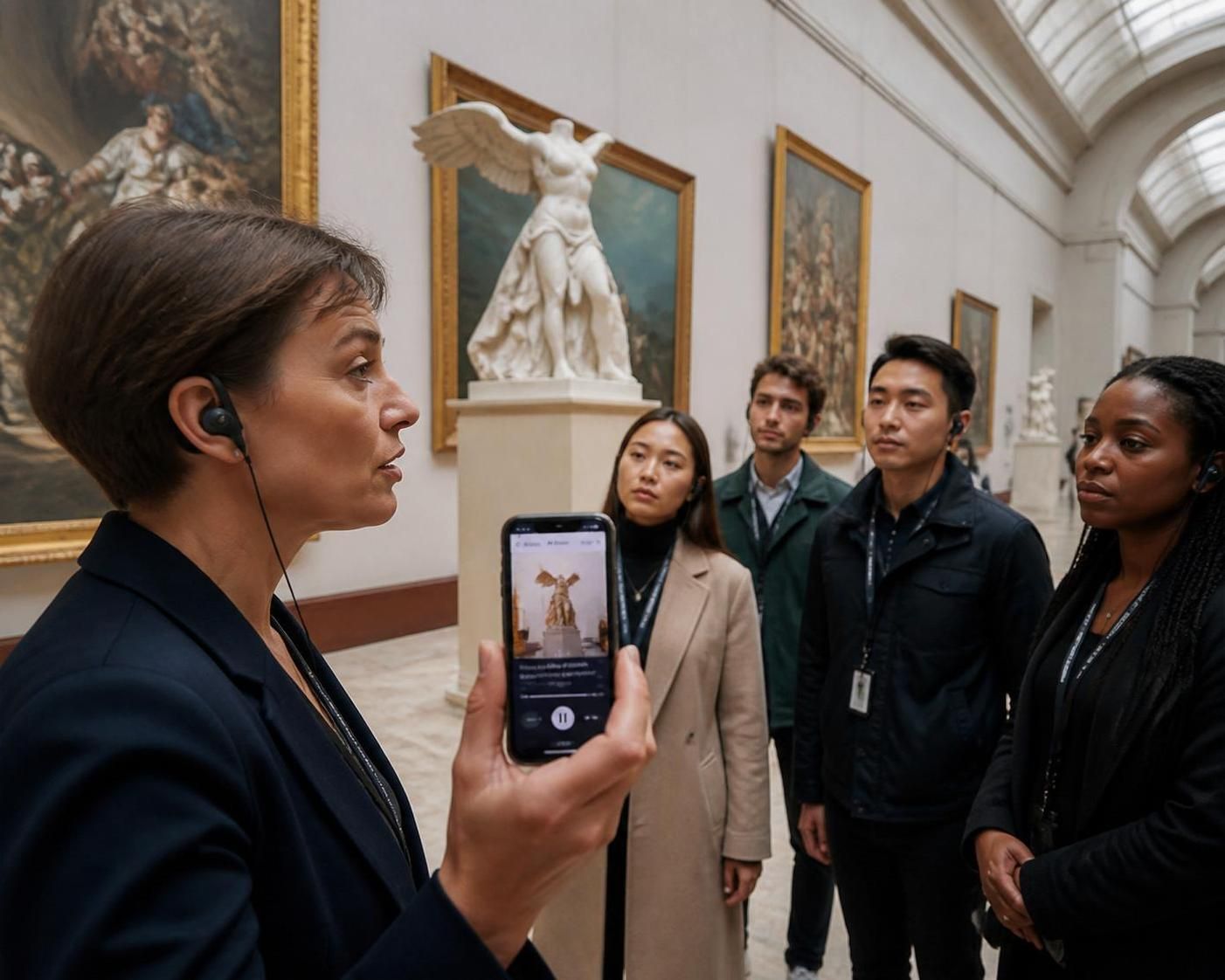
A museum guide called Clara offers a useful hypothetical example. Her venue wants to offer short audio responses in English, French, and Spanish through visitors’ own phones. The team should begin with benchmark information, but then test names of artists, local street names, heritage vocabulary, children’s questions, and noisy environments. A top ranking creates a credible starting point; real visitor scenarios determine whether it is the right fit.
Why Real-Time Performance Is a Core Requirement for Voice AI
Real-Time Performance is often misunderstood as a narrow speed metric. In a live voice service, it is better viewed as the continuity of an interaction: how quickly the application recognises a request, interprets intent, prepares an answer, starts speech generation, and keeps the conversation natural. A system can produce beautiful audio but still feel frustrating if every response begins after a long silence.
For text-to-speech, streaming is central to this experience. A conventional batch workflow receives text, processes the complete passage, and then supplies an audio file. That approach remains effective for curated museum tracks, safety instructions, downloadable city walks, and podcast-style material. A streaming model instead can send audio in small segments. This makes it appropriate for conversational applications, adaptive interpretation, assistance desks, and voice companions that react to a visitor’s position or question.
Consider a family standing outside a cathedral during a busy afternoon. A mobile guide suggests an accessible entrance, then the parent asks whether photography is allowed inside. If the reply takes several seconds to begin, the interaction feels less like guidance and more like a delayed search result. If speech begins quickly, with a clear and measured answer, the digital layer supports the flow of the visit rather than interrupting it.
Speed must not be evaluated in isolation. The full path includes Speech Recognition, Natural Language Processing, content retrieval, policy checks, text generation where appropriate, and speech synthesis. A slow component anywhere in that chain may dominate the perceived wait. This is why teams should measure “time to first audible response” rather than focus exclusively on a model’s generation rate.
Measuring the complete voice journey rather than a single model
A useful pilot tracks at least four moments: when the visitor stops speaking, when their request is transcribed, when the system has selected or written a response, and when the first audible syllable arrives. The gap between these events reveals where friction originates. In some deployments, the voice model is fast but a distant API endpoint creates avoidable network delay. In others, excessive prompt length or a poorly designed content database causes the language layer to hesitate.
Performance Optimization therefore involves architecture as much as model selection. Teams can shorten answers for live contexts, cache common questions, store approved factual responses locally, and select infrastructure regions close to their audience. They should also provide a visible text alternative while audio is loading. This is not merely a fallback. It supports accessibility for people who prefer reading, use screen readers, or find the environment too loud for headphones.
- ⚡ Start audio early: assess time to first sound, not just total synthesis time.
- 🗺️ Cache high-frequency requests: opening hours, facilities, routes, and ticket rules should not require a new complex generation every time.
- 🔊 Keep spoken answers concise: live replies work best when they resolve one clear need before offering a next action.
- 📱 Provide visual continuity: show text, a loading indicator, and route context so that silence never feels like failure.
Real-time design also requires careful turn-taking. Visitors do not always speak in clean, complete sentences. They pause, change their minds, speak over one another, or ask “Where is it?” without naming a location. A robust system needs interruption handling, confirmation patterns for ambiguous requests, and an option to repeat information at a slower pace. These details determine whether a service feels considerate in public spaces.
For teams building complex conversational flows, the principles covered in this guide to voice AI orchestration with Pipecat show why component coordination matters. The speech engine is important, but it is one element within a visitor-facing service. The most convincing real-time voice experience is the one that preserves momentum from question to useful action.
Applying SIMBA 3.2 Voice Quality to Smart Tourism and Cultural Access
Smart tourism succeeds when technology removes practical barriers without making the visit feel technical. High-quality text-to-speech can support that objective in museums, historic sites, city trails, galleries, visitor centres, and temporary cultural events. The value does not come from adding an artificial voice everywhere. It comes from choosing moments where clear spoken guidance gives visitors more autonomy, more comfort, or more access to content.
A ranking result for Speechify SIMBA 3.2 is significant in this context because tourism audio is judged by real people, often while they are walking, looking around, managing children, or navigating an unfamiliar place. They do not evaluate a neural model as engineers do. They notice whether pronunciation feels credible, whether the voice is pleasant over several minutes, whether instructions are understandable at street level, and whether the response begins before they lose attention.
Imagine a regional heritage network managing twelve small sites. Recording a separate professional voiceover for every update can be expensive and slow, especially when exhibitions rotate or practical details change. A high-performing synthetic voice can help the network create provisional recordings, short alert messages, multilingual directions, and personalised route snippets. It can also assist staff in drafting and reviewing content before commissioning permanent human narration for flagship storytelling.
Where synthetic narration adds practical value
Accessibility is one of the strongest use cases. Visitors with visual impairments may benefit from detailed verbal orientation: a description of a room layout, a warning about uneven surfaces, or an explanation of where seating is located. Visitors who have difficulty reading small screens can choose to hear contextual instructions. However, accessibility requires more than converting written text to sound. Scripts must be written for listening, with short sentences, explicit references, and logical pauses.
Multilingual support is another practical area. A city may have authoritative information in one language but lack budget for professionally recording every short-term update in six others. Synthetic speech can help publish temporary translations rapidly, as long as human reviewers validate factual accuracy, cultural tone, and pronunciation. No voice platform should become a reason to distribute unchecked machine translations through a public service.
Grupem-style smartphone audio delivery illustrates a useful deployment principle: visitors already carry a familiar listening device. Instead of distributing specialised hardware, an organiser can make guided content accessible through personal phones and headphones. When paired with a suitable audio engine, this approach can bring live updates and route-specific information into the same simple interface. It also reduces the hygiene, charging, storage, and logistics issues associated with shared receiver equipment.
A food-tour operator can use the same method differently. Rather than replacing the guide’s personality, a voice service can relay practical messages: meeting point changes, allergy reminders, or directions between stops. The guide remains the human host; technology handles repeatable information. This division is important. Technology Innovation is useful when it protects attention for the human moments that visitors remember.
Voice personality still deserves scrutiny. An overly dramatic style can distract from sensitive heritage content, while a flat voice may make a vibrant local story feel lifeless. Teams should select a tone that fits the site: calm for wayfinding, warm for family trails, concise for safety instructions, and appropriately respectful for memorial spaces. They should also avoid presenting synthetic speech as a historical eyewitness or human specialist when it is not one.
For operators comparing voice advances across the sector, this overview of AI voice developments and deployment considerations is a useful additional reference. The goal is not to automate the entire visitor relationship. It is to make high-quality information easier to access at the moment it is needed. A voice model earns its place in tourism when it makes orientation, inclusion, and understanding noticeably easier.
Evaluating Machine Learning Voice Models Beyond Benchmark Headlines
A strong benchmark headline should initiate evaluation, not end it. Speechify’s SIMBA 3.2 may occupy a leading position on Artificial Analysis, but every organisation has different content, languages, security expectations, integration constraints, and audiences. A public library, a large museum, an outdoor festival, and a municipal tourism office will not arrive at the same decision merely because they have seen the same leaderboard.
The first step is to define a specific service outcome. “We need AI audio” is too vague to evaluate. “We need a visitor to ask for accessible directions in three languages and receive a clear reply within a practical delay” is testable. “We need to turn verified 90-second exhibits into natural audio tracks that can be updated weekly” is also testable. The scope determines what evidence matters.
Machine Learning models can perform exceptionally on common phrases while struggling with the vocabulary that makes a destination distinctive. Test local surnames, archaeological terms, regional food names, indigenous place names where applicable, dates, currency, transit references, and emergency wording. Include text that contains abbreviations, citations, quotations, and transitions. A polished demo with generic content tells little about an audio guide explaining a medieval facade or directing someone through a crowded station.
A practical voice-model test protocol
Build a compact test set before engaging in a long technical integration. Twenty to thirty samples are sufficient for an initial comparison if they represent real usage. Ask staff, guides, accessibility specialists, and a small number of target users to listen independently. They should score clarity, naturalness, correctness, pace, emotional appropriateness, and ease of comprehension in the likely listening environment.
- 🧭 Define the visitor task and the acceptable response delay.
- 📝 Prepare verified scripts with local terminology and multilingual variants.
- 🎧 Compare outputs through the headphones and phones visitors will actually use.
- 🌬️ Test outdoors, in galleries, near traffic, and on unreliable mobile networks.
- 🔎 Record pronunciation problems, factual risks, and confusing phrasing before deployment.
- 📊 Calculate projected usage costs using realistic seasonal traffic rather than a single demo day.
Quality assurance must include the written source material. Natural Language Processing can retrieve and organise information, but it cannot automatically guarantee that facts are current, rights-cleared, sensitive, or appropriate for a public audience. Create an editorial approval path. For a heritage site, curators may validate historical claims, operations staff may validate opening times and access routes, and accessibility advisers may check whether audio descriptions are useful in practice.
Privacy is equally important in conversational scenarios. If visitors speak into a phone, they should understand what is being processed, whether audio is stored, and how long data is retained. Minimise personal data collection. Avoid asking for more information than the service needs. For children, groups, and public spaces, transparent design is more than a legal concern; it is a trust requirement.
Reliability also includes graceful degradation. If a network connection disappears, a visitor should still receive essential downloaded content, a written route, or a clear message explaining the limitation. A service that fails silently damages confidence more than a service that provides a simple alternative. This is particularly relevant for rural routes, underground spaces, historic buildings with thick walls, and large outdoor events.
Current real-time voice AI challenges show why latency, interruption handling, background noise, and infrastructure resilience deserve attention alongside rankings. A model’s scores are useful evidence, but a deployment decision should rest on the complete visitor journey. The best evaluation is the one that combines independent benchmarks with local, repeatable, user-centred testing.
Performance Optimization, Cost Control, and Responsible Voice Deployment
The reported $6-per-million-character starting price for SIMBA 3.2 gives teams a practical basis for estimating usage, but responsible procurement requires a broader cost model. Text volume is only one element. A real service may include transcription, translation, language-model calls, storage, analytics, content management, network delivery, monitoring, and support. There may also be costs for professional scriptwriting, human review, and accessibility testing.
For a tourism operator, the most efficient approach is usually not to synthesize everything dynamically. Stable material such as a two-minute introduction to a landmark can be generated, reviewed, and cached in advance. Live synthesis should be reserved for information that changes frequently or needs to respond to a specific request: queue updates, customised routes, opening changes, live event timing, or short follow-up questions.
This mixed model improves both budget control and reliability. Cached audio can be available even in poor connectivity conditions, while real-time responses preserve flexibility where it adds genuine value. It also gives content teams more control over the most important narrative segments. A permanent exhibition story may deserve a carefully selected voice and detailed editorial approval, whereas a temporary notice can be delivered through dynamic speech.
Designing a sustainable service rather than a costly novelty
Start with a limited set of high-value moments. A visitor centre might first implement spoken navigation between the entrance, facilities, ticket desk, and three key exhibits. After measuring use and collecting feedback, it can add conversational questions or multilingual assistance. This phased approach avoids building a broad feature set before knowing whether visitors use it.
Monitoring must include service quality, not only uptime. Track abandonment after a voice request, repeated play actions, manual language changes, fallback use, and common failed questions. If visitors repeatedly replay a sentence, the cause may be unclear pronunciation, environmental noise, or an overly fast voice. If they abandon after asking for directions, the answer may be accurate but too abstract to act upon.
A fictional coastal museum, Harbour House, illustrates the process. Its staff initially planned an unrestricted voice assistant for every gallery. Testing showed that visitors mainly needed three things: a clear route, an accessible explanation of two objects, and updates on guided-tour times. The museum released those functions first. It cached the fixed object descriptions, used real-time voice for schedule changes, and retained a clearly visible staff-contact option. The result was a more manageable service with fewer unanswered expectations.
Governance should be equally deliberate. Assign ownership for source content, pronunciation dictionaries, incident response, vendor review, and accessibility feedback. If a local name is mispronounced, staff should know who can correct it and how quickly the fix will appear. If incorrect information is generated, the service needs a clear correction path. These operational details are often more important to public trust than the novelty of the underlying model.
Voice output should never impersonate a real guide, historian, or local resident without transparent consent. Nor should it present generated interpretations as settled fact in contested historical contexts. Synthetic narration can be engaging and useful, but it must be clearly designed as a service tool with accountable human editorial oversight.
Speechify’s place in the Artificial Analysis results is a strong signal for teams exploring real-time voice systems. It points to a market in which quality, speed, and cost are converging in more practical ways. Still, the durable advantage comes from thoughtful implementation: usable scripts, accessible design, resilient delivery, and honest communication with visitors. Performance Optimization is successful when the technology becomes almost invisible and the visitor receives the right information at the right moment.
What does SIMBA 3.2 ranking first on Artificial Analysis indicate?
It indicates that Speechify’s streaming text-to-speech model is reported at the top of the independent Artificial Analysis TTS leaderboard. This is valuable comparative evidence, although organisations should still test the model with their own languages, terminology, devices, and visitor scenarios.
Why is real-time text-to-speech important for tourism services?
Real-time delivery allows audio to begin quickly after a visitor asks a question or triggers an action. This supports conversational guides, dynamic route information, accessibility assistance, and live event updates without the long pauses associated with fully batch-generated audio.
Can a high-ranking voice model replace professional guides?
No. A synthetic voice is most effective for repeatable information, multilingual support, navigation, and accessibility features. Professional guides provide contextual judgement, storytelling, group awareness, and human interaction that a voice engine does not replace.
How should an organisation test a text-to-speech platform before launch?
Use verified local scripts, test pronunciation and pacing on the actual visitor devices, include noisy and low-connectivity conditions, measure time to first audio, and involve guides, accessibility advisers, and target users in the review process.
