
SoundHound AI Shares Plunge 37%: What the 2026 Stock Market Reaction Actually Signals
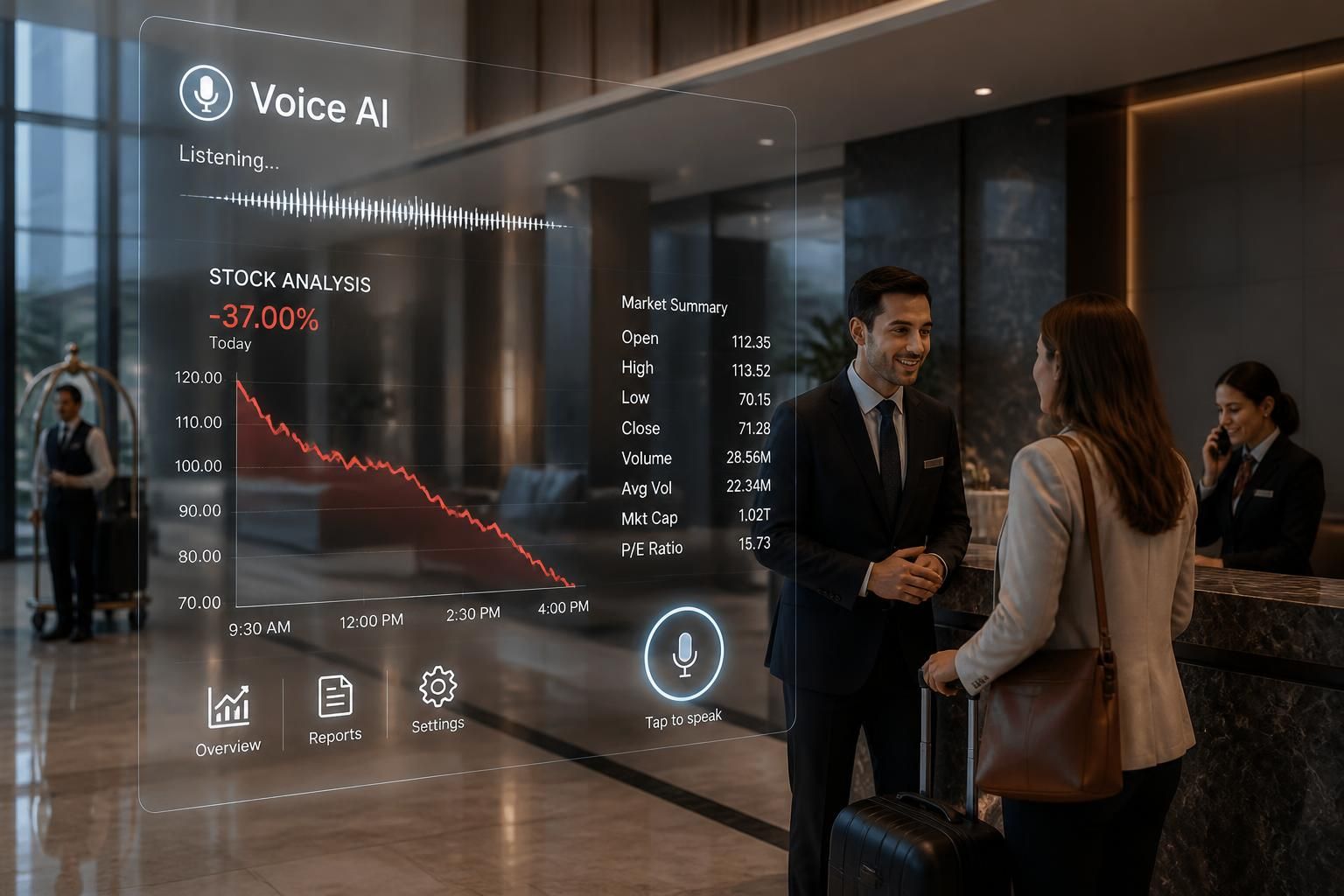
SoundHound AI shares have declined 37% so far in 2026, even as many AI-related companies continue to attract investor attention. The stock was also recently trading around 68% below its record high reached in 2024. That contrast is central to any serious financial analysis: a falling share price can make a former high-growth name look less expensive, but it does not automatically make it undervalued.
The immediate explanation is not a collapse in commercial activity. SoundHound AI remains an established provider of conversational AI technology, with products used in automotive, restaurant, hospitality, healthcare, and customer-service environments. Instead, the market reaction reflects a recalibration of expectations. Investors who once priced the company for exceptionally rapid expansion are now examining whether revenue growth, operating costs, acquisitions, and eventual profitability can support that earlier optimism.
In the stock market, the percentage decline matters, but the starting valuation matters just as much. A company can lose more than one-third of its value and still trade at a demanding multiple if its previous price already anticipated years of future growth. This is particularly relevant for AI businesses, where enthusiasm can accelerate pricing well ahead of proven earnings power. A 37% decline is substantial, yet it should be interpreted as a change in investor expectations rather than a standalone valuation signal.
For tourism, hospitality, and visitor-experience professionals, SoundHound’s market position deserves attention beyond the ticker symbol. Voice interfaces are becoming a practical service layer. A hotel guest can call to request late checkout, a visitor can ask a voice assistant for directions, and a restaurant customer can place an order without waiting for an employee. The value of conversational software depends less on novelty than on whether it reduces friction while preserving a high-quality human experience.
Consider a fictional urban resort, Harborline Hotel, that receives hundreds of calls daily about reservations, airport transfers, breakfast hours, and local activities. If a voice agent resolves routine requests accurately, staff can spend more time helping guests with complicated itineraries or accessibility needs. The technology has a measurable purpose: reducing queue time and increasing service availability. However, if the assistant misunderstands accents, fails to transfer complex cases, or provides outdated information, the same deployment can damage trust quickly.
Why market volatility has hit AI stocks unevenly
Market volatility tends to be strongest when a company combines fast growth, substantial losses, and a valuation built on future assumptions. SoundHound AI fits this profile more closely than mature software businesses with established profit margins. Investors are not only asking whether demand for voice AI exists. They are asking how fast revenue can grow, whether customer contracts can be retained, how much implementation support is required, and when operating leverage may emerge.
Another factor is competition. Conversational interfaces are no longer a narrow technical category. Large cloud providers, enterprise-software vendors, and generative AI platforms are all improving their speech, language, and automation capabilities. SoundHound differentiates itself through specialized, deployable voice products and a long-standing focus on speech interaction. Still, competitive pressure can affect pricing, sales cycles, and the perceived durability of its technology advantage.
Investors should therefore separate two questions. First: is voice AI becoming more useful across real-world industries? The evidence increasingly points to yes. Second: will SoundHound capture enough of that value efficiently to justify its market capitalization? That question requires closer examination of revenue quality, customer concentration, and cash consumption.
- 📉 Share-price performance: a 37% drop can reduce valuation pressure, but it does not remove business risk.
- 📊 Growth expectations: investors react to deceleration even when reported revenue is still rising rapidly.
- 🎙️ Product relevance: voice automation has practical uses in hospitality, mobility, restaurants, and customer support.
- ⚠️ Key caution: AI technology adoption does not guarantee a direct path to sustainable profitability.
A useful starting point is to follow the Q1 revenue report and subsequent share decline together rather than treating them as contradictory events. Revenue can meet expectations while the stock falls if investors expected an upgrade to the forward outlook. That is the central lesson from the recent move: markets price the future trajectory, not only the latest reported quarter.
The practical takeaway is simple: the shares plunge reflects a reset in confidence and valuation, not proof that SoundHound’s underlying products have lost relevance. The next issue is whether the company’s growth engine remains strong enough to validate a long-term investment opportunity.
SoundHound AI Revenue Growth and the Meaning of a Slower Expansion Rate
SoundHound AI reported record first-quarter revenue of $44.2 million, representing year-over-year growth of 52%. On an absolute basis, this is a strong result. A company generating more revenue than ever before and expanding by more than half from the prior-year period is clearly not standing still. Yet the stock market often focuses on the direction of growth rather than the size of one quarterly increase.
The challenge is comparison. During the equivalent quarter in 2025, SoundHound’s revenue rose by 151% year over year. Growth of 52% remains robust by the standards of many software companies, but it represents a visible slowdown from the prior pace. Investors may interpret that shift in several ways: as a normal effect of a larger revenue base, as evidence that acquisition-related growth is becoming harder to replicate, or as a sign that sales momentum is moderating.
None of these interpretations should be accepted without context. High percentages often become more difficult to maintain as revenue rises. Growing from a small base is statistically easier than adding the same percentage to a larger revenue figure. A disciplined financial analysis should therefore examine sequential progress, contract timing, recurring revenue characteristics, backlog conversion, and the effect of acquired businesses rather than relying solely on a single annual percentage.
Why unchanged guidance can matter more than strong quarterly numbers
The company kept its full-year revenue forecast in a range of $225 million to $260 million. Maintaining guidance may be a sign of management discipline, especially when the business operates in industries with long sales cycles and complex enterprise deployments. However, it can disappoint investors who expected the strong first-quarter performance to trigger a higher forecast.
In fast-moving AI technology markets, sentiment often rewards positive surprises. When a company exceeds estimates or presents a convincing path toward accelerated growth, investors may bid up its shares quickly. Conversely, when management confirms rather than raises its outlook, the market can interpret the decision as caution. This does not necessarily mean leadership expects deterioration. It may simply indicate that management prefers to wait for greater visibility before revising targets.
| Metric | Reported or Forecast Figure | What Investors May Assess |
|---|---|---|
| 📈 Q1 revenue | $44.2 million | Record quarterly scale and commercial traction |
| 🚀 Year-over-year growth | 52% | Still rapid, but below the 151% growth rate in Q1 2025 |
| 🧭 Full-year forecast | $225 million to $260 million | Management’s current view of expected demand and execution |
| 📉 Share movement in 2026 | 37% decline | Lower valuation, alongside continued execution risk |
For a practical example, imagine that Harborline Hotel signs a three-year customer-service automation agreement. The contract may generate revenue over time, but the timing of deployment, integration, and usage can influence when the income appears in financial reports. This is why a strong commercial announcement and a modest quarterly revenue effect can coexist. Enterprise AI contracts frequently require implementation work, integrations with existing booking tools, and testing across several customer-contact channels.
That same principle applies to organizations deploying voice services in tourism. A museum may decide to add a multilingual conversational assistant for visitor support. The decision can be fast, but the rollout still depends on accurate content, accessibility checks, staff training, and clear escalation paths. Technology revenue may be recognized gradually, while the operational benefit also develops over several stages.
Investors should be cautious about treating the slowing percentage as a definitive negative signal. The more useful question is whether SoundHound can sustain expansion while improving unit economics. If new contracts require increasingly expensive sales efforts, custom development, or support, high revenue growth may not translate into a stronger business model. If standardized products are adopted across multiple locations or brands with limited incremental cost, the outlook becomes more compelling.
Growth remains meaningful, but the market is demanding evidence of durable, scalable growth rather than headline momentum alone. The next area to evaluate is the product portfolio behind those numbers and the industries where its voice platforms are being deployed.
How SoundHound AI Technology Creates Value in Restaurants, Vehicles, and Hospitality
SoundHound AI is not solely a general-purpose chatbot provider. Its core proposition is conversational technology designed for specific customer interactions. The company has developed products that enable spoken orders, voice-enabled vehicle controls, automated call handling, and custom enterprise agents. This industry focus can be an advantage because real operational problems are usually specific: a drive-thru order is not the same interaction as a hotel reservation request or an in-car navigation command.
In quick-service restaurants, Dynamic Drive-Thru and Dynamic Kiosk are intended to automate customer orders. The objective is not necessarily to eliminate staff. It is to shift staff time away from repetitive order-taking toward food preparation, guest support, exception handling, and quality control. During peak periods, even a small reduction in order-processing delay can improve throughput. Accuracy remains essential, because an automated system that creates incorrect orders may cost more in refunds and customer dissatisfaction than it saves in labor.
In the automotive sector, SoundHound’s Voice AI platform allows manufacturers to embed voice interactions in vehicles. A driver may ask for navigation, media controls, weather information, vehicle settings, or nearby services. The safety argument is straightforward: voice can reduce the need to navigate a touchscreen while driving. But the user-experience standard is high. Drivers expect answers that are quick, context-aware, and reliable even when there is road noise, passenger conversation, or a non-standard accent.
Hospitality and tourism need voice tools that respect service quality
Hospitality provides one of the most practical environments for conversational automation. Guests frequently need help outside peak staffing hours, and many queries are repetitive. They ask about check-in timing, Wi-Fi, parking, restaurant opening hours, local transport, and reservation changes. A well-designed voice agent can handle routine requests at any hour while transferring sensitive, complex, or emotionally charged cases to a person.
Resorts World Las Vegas offers a concrete illustration of this model. The organization uses Amelia, a conversational AI platform acquired by SoundHound in 2024, to autonomously address more than half of incoming customer calls. The operational logic is clear: when automated handling takes repetitive calls off the queue, hospitality teams can dedicate more time to high-touch guest service. In a luxury environment, that human availability is part of the product itself.
For tourism operators, the lesson is not to automate every interaction. It is to identify the moments where an immediate, accurate answer genuinely helps. A visitor asking where to meet a guide needs fast information. A traveler seeking help after a missed connection needs empathy and human judgment. Smart deployment starts by mapping those different scenarios rather than forcing every request through the same automated flow.
Voice technology can also complement mobile audio experiences. During a guided route, an application can provide structured audio content while voice tools answer logistical questions such as “Where is the next meeting point?” or “Is this location accessible by wheelchair?” A solution like SoundHound’s voice AI approach is most useful when paired with accurate location data, curated information, and a clear option to reach a human organizer.
There are several implementation checks tourism professionals should make before adopting conversational tools:
- 🎧 Test real acoustic conditions: assess performance in lobbies, streets, buses, restaurants, and crowded cultural venues.
- 🌍 Review language coverage: international visitors require reliable handling of multiple languages and accents.
- ♿ Design for accessibility: provide text, human support, and visual alternatives for people who cannot or do not wish to use voice.
- 🔄 Create escalation routes: a guest should never be trapped in an automated loop when the request is urgent.
- 🔐 Control data practices: explain what is collected, where it is stored, and how sensitive information is protected.
The planned acquisition of LivePerson expands this conversation beyond voice. LivePerson’s digital engagement platform processes more than one billion messages each month across websites, social platforms, and chat applications. That scale could give SoundHound a broader customer-service footprint, combining spoken interactions with messaging-based support. For background on this strategic direction, the SoundHound AI and LivePerson transaction analysis highlights why omnichannel engagement is relevant to service-heavy industries.
The strongest use case is not automation for its own sake: it is an accessible service design where AI resolves simple requests and staff remain available for the moments that require expertise, reassurance, or local knowledge.
LivePerson, Amelia, and the Acquisition Strategy Behind SoundHound AI’s Investment Opportunity
SoundHound AI has expanded through product development and acquisitions. This is strategically important because the company is building a broader suite of conversational capabilities rather than relying on one narrow voice product. The acquisition of Amelia in 2024 brought an enterprise-oriented platform for creating AI agents that can support customers and employees. The more recent plan to acquire LivePerson adds another layer: digital messaging engagement across web, social, and chat channels.
Acquisitions can strengthen a business when they add complementary technology, established customers, distribution channels, or specialized expertise. They can also create risk. Investors must assess whether SoundHound can integrate teams, retain customers, avoid duplicate costs, and make the product portfolio easier rather than harder to understand. Buying growth is not the same as building a sustainable platform. The quality of post-acquisition execution is therefore a major element of the investment strategy.
Amelia 7 is an example of SoundHound’s effort to provide a customizable agent platform for organizations. A company can use such a platform to automate customer questions, guide employees through internal processes, or direct requests to the appropriate team. In practice, the success of these systems depends on the quality of the underlying business information. If opening hours, policy rules, booking conditions, and escalation contacts are not maintained, even advanced conversational AI will produce a poor experience.
Assessing the promise and risk of an omnichannel platform
LivePerson’s platform processes over one billion customer messages per month, a figure that demonstrates the size of the engagement infrastructure involved. If integrated effectively, the combination could let businesses manage voice calls and digital messages through a more connected conversational layer. A hotel group, for example, could begin a guest interaction through web chat, continue it by text message, and resolve a complex issue through a voice call without losing the context of the original request.
That continuity has operational value. It reduces repetition for the guest and helps employees understand the history of an inquiry. Yet it also raises a demanding implementation challenge: data from every channel must be accurate, secure, and appropriately governed. A fragmented system can create the opposite outcome, where a visitor receives one answer on chat, another through an automated call, and a third from a staff member.
For investors, the acquisition strategy can be viewed through two lenses. The optimistic view is that SoundHound is assembling a differentiated conversational AI stack with exposure to high-value industries. The cautious view is that broader scope can introduce integration complexity and make profitability harder to assess. Neither interpretation should rely on a press release alone. Metrics such as customer retention, cross-selling results, gross margin development, and operating expenses will be more informative over subsequent reporting periods.
A hypothetical cultural attraction, Northgate Museum Network, demonstrates the distinction. If it licenses a voice assistant only for visitor FAQs, the contract is limited but operationally clear. If it adopts a broader platform for ticketing messages, staff support, call automation, group-booking questions, and post-visit feedback, the potential value rises. However, integration with ticketing software, CRM records, payment systems, and accessibility workflows becomes essential. The broader deployment may yield more recurring revenue for the technology vendor, but it also requires stronger delivery discipline.
This is one reason investors should avoid treating AI technology as a single category. Software can appear similar in a product demonstration while having very different deployment costs, sales cycles, and customer-retention profiles. Voice ordering in a national restaurant chain may scale through repeatable templates. Enterprise service automation for a multinational hotel group may involve a longer, more customized process.
A sound due-diligence process should monitor the following areas:
- 🧩 Integration execution: whether Amelia and LivePerson capabilities become coherent products rather than separate offerings.
- 🏢 Enterprise customer retention: whether acquired customers remain active and expand their usage.
- 💼 Cross-selling evidence: whether existing SoundHound clients adopt messaging and agent capabilities.
- 💵 Margin discipline: whether revenue growth is accompanied by improving cost efficiency.
- 🛡️ Trust and governance: whether data handling supports enterprise and public-sector requirements.
Investors looking for a real-time overview can compare market commentary with a SoundHound AI stock research page, but external ratings should remain a reference point rather than a substitute for independent evaluation. Analyst targets, price charts, and sentiment indicators often change quickly when market volatility increases.
The acquisition story could create a wider competitive moat, but only if management converts greater scale into simpler customer experiences and more efficient economics. That makes valuation and risk management the decisive next part of the analysis.
Building a Disciplined Investment Strategy After the SoundHound AI % Decline
The central question is whether SoundHound AI represents a genuine investment opportunity after its 37% decline or whether the lower share price simply reflects further downside risk. There is no universal answer because the appropriate decision depends on an investor’s time horizon, tolerance for volatility, portfolio concentration, and belief in the company’s ability to execute. What can be established is a disciplined framework for assessing the opportunity.
First, avoid confusing a lower price with a low valuation. If a stock previously traded at an elevated revenue multiple, a sizeable decline may only bring it closer to a more realistic level. The relevant calculation is not “How far has it fallen from its peak?” but “What growth, margins, and cash generation does the current valuation assume?” A stock trading 68% below a historic high can still be expensive if future expectations remain aggressive.
Second, distinguish business indicators from share-price momentum. Strong quarterly revenue, expansion into new channels, and credible enterprise customers can support a long-term thesis. At the same time, slowing growth, continuing losses, dilution risk, acquisition integration, and competitive pressure can challenge it. An investor should weigh both sets of facts instead of selecting only the data that confirms an existing view.
Using scenarios instead of relying on a single forecast
A practical investment strategy can use three scenarios. In a constructive scenario, SoundHound maintains strong growth, integrates Amelia and LivePerson effectively, wins new enterprise clients, and gradually improves operating leverage. In a middle scenario, growth remains solid but moderates, while profitability takes longer to arrive. In a negative scenario, integrations prove costly, customers face competing alternatives, and revenue fails to justify the company’s valuation.
This method is more useful than assuming the stock will recover simply because it has fallen. Recovery requires a catalyst: improved financial performance, stronger guidance, successful acquisition execution, meaningful customer wins, or a broader market reassessment of AI software valuations. Without such evidence, a share-price drop can persist for a long period.
| Scenario | Operational Evidence to Watch | Potential Stock Market Effect |
|---|---|---|
| 🟢 Constructive | Growth stays strong, forecast improves, integration milestones are met | Investor confidence and valuation support may improve |
| 🟡 Balanced | Revenue expands, but margins and guidance remain measured | Shares may remain volatile while the market waits for proof |
| 🔴 Adverse | Slower sales, higher costs, integration issues, or customer losses | Further % decline remains possible despite the earlier pullback |
For a tourism-sector decision-maker, the parallel is useful. No museum or destination organization should adopt a new platform solely because a supplier offers a discounted contract. The decision should be based on outcomes: does the tool improve visitor access, reduce staff friction, support multilingual content, and integrate with existing processes? Investing in a public company requires the same discipline. Price is one input; operating evidence is the larger issue.
Dollar-cost averaging may be considered by investors who have independently decided that SoundHound fits their long-term portfolio thesis. Rather than committing all capital at one price, staged purchases can reduce the risk of entering during a short-lived rally. This approach does not eliminate loss risk, and it is not appropriate for every investor, but it can limit the impact of trying to predict the exact market bottom.
Position sizing is equally important. High-volatility AI equities should not dominate a diversified portfolio merely because their upside narrative is compelling. A smaller allocation can allow participation in potential growth while limiting the damage if the negative scenario develops. Investors should also review broader exposure: someone already holding multiple speculative software and semiconductor positions may have more AI concentration than expected.
Regular monitoring should focus on relevant indicators, not daily headlines. Watch the full-year forecast, quarterly revenue growth, cash flow trends, customer wins, product deployment updates, and integration milestones. Track the SOUN quote and financial updates for current market data, while remembering that a daily chart cannot determine long-term business quality.
SoundHound AI may become an attractive opportunity only if the lower valuation is matched by consistent commercial execution, disciplined spending, and evidence that its expanded conversational platform can scale.
Operational Signals That Could Change the SoundHound AI Investment Case
SoundHound AI’s investment case will not be settled by one quarterly report. It will evolve through a series of operational signals that show whether the company is translating AI technology into repeatable, profitable customer outcomes. This is especially relevant because conversational AI is now moving from pilot projects toward broader operational use. Companies no longer want demonstrations alone; they want measurable reductions in response time, higher conversion, better service availability, and reliable handoffs to human teams.
One positive signal would be a clearer link between revenue growth and improved economics. If revenue rises while sales, implementation, and support costs grow more slowly, the company may demonstrate operating leverage. That pattern is important in enterprise software because it suggests the platform is becoming more scalable. If costs rise at the same pace as sales, or faster, investors may question how soon the business can generate durable returns.
Another meaningful indicator is the quality of customer deployments. A contract announcement is useful, but a production deployment across hundreds or thousands of locations is more valuable. For example, a restaurant brand using voice ordering in one pilot store is an early test. A rollout across a large network, with documented order accuracy and customer satisfaction, provides stronger proof that the product can scale.
Why user experience is an investment metric, not only a product metric
In hospitality, tourism, and transport, customer experience has a direct commercial effect. An unanswered call can become a lost reservation. A confusing voice menu can increase abandonment. A multilingual assistant that gives a visitor clear directions can reduce pressure on front-desk teams while improving the perceived quality of the service. For this reason, implementation quality can ultimately affect retention, expansion revenue, and brand reputation.
Organizations should ask practical questions when evaluating voice systems. Does the tool recognize natural language rather than requiring scripted phrases? Can it distinguish a routine request from a complaint? Does it connect to the latest operational information? Can supervisors review conversations and improve responses? Does the design include a fast route to a person when necessary? These are not minor product details. They determine whether a deployment becomes a useful service layer or an expensive source of friction.
SoundHound’s position in automotive, restaurant, healthcare, and hospitality markets gives it access to industries where voice interaction can solve real problems. It also means the company must meet sector-specific expectations. Healthcare needs careful handling of sensitive information. Automotive systems must work safely and reliably in motion. Hotels require brand-appropriate service and multilingual support. Restaurants prioritize speed, accuracy, and integration with order-management systems.
The difference between a promising platform and a resilient business is often found in these details. A travel operator may be impressed by a natural-sounding voice assistant, but the procurement decision will depend on integration, pricing, analytics, uptime, privacy controls, and staff usability. In the same way, investors should look past impressive AI demonstrations and examine evidence that customers renew contracts, increase usage, and achieve operational benefits.
Several developments could strengthen the medium-term outlook:
- 📌 Raised guidance: an upgraded forecast would indicate improved management visibility and commercial momentum.
- 🏨 Large-scale hospitality adoption: deployments across hotel groups or resorts could validate the enterprise service model.
- 🚗 Automotive expansion: broader manufacturer adoption would reinforce the relevance of embedded voice AI.
- 💬 Successful messaging integration: clear progress connecting LivePerson capabilities with existing offerings could expand the addressable market.
- 📉 Narrowing losses: improved expense discipline would make growth more financially credible.
On the other hand, investors should monitor warning signals with equal attention. A reduced forecast, weak customer retention, unexpected integration expenses, or repeated delays in converting pilots to wider deployments would challenge the bullish case. Market volatility can amplify these signals because high-expectation AI stocks are frequently repriced quickly after earnings updates.
For professionals interested in the operational implications of voice automation, the analysis of voice AI and connected mobility services offers a relevant perspective. The most effective digital experiences combine reliable conversational design with contextual data, clear interfaces, and human support. That principle applies whether the user is a driver, hotel guest, restaurant customer, or visitor navigating a cultural destination.
The strongest evidence to watch is not promotional language but repeatable deployment success: customers using the platform at scale, users receiving accurate support, and financial results that show this value can be delivered efficiently.
Why did SoundHound AI shares plunge 37% in 2026?
The decline reflects a mix of valuation pressure, investor concern about slower revenue growth, ongoing losses, and unchanged full-year guidance. Although first-quarter revenue reached a record $44.2 million, the 52% growth rate was below the 151% rate reported in the comparable 2025 period.
Does a 37% decline make SoundHound AI stock cheap?
Not automatically. A lower price can reduce a previously elevated valuation, but investors should compare the company’s market value with expected revenue growth, future margins, cash needs, competitive pressure, and acquisition execution.
What are SoundHound AI’s main products?
Its portfolio includes voice AI for vehicles, Dynamic Drive-Thru and Dynamic Kiosk products for quick-service restaurants, and enterprise conversational agents through Amelia. The planned LivePerson acquisition would broaden its messaging and digital customer-engagement capabilities.
What should investors monitor after SoundHound AI’s share-price decline?
Key indicators include full-year forecast changes, quarterly revenue growth, losses and cash flow, customer retention, large-scale deployments, progress integrating Amelia and LivePerson, and evidence that new products improve margins over time.
