
Enhancing Public Access by Reopening the Historic South Entrance of the Museum of Science and Industry
The Museum of Science and Industry’s initiative to reopen its original south entrance marks a significant step toward overcoming long-standing visitor access challenges. For decades, the museum’s primary entrance on the north side has dominated access, leaving the south-facing colonnaded portico closed since the early 20th century. This closure limited access points and forced visitors to approach the museum predominantly via the north, despite the south entrance historically serving as the main gateway during the 1893 World’s Columbian Exposition.
The reopening is part of an ambitious $22 million renovation project set to conclude by 2027. This project aims to restore the south entrance’s architectural grandeur while integrating modern infrastructure to improve accessibility and visitor experience. With new access points that comply with ADA standards, the museum addresses a significant barrier for visitors with disabilities, making public access more inclusive and convenient. According to the museum’s CEO Chevy Humphrey, the reintegration of this entrance is not merely a restoration of the building’s historic footprint but a strategic enhancement of how the Museum of Science and Industry welcomes the public from all directions.
This redevelopment involves the installation of a glass curtain wall behind the museum’s iconic bronze doors and columns, which will both protect the structure and provide a transparent link between exterior and interior spaces. Patrons will enter through on-grade doors leading into a new lobby equipped with elevators and possibly new exhibition spaces, thereby reducing the physical strain associated with stairs and steep access points that were previously problematic. In addition to improving flow, this project renovates the infrastructure to support modern visitor needs, including climate control and energy efficiency.
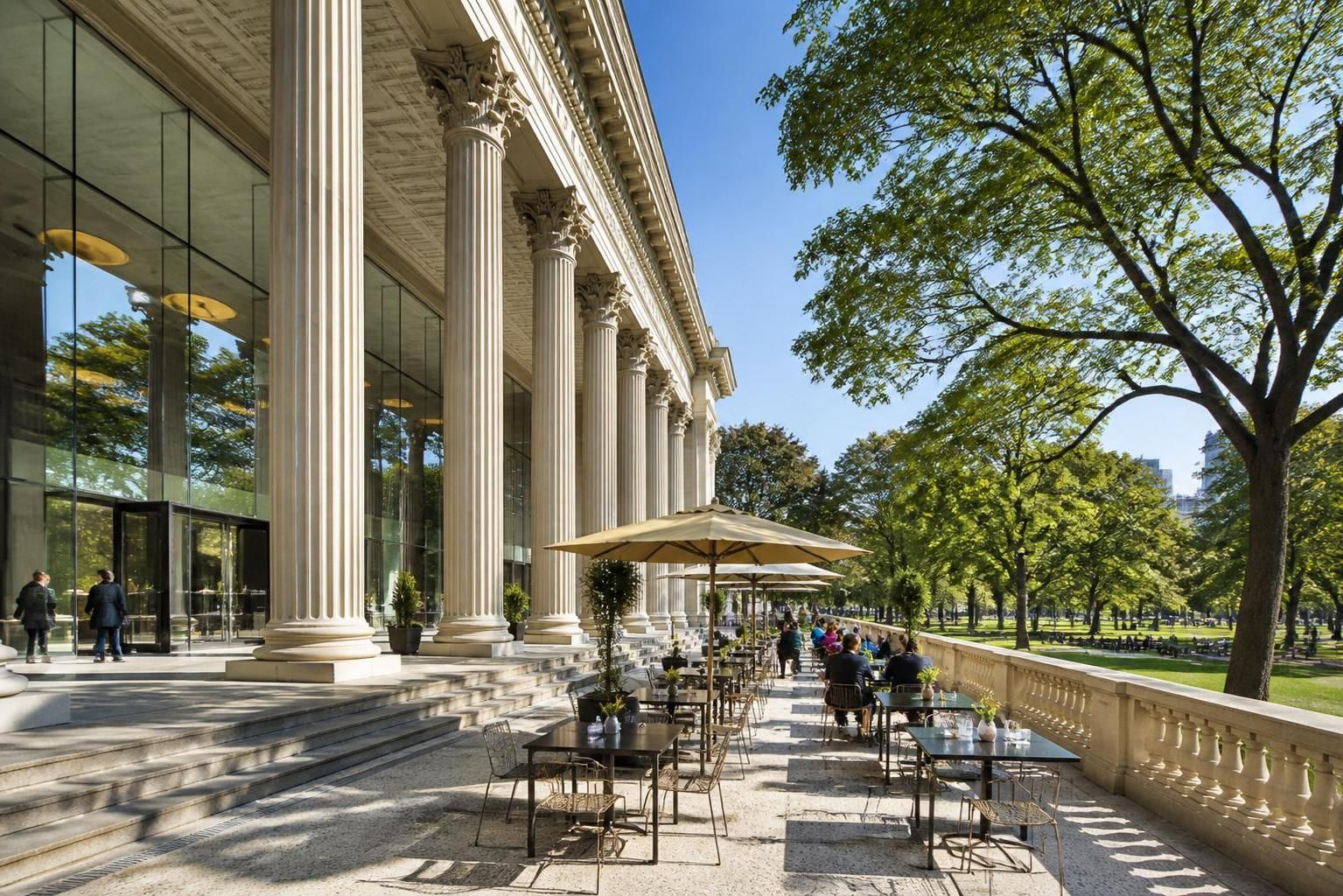
Besides accessibility improvements, the redesign includes an indoor café and a newly configured outdoor terrace overlooking Jackson Park and its picturesque landmarks, transforming the south entrance into a vibrant social and cultural node. It serves to enhance the visitor experience beyond traditional gallery spaces, encouraging longer stays and social engagement. This revitalization reflects a broader trend in museums embracing more engaging public amenities that complement scientific and cultural exhibitions.
The project has received substantial support, notably a $10 million grant from the Richard H. Driehaus Foundation, underscoring the community and philanthropic commitment to facility improvement and historic preservation. The redesign is entrusted to RAMSA, a renowned architectural firm known for its sensitive restoration of historic landmarks, which promises a “very light touch” on the museum’s listed structure to maintain its essence while modernizing it effectively.
This reopening will not only restore historical integrity but also better connect the museum to its surroundings, including the adjacent Obama Presidential Center, contributing to the evolving cultural landscape on Chicago’s South Side. The synergy between these institutions suggests a revitalization of the neighborhood as a hub for cultural tourism and public engagement.
For more detailed insights into the project and its funding, see the detailed coverage on Chicago YIMBY’s report on the reopening.
Architectural and Structural Transformations Supporting Modern Visitor Experience and Accessibility
The architectural challenge of reopening the south entrance lies in balancing the restoration of a 133-year-old landmark with the introduction of contemporary access and amenities suited for today’s diverse visitors. The museum’s south portico was initially designed by Charles Atwood for the 1893 World’s Columbian Exposition as the primary entrance, serving visitors arriving by gondola across Jackson Park’s basin. Since then, however, the museum’s focus shifted to the north side, rendering the south side dormant for almost a century.
RAMSA’s approach respects the building’s Neoclassical style, preserving its limestone cladding and iconic bronze doors, while subtly incorporating new features like a floor-to-ceiling glass curtain wall. This transparent enclosure not only protects the structure from weather damage but also enhances visibility, creating a welcoming threshold that signals openness. The historic portico’s loggia, once exposed to elements, will become a functional transitional space linking outdoors and indoors.
The introduction of ADA-compliant elevators inside the new lobby ensures that all visitors, including those with limited mobility, can access the museum’s main levels seamlessly. This contrasts with the previous south entrance stairs, which presented an obstacle, especially for wheelchair users and seniors. The upgrading of the stairs alongside the elevator addition preserves historic elements while ensuring safety and usability.
Attention to visitor comfort continues with the addition of public restrooms, upgraded event spaces, and an indoor café with seating extending outdoors on the terrace. These improvements foster new ways for guests to experience the museum, providing areas for socializing, resting, and enjoying scenic views of Jackson Park’s Wooded Isle and Osaka Garden. This ecosystem of amenities contributes to a more holistic visit that accommodates diverse patron needs.
Such facility improvements align with contemporary museum trends, where institutions recognize the importance of blending exhibition spaces with hospitality and community-focused facilities. The Museum of Science and Industry is positioning itself as a forward-thinking entity that understands visitor expectations in 2026: seamless access, comfort, and engagement with both the built and natural environment.
Moreover, the project underscores sustainability considerations through elements such as energy-efficient glazing and the reuse of the existing footprint to minimize environmental impact. This focus on infrastructure enhancement not only benefits user experience but also ensures the museum’s operational resilience.
For those interested in the architectural renovation specifics, further details are elaborated on NBC Chicago’s renovation overview.
Addressing Historical and Community Access Challenges Through Infrastructure and Inclusion
The longer-term closure of the south entrance has been a persistent obstacle for community access and equitable visitor flow. The Museum of Science and Industry’s shift to the north entry decades ago was practical for automobile and bus traffic, but it limited multi-directional site accessibility. This has particularly affected visitors arriving from Jackson Park or the South Side neighborhoods, for whom the south entrance offers a more logical and scenic approach.
Furthermore, the barriers posed by the original south portico – mainly the steep stairs and lack of accessibility features – restricted groups such as seniors, families with young children, and people with disabilities from easily using that entrance. Reopening it with ADA-compliant infrastructure demonstrates an institutional commitment to inclusion and visitor-centric design. It is a proactive step enabling the museum to serve a broader audience with diverse mobility and spatial needs.
The museum’s strategy to build admission-free public spaces around the structure expands the role of the south entrance beyond a mere entry point. These spaces are envisioned as neighborhood assets where education, science engagement, and social interaction coexist. This reflects a modern understanding that museums are not isolated containers of culture, but integral parts of their communities requiring open, welcoming, and accessible interfaces.
This focus on public access also supports the cultural and economic revitalization of Chicago’s South Side, which has seen growing investment in recent years. The newly enhanced entrance will better link with local transit routes, pedestrian access, and adjacent attractions like the Obama Presidential Center. Such improved connectivity is expected to increase foot traffic and tourism, ultimately benefiting neighborhood vitality and museum attendance.
Key benefits of reopening the south entrance include:
- 🚪 Increased visitor entry points reducing congestion
- ♿ Full ADA compliance and improved mobility access
- 🌿 Stronger integration with Jackson Park and outdoor green spaces
- ☕ Enhanced visitor amenities including café and terrace seating
- 🏛️ Preservation of historic architecture blended with modern facility needs
These benefits align with wider museum sector priorities focusing on accessibility and community engagement as integral to contemporary cultural institutions.
Visitor Experience Revamped: Blending Heritage with Modern Amenities
Visitors to the Museum of Science and Industry will soon benefit from a revitalized experience that honors the building’s storied past while embracing 21st-century expectations. The south entrance reopening will create a new narrative thread in the visitor journey — one that combines historical appreciation with comfort, convenience, and discovery.
The preservation of the south portico’s grand bronze doors and towering columns preserves a tangible connection to the 1893 World’s Columbian Exposition, an iconic cultural moment in Chicago’s history. This backdrop offers educational and interpretive opportunities where visitors can engage with the museum’s heritage as part of their entry experience.
The combined effect of architectural restoration and new facilities extends to curated exhibition space potentially located near the new lobby, where the museum can design interactive displays or temporary exhibits that complement main galleries. These can emphasize themes of innovation and industry relevant both to the museum’s core mission and the surrounding community.
The inclusion of a café adjacent to the new entrance is a critical component of enhancing dwell time and social interaction. Patrons can appreciate views of Jackson Park’s natural beauty while enjoying refreshments, effectively merging cultural and leisure experiences. This multipurpose approach encourages visitors to spend more time on-site, enhancing satisfaction and engagement.
Furthermore, this redesign creates an event-friendly environment where community gatherings, educational programs, and membership events can be held. By providing improved event spaces, the museum fosters stronger community ties and diversified revenue streams, critical for sustainability in the competitive cultural sector.
Visitors gain not only improved physical access but also an enriched sensory and intellectual experience, supported by the thoughtful integration of heritage and innovation. This underpins the museum’s ongoing goal of remaining a relevant and inspiring destination.
Strategic Implications for the Museum and Regional Cultural Landscape
The reopening of the Museum of Science and Industry’s south entrance is poised to have broader strategic implications for both the institution and Chicago’s cultural ecosystem. This project strengthens the museum’s position as a leading science and industry institution while contributing to the revitalization of Chicago’s South Side as a vibrant cultural corridor.
With improved infrastructure and public access, the museum increases its capacity to host larger and more diverse audiences. This expansion supports ambitions to potentially reintroduce free general admission in the future, as expressed by CEO Chevy Humphrey, aiming to eliminate financial barriers and democratize access to science education.
The project’s timing aligns with the evolving development of nearby attractions, particularly the Obama Presidential Center, creating a synergistic museum campus on the South Side. This convergence fosters cross-institutional collaboration and shared programming, enhancing cultural tourism and educational outreach.
Furthermore, the ongoing shift toward smart and inclusive tourism practices highlights the importance of accessible infrastructure enhanced by technology. Offering visitors a seamless, welcoming entry experience reflects modern expectations for cultural venues. Integration with digital tools such as interactive audio guides and mobile apps will further enrich interpretation as visitors move between indoor and outdoor spaces.
Table: Strategic Benefits of South Entrance Reopening at Museum of Science and Industry
| Strategic Focus 🎯 | Benefits and Outcomes 🌟 | Related Opportunities 💡 |
|---|---|---|
| Public Access Improvement | Multiple entry points; enhanced ADA access; increased visitor flow | Broader audience reach; improved visitor satisfaction |
| Heritage Preservation | Restoration of historic architecture; protection of landmark status | Educational programming; cultural tourism appeal |
| Community Engagement | New public spaces; event venues; cultural hub formation | Stronger neighborhood ties; partnerships with local institutions |
| Visitor Experience Enhancement | Modern facilities; amenities; green views; social spaces | Longer visits; repeat attendance; diversified revenue |
| Regional Cultural Revitalization | Synergy with nearby cultural centers; boosted tourism | Economic growth; enhanced city cultural profile |
The museum’s commitment to these strategic areas aligns with best practices in cultural management and urban development. This renovation project is a practical example of how facility improvements can generate broader social, educational, and economic benefits.
For innovative approaches to improving museum access and visitor engagement, exploring how technology supports inclusivity offers valuable insights. Discover smart tourism strategies in cultural venues via resources like the article on AI enhancing museum access.
Why has the Museum of Science and Industry’s south entrance been closed for so long?
The south entrance was closed primarily because the museum shifted its main access to the north side in the early 20th century for logistical reasons such as vehicle and bus traffic, and the south entrance’s stairs were not accessible for all visitors. This closure lasted over a century until plans were made for restoration and modernization.
What improvements will the renovation of the south entrance include?
The renovation will add ADA-compliant elevators, a glass curtain wall behind the historic portico, a new lobby, exhibition space, public restrooms, an indoor café, and an outdoor terrace with scenic park views, significantly upgrading visitor access and experience.
How will reopening the south entrance impact visitor access?
It will provide an additional, fully accessible entry point that reduces crowding, welcomes visitors from the south and Jackson Park, and better integrates the museum with the surrounding community and transit options.
What role does the Richard H. Driehaus Foundation play in this project?
The Richard H. Driehaus Foundation granted $10 million toward the $22 million project, supporting the restoration of the historic south portico and infrastructure improvements to enhance public access and visitor experience.
How does this renovation align with broader cultural developments in Chicago?
The reopening complements nearby developments like the Obama Presidential Center, contributing to the emergence of a South Side cultural campus and reinforcing Chicago’s profile as a leading destination for cultural tourism and education.
