
Peu de temps ? Voici l’essentiel à retenir :
✅ Apple unveils Siri AI, a fundamental redesign of its smart assistant with AI at its core, enhancing interactivity and personalization.
✅ New customizable voice options allow users to tailor Siri’s expressivity, pace, and accent for a more natural conversational experience.
✅ Privacy remains central despite expanded access to personal apps and data, with AI features carefully integrated to support user control.
Revolutionizing Virtual Assistant Technology with Siri AI
Apple’s announcement of Siri AI marks a significant turning point in the realm of smart assistants. Rebuilt from the ground up at the 2026 Worldwide Developers Conference, Siri AI integrates the latest advances in artificial intelligence, drastically improving its ability to engage in natural, context-aware conversations. This innovation moves Siri beyond the limitations of scripted responses toward a highly adaptive, intuitive interaction model.
At its core, Siri AI leverages Google’s advanced Gemini AI model, reflecting a strategic partnership that channels leading-edge AI technology into Apple’s software ecosystem. This collaboration facilitates a smart assistant capable not only of understanding user intent more deeply but also of executing complex tasks by interacting seamlessly across various applications within an iPhone. This capability enhances productivity by streamlining workflows, as Siri can now, for example, book appointments, manage reminders, or extract relevant information from multiple apps without cumbersome manual operations.
What sets Siri AI apart is its sensitivity to the user’s context and data, carefully balanced with Apple’s well-established commitment to privacy. Craig Federighi, Apple’s senior vice president of software engineering, emphasized that while AI technologies proliferate rapidly, Apple’s approach remains human-centered. This means users maintain strict control over what data Siri AI accesses and how it applies artificial intelligence in everyday interactions. The integration is designed to appear effortless and beneficial, elevating the overall user experience without compromising security.
Consider a tourism professional using Siri AI during guided visits: the assistant can retrieve historical information, local insights, and logistics details dynamically by interfacing with different apps swiftly. Such real-time intelligence exemplifies how AI supports efficiency and enriches service delivery in professional environments, a crucial advancement for sectors relying on timely and accurate data access.
For a more detailed look at Siri AI’s architecture and capabilities, further insights are available in the in-depth coverage at Apple Intelligence official page.
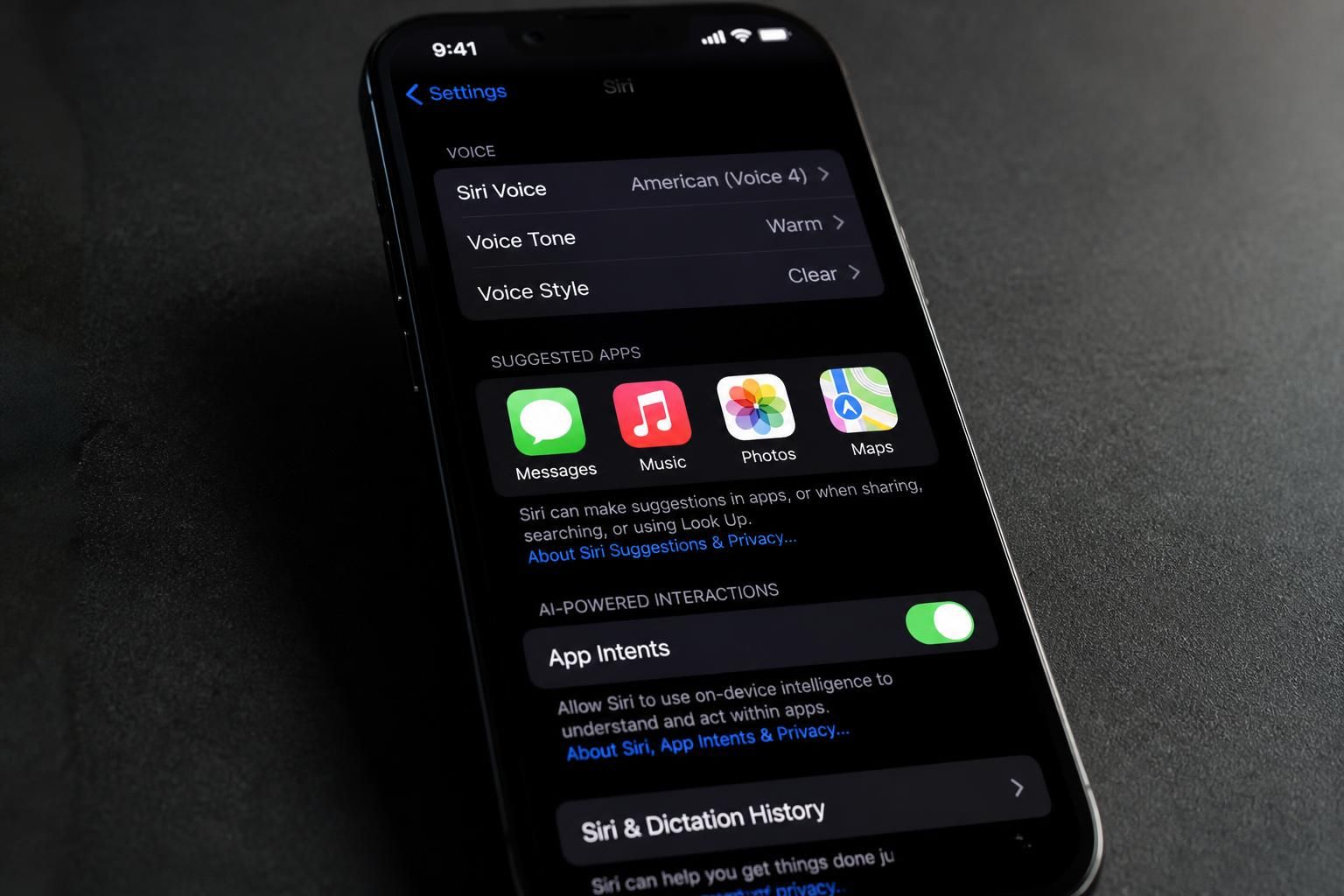
Enhanced Customizable Voices: Elevating User Experience Through Personalization
Siri AI’s voice customization introduces a new dimension to artificial intelligence interaction — one where users can tailor the assistant’s voice expressivity, rhythm, and accent. This feature moves beyond the traditional fixed voice presets, enabling a dynamic user experience that feels more personalized and human.
Users can adjust parameters such as speaking pace to suit environments (e.g., faster for quick responses, slower for clarity in noisy surroundings) and modify emotional expressivity to shift between formal or casual tones. Additionally, accent options help to reflect local dialects or preferred pronunciations, enhancing inclusivity and comfort during use.
For example, a tour guide leveraging such customizable voices can modulate Siri’s tone to match the ambiance of a museum or an outdoor historical site — making the assistant feel less mechanical and more intuitive, thereby improving visitor engagement. Similarly, individuals with hearing difficulties can set a clearer, slower voice, improving comprehension.
Underlying this innovation is advanced voice recognition technology that ensures smooth transitions between these voice parameters without loss of natural intonation or fluency. The result is an assistant that reacts intelligently and sounds authentic across diverse use cases.
A practical outcome is the better acceptance and adoption of voice assistants among broader demographics, including elderly users or speakers of regional accents underserved by prior voice recognition systems.
For those interested in detailed voice customization techniques and future developments in AI-powered speech, resources like the article on the latest Siri AI voice enhancements provide an expert perspective.
Unparalleled Integration with iOS Ecosystem: Harnessing AI Across Applications
Siri AI introduces unprecedented integration capabilities within the iOS ecosystem. Unlike earlier iterations constrained to basic tasks and isolated commands, Siri AI can now analyze and execute actions across multiple apps simultaneously. This capability fundamentally changes how users interact with their smart devices.
For instance, through contextual awareness, Siri AI can coordinate calendar events, communication apps, and map utilities for a seamless travel planning experience. Suppose a user asks Siri to organize a business trip itinerary: Siri AI can check available flights, book accommodations, set reminders, and update contacts, all in one cohesive flow without necessitating manual app switching.
Another remarkable function is the new Siri AI mode on the iPhone camera, which interprets what it “sees” to offer relevant responses. Pointing the camera at a dish on a restaurant table triggers nutritional analysis or recipe suggestions, which is a practical tool for tourists and health-conscious users alike.
This multi-application interaction highlights Apple’s vision to embed artificial intelligence deeply within everyday user workflows, reducing friction and enhancing multitasking efficiency.
Privacy remains a cornerstone: user data accessed during these interactions is confined within strict boundaries, ensuring controls remain with the user, confirming Apple’s premium stance on security even as AI capabilities expand.
To explore how such cross-app functionalities can be leveraged in smart tourism and event settings, the overview on Apple CarPlay AI and chatbot integration offers practical insights.
Siri AI and Privacy: Balancing Intelligent Assistance with Data Security
At the intersection of powerful AI capabilities and user privacy, Apple positions Siri AI as a model for responsible technology deployment. While AI systems typically require large data inputs, Apple’s approach incorporates rigorous privacy safeguards and transparency.
Key to this balance is on-device processing, which minimizes data sent to external servers, thereby reducing exposure risks. Users are empowered to manage permissions granularity, choosing precisely what data Siri AI can access. This fosters trust and ensures compliance with increasing regulatory demands worldwide.
Craig Federighi’s remarks at WWDC emphasize that Apple’s AI implementation is designed to prioritize human utility rather than technological novelty for its own sake. This user-first mandate prevents unnecessary data collection and focuses instead on delivering real value through AI enhancements.
From the perspective of cultural institutions or tour operators, this approach allows integrating intelligent assistants within their offering without concerns about compromising visitor confidentiality or proprietary content.
The framework established by Apple sets an industry standard, encouraging other AI-driven solutions to adopt similar ethical guidelines.
A comprehensive analysis on this theme can be found at Apple Intelligence privacy and AI ethics report.
Implementing Siri AI in Professional Environments: Practical Uses in Smart Tourism and Beyond
The practical implications of Siri AI’s enhancements extend well into professional domains where digital assistants can streamline operations and enrich user engagement. Smart tourism, a sector highly reliant on nimble, accurate information dissemination, stands to benefit significantly.
Guides and event organizers can use Siri AI as a dynamic content assistant, providing visitors with real-time audio commentary tailored by voice customization settings. Siri AI’s voice recognition and natural language processing allow for smooth multilingual support and interactive Q&A sessions, transforming traditional tours into adaptive, user-responsive experiences.
The following list highlights key benefits of deploying Siri AI in professional tourism contexts:
- 🗣️ Multilingual voice customization adapts to diverse tourist demographics.
- 🎤 Enhanced speech expressivity for engaging storytelling and immersive audio guides.
- 📱 Cross-app data integration for seamless itinerary management and real-time updates.
- 🔒 Robust privacy controls ensuring user data protection during tours and events.
- ⚡ Hands-free interaction enabling efficient multitasking for guides and staff.
These advantages not only improve operational efficiency but also contribute to a modernized, accessible visitor experience that meets contemporary expectations.
Adopting such solutions aligns with trends showcased in recent case studies using AI in audio tour applications—such resources are well documented at Perplexity AI Voice Assistant for tourism.
| 🔍 Feature | ✅ Benefit | 🎯 Practical Example |
|---|---|---|
| Customizable voice settings | Improved user engagement through personalization | Guide adjusts Siri’s tone for museum or outdoor tours |
| Cross-app integration | Streamlined multi-tasking and coordinating tasks | Booking, reminders, and mapping coordinated seamlessly |
| Privacy-first AI design | Ensures compliance and builds user trust | On-device data processing reducing exposure risks |
| Camera-based Siri AI mode | Contextual responses for real-world objects | Nutritional info from food on a plate |
| Multilingual support | Facilitates access for international audiences | Smooth language transitions on tours |
By integrating Siri AI into professional workflows, businesses can harness cutting-edge technology to meet user demands for intuitive and accessible digital assistance, promoting innovation without sacrificing usability.
How does Siri AI balance advanced functionality with privacy?
Siri AI processes most data on-device, limiting data sharing externally. It offers granular user controls to decide which information the assistant can access, ensuring privacy remains paramount despite enhanced AI capabilities.
What voice customization options does Siri AI provide?
Users can modify Siri’s voice pace, expressivity, and accent. This allows more natural and context-sensitive interaction tailored to different environments and cultural backgrounds.
How does Siri AI’s cross-app integration improve productivity?
By coordinating actions across multiple applications, Siri AI streamlines complex tasks like scheduling, messaging, and navigation without switching apps, saving time and creating a cohesive user experience.
Is Siri AI available in multiple languages?
Initially, Siri AI launches in English, with plans to extend support to additional languages to accommodate global users.
How can professionals in tourism leverage Siri AI effectively?
Tourism professionals can customize voices for engaging audio guides, utilize real-time data integration, and maintain secure user interactions, enhancing both operational efficiency and visitor satisfaction.
