
Few moments encapsulate the creative tensions currently shaping the film industry better than Will Arnett’s fervent defense of animation during the recent Oscars ceremony. His remarks, aimed directly at the growing role of artificial intelligence (AI) in creative processes, highlight a renewed call to protect human artistry in an era increasingly influenced by digital innovation.
Peu de temps ? Voici l’essentiel à retenir :
- 🎬 Will Arnett emphasizes the irreplaceable human element in animation creation despite AI advancements.
- 🤖 The Oscars become a platform for serious debate about the ethical and artistic implications of AI in filmmaking.
- 💡 Industry professionals and audiences alike face the challenge of balancing technological progress with authentic creative expression.
- 📊 A growing necessity for transparent guidelines and standards surrounding AI use in animated features and performances.
Will Arnett’s Stand: Defending Animation as a Human Art Form in the Age of AI
During the 98th Academy Awards at the Dolby Theatre, Will Arnett seized the moment before presenting Best Animated Short Subject to passionately highlight the distinction between human creativity and artificial intelligence. Known for his voice performances in acclaimed animation projects such as The LEGO Batman Movie and BoJack Horseman, Arnett brought his authoritative voice to a sensitive industry debate.
He articulated a clear message: “Tonight, we are celebrating people, not AI, because animation, it’s more than a prompt. It’s an art form and it needs to be protected.” This statement reverberated through the audience, earning applause and reigniting discussions over AI’s burgeoning influence.
Arnett’s objections center on the misconception that AI can replace the nuanced human performances integral to the animation craft. While AI may assist in generating visuals or even voice modulation, the emotional depth and subtlety embedded by human actors remain hallmarks of authentic storytelling. Such sentiments echo a broader concern within the film industry — how to integrate innovation without eroding the soul of creative work.
His speech also punctuated a light-hearted exchange with co-presenter Channing Tatum, who initially suggested voice acting was a lesser form of performance. Arnett effectively turned the narrative, underscoring not only the legitimacy but also the complexity of performing animated characters. This defense further elevates the respect owed to voice actors within the broader cinematic ecosystem.
The awards handed out that evening, like “The Girl Who Cried Pearls” for Best Animated Short and “KPop Demon Hunters” for Best Animated Feature, reinforce that animation remains a vibrant, evolving medium engaging artists and audiences alike.
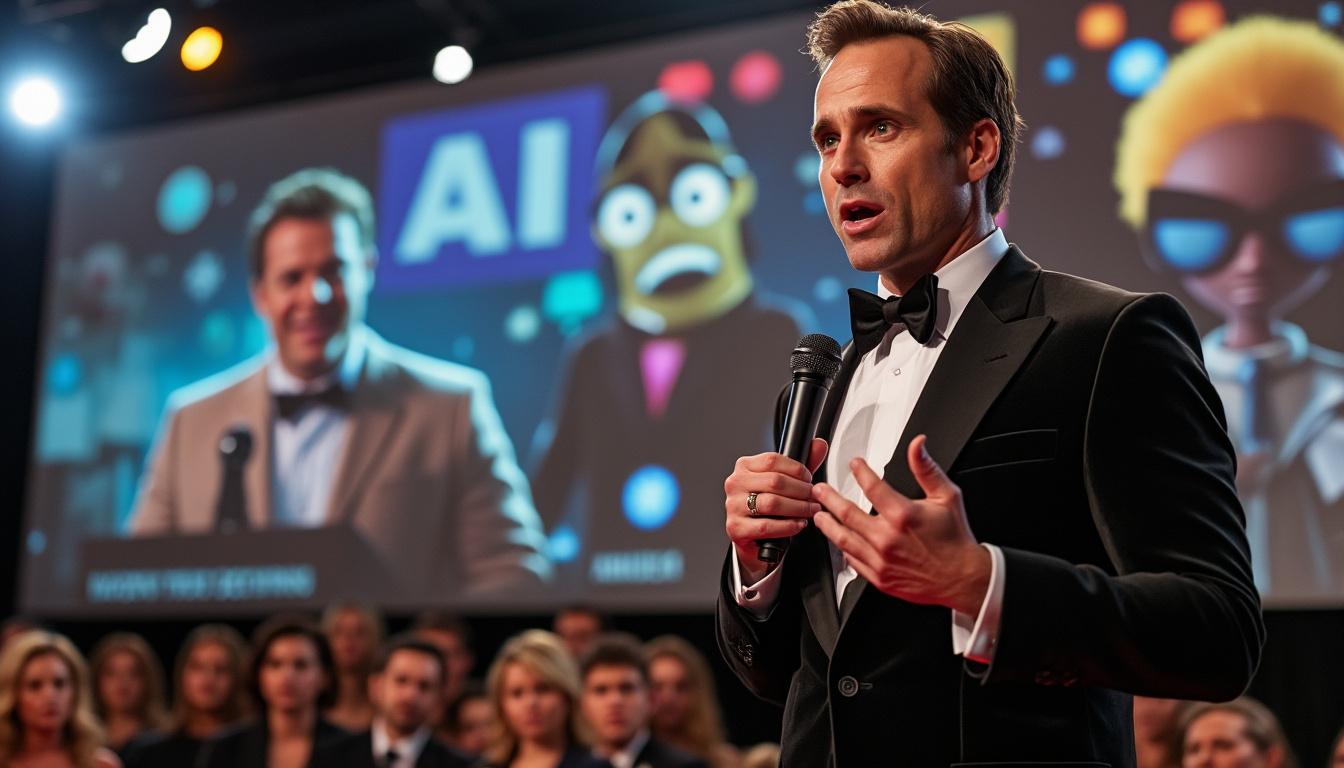
Understanding the Oscars AI Controversy: Implications for Animation and Film
The controversy surrounding AI at the Oscars goes beyond a debate on technology; it touches upon fundamental questions about creativity, originality, and artistic integrity in the digital age. The film industry, historically a crucible for innovation, now faces a crossroads where the roles of human artisans and artificial intelligence intersect and sometimes conflict.
The backlash against AI-generated content gaining recognition amid traditional awards has sparked fears that the essence of artistic labor could be overshadowed by algorithms. Critics underscore that while AI tools can accelerate production and offer novel techniques, they lack the intentionality and cultural context that human creators provide.
For instance, AI can generate animations based on prompts or assist in voice synthesis, which might reduce costly production times. However, questions remain about whether such processes can capture authentic emotional resonance or if they risk commodifying art into mere data output. This skepticism aligns with growing calls within the industry for clearer guidelines governing AI’s role in content creation.
The Oscars controversy is emblematic of a larger conversation about the ethical deployment of AI—not only in animation but across the cinematic spectrum. Industry leaders advocate for a framework that safeguards the artist’s role, ensures transparency, and delineates credit fairly when AI is part of the creative pipeline.
Consequently, animation professionals and studios are increasingly exploring hybrid workflows where AI tools complement but do not supplant human creativity. This approach allows innovation without compromising the craftsmanship that audiences cherish.
Insights from experts and the perspectives of creatives like Arnett provide valuable lessons for the film industry’s adaptation to these rapid shifts.
Examples of AI integration in animation workflows and the resulting challenges:
- 🎥 AI-assisted background generation speeding up scene creation but requiring human oversight for artistic coherence.
- 🎙️ Use of AI voice modulation tools to supplement voice actors, demanding careful balance to maintain character authenticity.
- 🖌️ Algorithmic animation in preliminary drafts, refined by human animators for storytelling nuance.
- 📊 Ethical dilemmas around attribution when AI contributes significantly to a project’s output.
Will Arnett’s Career and Contribution to Animation: A Testament to Human Creativity
Will Arnett’s longstanding association with animation cannot be separated from his passionate stance on AI in the Oscars debate. His prolific voice roles in influential productions illustrate how expert performance adds depth to animated storytelling. Projects such as Monsters vs. Aliens, Ratatouille, and Despicable Me showcase a spectrum of characters brought vividly to life by his nuanced voice talents.
His career trajectory—from television to major animated blockbusters—underscores the importance of versatility and emotional intelligence in voice acting, qualities that AI has yet to replicate with equal artistry. Arnett’s voice is recognized not only for its distinctive gravelly timber but also for the personality and humor infused into each character, reflecting creative choices only a human can make.
A deeper look at his work illuminates animation’s reliance on human storytelling at every stage, from voice performance to the meticulous labor of animators and directors. This synergy results in compelling narratives that emotionally engage diverse audiences worldwide.
His championing of animation also aligns with broader industry efforts to preserve the cultural value of this art form amidst technological shifts. Recognizing the limits and possibilities of AI tools encourages the film industry to embrace complementary innovation while preserving human agency.
| 🎭 Roles Played by Will Arnett | 🎬 Production | 🌟 Notable Traits |
|---|---|---|
| Gob Bluth | Arrested Development | Witty, unpredictable comedy |
| BoJack Horseman | Netflix Animated Series | Complex emotion, dark humor |
| The LEGO Batman | Animated Film | Distinctive voice, playful charisma |
| Ratatouille (Supporting Role) | Pixar | Expressive character voice |
Balancing AI and Artistic Integrity in Modern Animation Production
Animation studios increasingly incorporate AI-driven tools aimed at optimizing various stages of production—from initial storyboarding to facial animation and lip-syncing. Nonetheless, industry veterans highlight the critical need to balance these advancements with artistic integrity. The core challenge is ensuring that AI remains an assistive force rather than a creator in its own right.
The implications for audience experience are significant. An animated film’s emotional impact depends heavily on subtleties in voice performance and animation gestures, often anchored in human creativity and spontaneity. If AI were to dominate too heavily, there is a risk of producing formulaic or emotionally hollow content.
Many studios are piloting hybrid approaches combining AI efficiency with human supervision to preserve quality. For example, AI algorithms can accelerate animation cycles on repetitive sequences, thus enabling creators to focus on more nuanced elements. Voice actors, meanwhile, increasingly use AI tools to expand their vocal range or restore recordings, but always under human creative direction.
Such collaborative workflows reflect not only technological innovation but also a deep respect for tradition. Furthermore, transparent communication about AI’s role is becoming an industry standard, helping audiences appreciate the blend of tools behind their favorite films. This mindset safeguards the sentimental and cultural value attached to animated works.
Strategies to maintain creative control when using AI tools in animation:
- 🎨 Retaining human oversight during all AI-generated content phases.
- 📋 Establishing clear ethical guidelines for AI contribution disclosure.
- 🎭 Prioritizing authentic performance by experienced voice actors over synthetic voices.
- 🔍 Continuous training for artists in emerging AI techniques to leverage technology effectively.
The Future of Animation Awards and AI: Navigating an Evolving Landscape
The increasing presence of AI in animation raises questions about how awards such as the Oscars will adapt to evolving production paradigms. As artificial intelligence tools become more sophisticated, the industry faces complex decisions regarding eligibility, credit attribution, and the definition of creativity.
Will Arnett’s vocal opposition highlights a growing call among artists to protect traditional notions of creativity. However, there is also recognition that innovation cannot be entirely resisted. Instead, awards committees, creators, and studios are initiating dialogues to reshape criteria that fairly reflect both human artistry and technological contributions.
This evolution includes exploring new award categories or redefining existing ones to account for AI-assisted works responsibly. For instance, some festivals have begun acknowledging hybrid projects where AI aids human creators rather than replaces them. Transparent policies create opportunities for leveraging AI as a tool without diminishing the craftsmanship celebrated by awards.
Moreover, the 2026 Oscars have already sparked discussions on implementing stricter transparency about AI’s involvement in nominated works. This approach aims to maintain audience trust and uphold the legitimacy of prestigious awards. Maintaining this balance is essential for the ongoing credibility of the Oscars and serves as a benchmark for the global film industry.
| 🎥 Oscar Award Categories (2026) | 🤖 AI Impact Level | 🎯 Industry Response |
|---|---|---|
| Best Animated Feature | Medium | Enhanced AI tools assist but human creativity prevails |
| Best Visual Effects | High | AI integral to creating complex effects under artist direction |
| Best Original Screenplay | Low | AI as supportive research, human authorship primary |
| Best Voice Acting | Minimal | Exclusively human performers acknowledged for emotional nuance |
What was Will Arnett’s main message at the Oscars regarding AI?
Will Arnett emphasized that animation is a human art form that goes beyond AI-generated prompts, urging the industry to celebrate human creativity and protect the craft of animation.
How is AI currently used in the animation industry?
AI assists in backgrounds, voice modulation, preliminary animation drafts, and visual effects, but human oversight remains essential to preserve artistic quality and emotional depth.
Why is there controversy about AI in film awards like the Oscars?
Controversy arises from concerns that AI-generated content might overshadow authentic human performances, raising ethical and creative questions about originality, credit, and artistic integrity.
How can animation professionals maintain artistic integrity while using AI?
By retaining human oversight, establishing ethical guidelines, prioritizing genuine voice performances, and training artists to effectively use AI tools collaboratively.
What future changes might occur in animation awards due to AI?
Awards may adopt new categories recognizing AI-assisted work, require transparency about AI’s role, and seek balanced criteria that honor both human creativity and technological innovation.
