
Grant Guidelines for Libraries and Museums continue to evolve amid significant political pressures. In recent years, federal funding administered by the Institute of Museum and Library Services (IMLS) experienced unprecedented interventions under the Trump Administration. This shift introduced stringent criteria demanding alignment with specific ideological narratives, profoundly affecting cultural institutions nationwide.
Peu de temps ? Voici l’essentiel à retenir :
- ✅ Grant funding now emphasizes patriotic, positive narratives aligned with Trump-era executive directives.
- ✅ Libraries and museums face increased scrutiny and potential constraints on historical interpretation and project eligibility.
- ✅ Institutions must balance acceptance of crucial government grants with concerns about political influence.
Transformation in Grant Guidelines under the Trump Administration: Political Shift in Funding Policies
The Institute of Museum and Library Services (IMLS) manages crucial federal grants supporting libraries, museums, and archives that serve communities across the United States. Traditionally, these grants were distributed based on merit, focusing on enhancing public access to knowledge, preserving collections, and fostering engagement. However, beginning in 2025, the Trump Administration’s influence markedly altered grant guidelines to reflect a politically driven agenda.
Specifically, the new grant criteria emphasized projects that promote an “uplifting” and patriotic narrative of American history, as opposed to critical or contested perspectives. This agenda is rooted in a series of executive orders intended to counter what the administration defined as the “anti-Christian weaponization” of government and “divisive, race-centered ideology.” Such policies targeted institutes like the Smithsonian Institution, accusing them of overemphasizing negative aspects of American history.
These changes signify a decisive departure from the traditionally apolitical stance of the IMLS. Applicants are now encouraged explicitly to align projects with this vision of patriotism and national pride, a move that several experts have described as a chilling political turn. For instance, museums seeking funding for exhibits not only need to meet programmatic goals but also must frame narratives within the preferred historical lens — potentially sidelining critical inquiry and inclusivity.
Former agency leaders from across the political spectrum, including associates from the American Library Association and the American Alliance of Museums, have expressed deep concern that such guidelines could suppress diversity in historical interpretation and marginalize certain communities’ experiences. The imposition of such criteria risks creating an atmosphere of self-censorship, undermining the very purpose of public cultural institutions: to reflect the complexities and richness of American history.
Adding to these concerns, the administration’s appointment of non-experts to head the agency and subsequent personnel changes raised alarms about the politicization of grant distribution. Nearly all of IMLS’s employees were placed on administrative leave in a move described as disrupting the agency’s routine operations.
Given these developments, institutions are facing the delicate challenge of navigating compliance with the new grant guidelines without compromising their commitment to historical integrity and community trust.
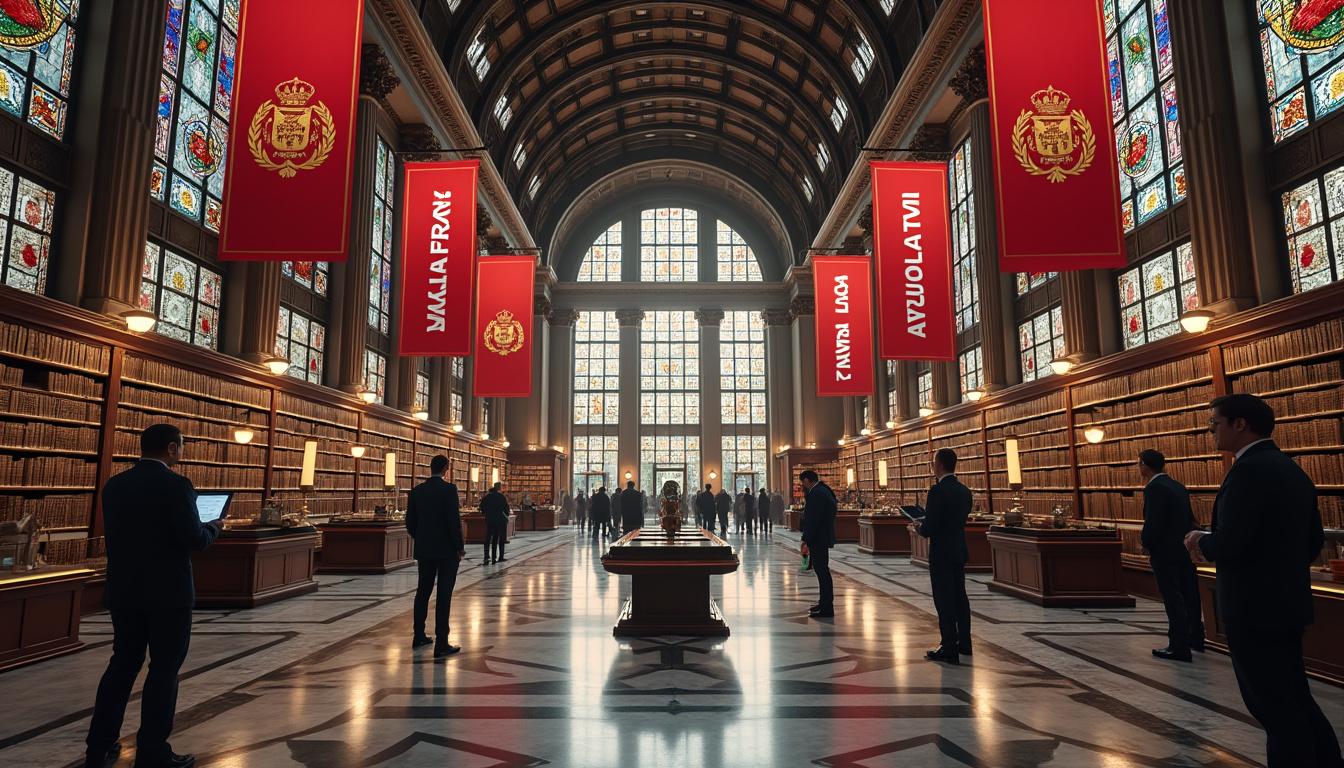
The Impact of Controversial Policies on Libraries and Museums’ Funding and Operations
Government grants play a pivotal role in sustaining libraries and museums, especially those in underserved or rural areas. For example, a rural Alaskan library sought funding to provide free Wi-Fi and encourage children’s literacy programs, while a children’s museum in Washington needed support for expanding its educational Little Science Lab. Additionally, a World War I museum in Missouri required resources to digitize valuable historic documents.
Prior to the federal government’s recent political shift, these projects would typically be evaluated on their merit and community benefits. However, under the new policy directives, the lens of eligibility narrowed to projects aligning with the Trump Administration’s vision for cultural institutions. This shift has had immediate consequences for project funding and institutional strategies.
Key impacts include:
- 📌 Prolonged uncertainty regarding grant approvals due to intensified reviews focusing on political alignment.
- 📌 Reduced funding amounts as the agency’s budget contracted to approximately one-third of prior years’ levels, limiting awards to $5,000–$1 million per grant.
- 📌 Fears of government overreach sparked by audits targeting exhibit content, as occurred with Smithsonian collections reviewed for “tone” and “historical framing.”
- 📌 Institutional hesitation to accept funds out of concern for potential reputational risks linked to the administration’s ideological demands.
Such conditions place cultural organizations in a precarious position: either adapt grant proposals to fit prescribed narratives or forgo critical financial support essential for community programming, digitization efforts, and disaster preparedness initiatives. The case of a Missouri museum digitizing WWI documents highlights how institutions are forced to reconsider not only the content they present but also the framing to secure vital resources.
The political atmosphere surrounding funding has also catalyzed advocacy groups and legal action. In response to attempts to dismantle IMLS and freeze grants, state attorneys general and organizations like the American Library Association successfully obtained judicial orders to restore funding and prevent the agency’s liquidation. Nevertheless, the continued uncertainty challenges long-term cultural project planning and sustainability.
In light of these dynamics, museums and libraries increasingly seek guidance to manage the tensions between preserving institutional independence and fulfilling administrative requirements to maintain essential services. This balancing act is complicated further by reduced staffing and budget constraints within the agency itself.
Navigating Policy Impact: Strategies for Libraries and Museums Amid Funding Changes
With the evolving landscape of government grants under politically charged guidelines, libraries and museums must adopt thoughtful strategies to sustain operations and fulfill their missions effectively. Employing a pragmatic approach to funding applications and project framing is crucial.
Several measures are instrumental in this regard:
- 🎯 Aligning project proposals with current grant emphases without compromising core values. Institutions can emphasize community pride elements, local history with uplifting narratives, or cultural heritage themes that resonate with patriotic messages.
- 🎯 Leveraging technology to enhance accessibility and engagement. Incorporating smart audio guides and digital platforms for tours, such as those developed by Grupem, offers an innovative way to reach diverse audiences and enrich storytelling without editorial constraints imposed on exhibit content.
- 🎯 Engaging stakeholders through transparent communication. Libraries and museums should inform patrons about the challenges surrounding funding policies and the measures taken to protect institutional integrity.
- 🎯 Forming collaborative networks. Partnering with regional and national organizations advocates for policy adjustments and provides support in grant navigation and legal challenges.
- 🎯 Documenting project outcomes rigorously. Clear impact records help demonstrate merit and compliance, appealing to peer reviewers tasked with ultimate grant decisions.
For instance, a children’s museum that sought funds for scientific education could frame its initiative around fostering a collective sense of innovation and American ingenuity. Meanwhile, a rural library aiming to enhance digital literacy might highlight community empowerment and progressive values grounded in national identity.
More broadly, capitalizing on solutions such as interactive mobile audio guide applications offers a twofold advantage. First, it modernizes visitor experiences, making cultural content more accessible and engaging. Second, it allows institutions to focus creativity on interpretation rather than solely on attracting politically acceptable narratives.
Guidance available through platforms like Grupem’s Voice AI revolution introduces digital tools that help cultural institutions thrive amid evolving grant landscapes. By embracing such innovations, museums and libraries can maintain relevance while adapting to new funding criteria with resilience and professionalism.
Stakeholder Perspectives and Legal Challenges in the Face of Controversial Grant Policies
The reaction of cultural sector leaders and advocacy groups to the Trump Administration’s controversial policy shifts in federal funding reveals deep divisions and widespread apprehension.
Several professional associations, including the American Historical Association and the American Alliance of Museums, voiced concerns that these guidelines undermine the neutrality and independence of cultural institutions. Questions about whether accepting government grants equates to endorsing the administration’s political agenda have led to institutional ambivalence and even grant refusals.
A major area of uncertainty involves governance and long-term institutional risk:
- ⚠️ Potential for grant revocations after initial acceptance, undermining project continuity.
- ⚠️ Increased government audits and investigations similar to those affecting university DEI programs.
- ⚠️ Pressure to conform historical narratives to politically prescribed frameworks, risking censorship.
Legal actions have successfully blocked the immediate dismantling of IMLS, protecting grant integrity for now. However, the administration’s approach reflects a broader culture war, where federal agencies become arenas for ideological control of public knowledge and memory. This environment compels cultural institutions to engage more actively in advocacy and legal defense.
Experts emphasize that maintaining trust with the public depends on transparency about funding sources and the agency’s influence. Public confidence in museums and libraries owes much to their perceived independence, which these policies threaten.
Resource allocation also remains a critical concern. The IMLS budget contracted significantly, with requests to Congress for fewer full-time employees, placing operational pressures on remaining staff responsible for administering complex grant reviews. The lack of transparent information about the current peer review process adds to anxieties in the field.
Institution leaders are encouraged to stay informed through trusted channels like the American Library Association’s updates and legal advisories while continuing to build public and political support for independent, equitable cultural funding.
Grant Application Process and Recommendations for Successful Funding in a Politicized Environment
The 2026 IMLS grant cycle features new application materials reflecting the administration’s political priorities. While compliance with thematic emphases on patriotism and American exceptionalism is encouraged, the actual selection methodology still involves peer review by volunteer experts.
Applicants should carefully consider the following to enhance their chances of success:
| 📌 Key Area | 🎯 Recommendation | 💡 Practical Example |
|---|---|---|
| Alignment with Funding Themes | Highlight community pride, historical preservation with positive framing, and civic engagement initiatives. | Develop exhibits celebrating local historical figures emphasizing their contributions to American ideals. |
| Project Merit and Impact | Provide robust evaluation plans demonstrating social or educational benefits. | Include detailed metrics on program attendance, digital engagement, and outreach outcomes. |
| Technological Innovation | Incorporate tools like mobile audio guides or virtual tours to improve accessibility. | Use platforms akin to Grupem to deliver multi-language, interactive experiences for visitors. |
| Compliance and Transparency | Ensure grant proposals explicitly address thematic expectations without compromising intellectual integrity. | Offer clear statements on project goals aligned with public service values, acknowledging funding context. |
Ultimately, applicants must balance demonstrating compliance with political guidelines while upholding scholarly rigor and community diversity. Engaging with peer networks, attending grant workshops, and leveraging expertise in smart tourism technologies can improve both the quality and competitiveness of submissions.
How have the grant guidelines changed under the Trump Administration?
The guidelines now prioritize projects that promote patriotic and positive narratives of American history, reflecting specific executive orders. This marks a notable shift from prior merit-based, apolitical criteria.
What concerns do cultural institutions have regarding these changes?
Institutions worry the new guidelines impose political constraints on historical interpretation, risking censorship and potential reputational harm if they accept funding.
Are the grant application processes still peer-reviewed?
Yes, volunteer experts continue to conduct peer review, although transparency about the current process is limited, raising questions in the field.
How can museums and libraries adapt their projects to the new guidelines?
They can frame programs around community pride, American exceptionalism, and positive historical perspectives while leveraging technology to engage visitors creatively.
Where can institutions find reliable information about these funding changes?
Trusted sources include professional bodies like the American Library Association and legal advisories offering updates and guidance amid the evolving political landscape.
