
Peu de temps ? Voici l’essentiel à retenir :
- ✅ The Smithsonian’s future hinges on a complex debate involving cultural preservation versus political influence.
- ✅ Innovative digital tools and modern curation are essential to enhancing visitor experience while preserving heritage.
- ✅ Avoid confounding artistic representation with institutional endorsement — museums reflect history, not necessarily celebrate it.
The Smithsonian’s Role in Shaping National Heritage and Identity
The Smithsonian Institution, a sprawling network of museums, galleries, and research centers spread across Washington, D.C., and beyond, plays a crucial role in shaping the United States’ national narrative and cultural identity. It is often regarded as the “nation’s attic,” a repository for countless historical artifacts and objects of significant heritage value. Yet, its purpose is much broader than mere storage. Since the late 19th century, guided by figures like George Brown Goode, the Smithsonian has aimed to serve as a “nursery of living thoughts,” offering museums of record that document and interpret American history for public education rather than hoarding objects for their own sake.
Today, the Smithsonian remains the most influential institution in American culture, with museums that not only exhibit artifacts but actively frame the collective memory of a nation. This includes telling stories that shape public understanding of important moments, from the nation’s founding to contemporary social challenges. This influence makes the Smithsonian a lightning rod for debate about whose history is told and how it is conveyed, thus turning it into a true cultural battlefield.
In a country deeply divided over national narratives, the Smithsonian’s curation decisions reflect broader ideological tensions. The Air and Space Museum’s 1990s controversy over the Enola Gay exhibit shows just how easily Smithsonian exhibits become flashpoints. The original plan to acknowledge the suffering caused by the Hiroshima bombing sparked backlash from veterans’ groups and politicians, including House Speaker Newt Gingrich, who accused the Smithsonian of promoting biased narratives. The eventual reshaping of the exhibit stripped much of that critical context, highlighting the power and vulnerability of the Smithsonian’s role in American memory.
This dynamic demonstrates why the Smithsonian’s future is fiercely contested. Its mission to preserve and present history comes under scrutiny when politics seek to influence cultural preservation policies, with attempts to sanitize or revise exhibitions to align with certain historical viewpoints rather than offer comprehensive education. The battle for the Smithsonian’s perspective exemplifies the intersection of historical preservation and the political environment.
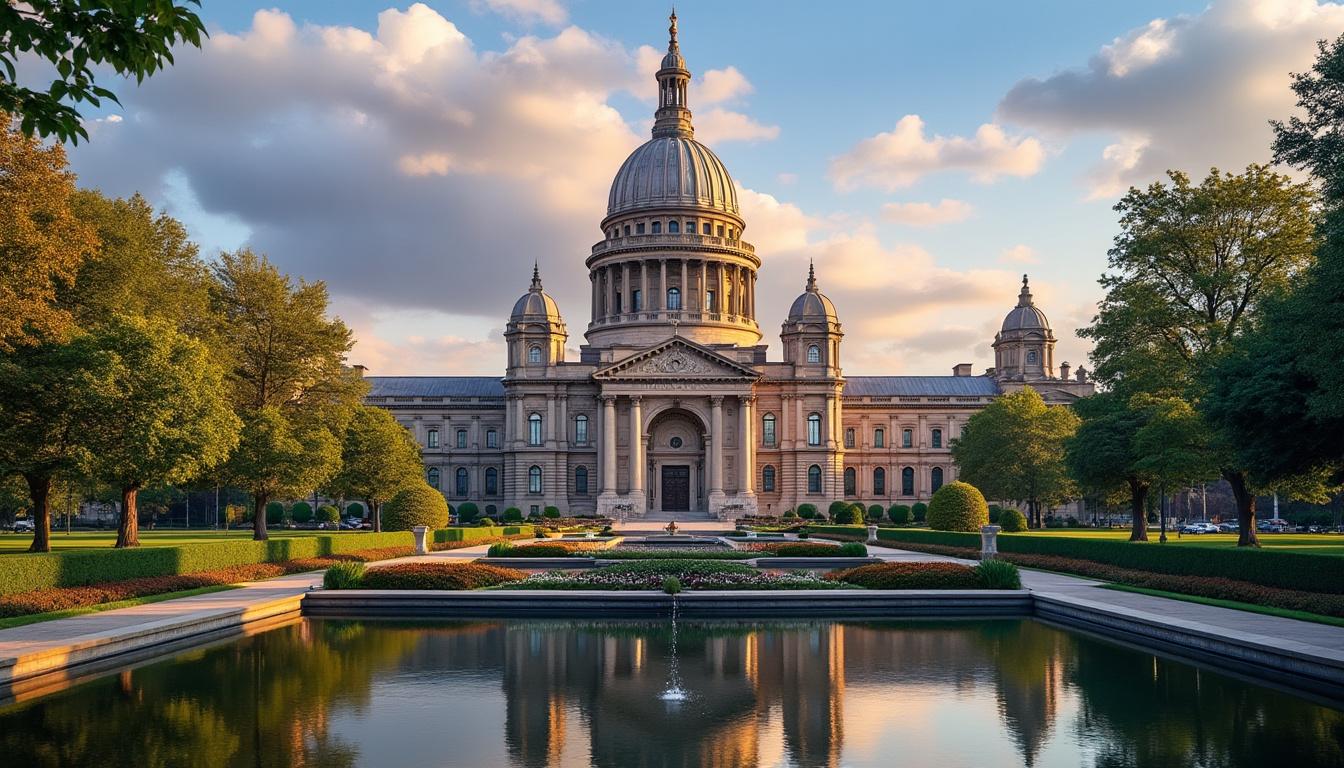
Political Pressures and Cultural Policy Impacting Smithsonian Museums
The Smithsonian’s status as a federal trust rather than a direct government agency places it in a unique institutional position, operating under the guidance of a Board of Regents including the nation’s Chief Justice and Vice President. Still, national politics heavily influence Smithsonian operations, especially through congressional funding and executive priorities.
In recent years, this influence has intensified dramatically. The Trump administration’s “Restoring Truth and Sanity to American History” executive order effectively mandated a sweeping review of Smithsonian exhibitions to ensure they promote “American exceptionalism” and avoid “divisive” or “anti-American” narratives. This directive extended to editing gallery texts, such as those referring to Donald Trump’s impeachments — a change publicly labeled routine but perceived by many as politically motivated censorship.
Moreover, the administration’s refusal to allocate funding for diversity-focused venues like the Museum of the American Latino and the Anacostia Community Museum raised alarms. These institutions represent significant cultural narratives vital to an inclusive national history. Their potential defunding signals a broader policy attack on the diversity and inclusiveness of America’s heritage preservation efforts.
Given the Smithsonian’s strong tradition of innovation in cultural storytelling, including pioneering technologies such as audio tech for improved visitor engagement, these political pressures complicate institutional autonomy. Museums risk losing the freedom essential to meaningful cultural mediation through modern, inclusive narratives and accessible storytelling.
Understanding these political dynamics is crucial for professionals in cultural and tourism sectors, who must anticipate how shifts in policy affect museum operations, visitor experience, and technology adoption strategies. For more detailed insights into how these developments may impact museum curation and accessibility, consult the analysis provided regarding Smithsonian museum revisions and the consequences of exhibit censorship.
Table: Key Political Influences on Smithsonian Museums as of 2026 🏛️
| Aspect 🔍 | Details 📋 | Impact on Museums 🎯 |
|---|---|---|
| Executive Orders | Mandates for promoting “American exceptionalism” | Revision of exhibits, selective historical narratives |
| Funding Allocation | Budget cuts for diversity museums | Potential closure and reduced programming |
| Board of Regents | Influence by political appointees | Strategic direction shaped by political balance |
| Public Controversies | Exhibition disputes (e.g. Enola Gay, Confederate Monuments) | Altered public perception, increased scrutiny |
Preserving History Amidst Controversy: The Confederate Monuments Debate
One of the Smithsonian’s most contentious recent issues involves how to handle the heritage of Confederate monuments, reflecting a national debate over memory, identity, and justice. Following the tragic 2015 Charleston church shooting and subsequent advocacy, public pressure to remove Confederate flags and statues intensified across the United States.
The Smithsonian’s affiliated institutions have witnessed the removal of roughly 200 Confederate monuments out of more than 1,500 nationwide. These statues, once dominant in public spaces, now often face defacement, relocation, or destruction, stirring fierce opposition from some communities and groups. The 2017 “Unite the Right” rally in Charlottesville notably underscored the deadly stakes tied to memory and cultural heritage preservation.
Contemporary art has taken a key role in reframing these contested legacies. Exhibitions such as “Monuments,” showcased by Los Angeles’s Museum of Contemporary Art (MOCA) and the Brick, present decommissioned statues in altered states—paint-bombed, corroded, and deconstructed—exposing their sustained cultural presence but diminishing their traditional power.
Artist Kara Walker’s transformation of the Confederate statue “Little Sorrel” into the sculpture “Unmanned Drone” poignantly symbolizes the reimagining of historical monuments into reflective commentary on racial violence and memory. This approach challenges visitors to re-evaluate heritage and preservation beyond mere reverence, emphasizing the evolving nature of cultural interpretation.
These discussions highlight how heritage and preservation are never static but dynamic processes often shaped by present-day politics, ideology, and innovation in exhibition practices. For stakeholders in museum management and cultural organizations, embracing technological and curatorial innovation like digital storytelling can enhance visitor engagement and contextualize contested histories without inflaming division.
Innovating Museums: Enhancing Visitor Engagement through Technology and Accessibility
As the battle over narrative control intensifies, Smithsonian museums have sought to respond by innovating in visitor experience, particularly through advanced audio guides and smart tourism technologies. These innovations not only improve accessibility but also empower visitors to engage actively with complex, sometimes controversial exhibits on their own terms.
Smart audio technologies, such as those developed by Grupem, have become fundamental in transforming smartphones into personalized professional guides. By delivering high-quality, multilingual content directly to visitors, these tools enhance understanding without overwhelming visitors with politicized messaging. This neutrality in delivery fosters personal interpretation, a critical element in navigating the evolving Smithsonian landscape.
Inclusivity and accessibility stand as core values in these innovations. The Smithsonian’s Anacostia Community Museum, dedicated to the experiences of Black Washingtonians, uses multimedia approaches to connect diverse audiences with underrepresented histories, thereby reinforcing the museum’s relevance and ensuring broad cultural representation in national heritage.
Digital tools also facilitate real-time updates and exhibit revisions without the cost and delay of physical changes. This agility is essential amid ongoing debates about exhibit content and public reception, allowing museums to balance preservation with innovation and responsiveness.
- 🎧 Enhanced audio guides for multilingual access
- 📱 Smartphone-based interactive tours via smart tourism apps
- 🖼️ Integration of augmented reality to visualize historical contexts
- 🔍 Easy updates of exhibition content reflecting evolving scholarship
- ♿ Improved accessibility options for visitors with disabilities
The Smithsonian’s Future: Navigating Battle, Innovation, and Cultural Responsibility
The Smithsonian’s future rests on balancing its traditional role as a guardian of American heritage with the demands of modern cultural politics and technological innovation. This balance requires a clear commitment to the preservation of authentic culture while embracing new methods that foster understanding among increasingly diverse audiences.
The ongoing battle—shaped by ideological pressures, political oversight, and evolving public expectations—challenges the Smithsonian to defend its mission as a museum of record that neither sanitizes history nor indulges in political partisanship. This endeavor must be aligned with innovations supporting accessibility and visitor empowerment.
Funding dynamics will remain a central variable, as changes in budget priorities influence which museums survive and how exhibitions evolve. The Smithsonian’s credibility depends not only on the integrity of its collections but also on its ability to utilize new media and smart technologies effectively, making cultural heritage dynamic and relevant.
The stakes are high: as the nation approaches its 250th anniversary, these conversations attain greater urgency, calling for informed public engagement and professional strategies that respect both heritage and innovation. For comprehensive updates on operational changes and new exhibitions planned for 2026, professionals can refer to reports on the Smithsonian operation status and new exhibits.
What is the core mission of the Smithsonian Institution?
The Smithsonian Institution serves as a museum of record dedicated to preserving and educating about the nation’s history through its vast collections and exhibitions.
How has political influence affected Smithsonian exhibits?
Political pressures, including executive orders and funding decisions, have led to revisions and censorship of exhibitions aiming to present unified or ‘unifying’ historical narratives.
Why are Confederate monuments a focal point of controversy?
These monuments symbolize conflicting views on heritage, identity, and racial justice, leading to debates over their public display, removal, or reinterpretation within museums.
How do smart tourism technologies enhance museum experiences?
Technologies like smartphone audio guides provide personalized, accessible content, helping visitors engage deeply and independently with complex historical narratives.
What challenges does the Smithsonian face moving forward?
Balancing political pressures, cultural responsibility, funding constraints, and technological innovation will be key to sustaining its role as a trusted institution for the public’s heritage.
