
Short on time? Here is what you need to know:
✅ The Portland Art Museum’s $116 million expansion uses architectural ingenuity to bridge two historic landmarks, reconnecting the museum with the city’s urban fabric.
✅ The Mark Rothko Pavilion serves as a transparent and welcoming link, enhancing accessibility and visual connectivity while honoring the museum’s educational mission.
✅ Avoiding past errors, this transformative intervention creates a community-centric cultural hub that integrates art, architecture, and public spaces for inclusive experiences.
✅ Bonus: The project embraces sustainable design and celebrates Portland’s streetcar line as a symbol of city values.
Architectural Solutions that Connect Historical Landmarks and Urban Life in Portland
The Portland Art Museum’s recent expansive renovation, culminating in the opening of the Mark Rothko Pavilion, represents a pivotal example of architectural intervention that effectively bridges two historic buildings. Initially, the museum’s 2005 expansion created disconnected, difficult-to-navigate spaces linking Pietro Belluschi’s elegant 1932 structure with the formerly acquired Masonic temple, resulting in poorly scaled galleries and a bewildering underground passage. Visitors often found the experience confusing, with galleries dubbed “bowling alleys” and wayfinding challenges that dampened the institution’s potential as a neighborhood cultural hub.
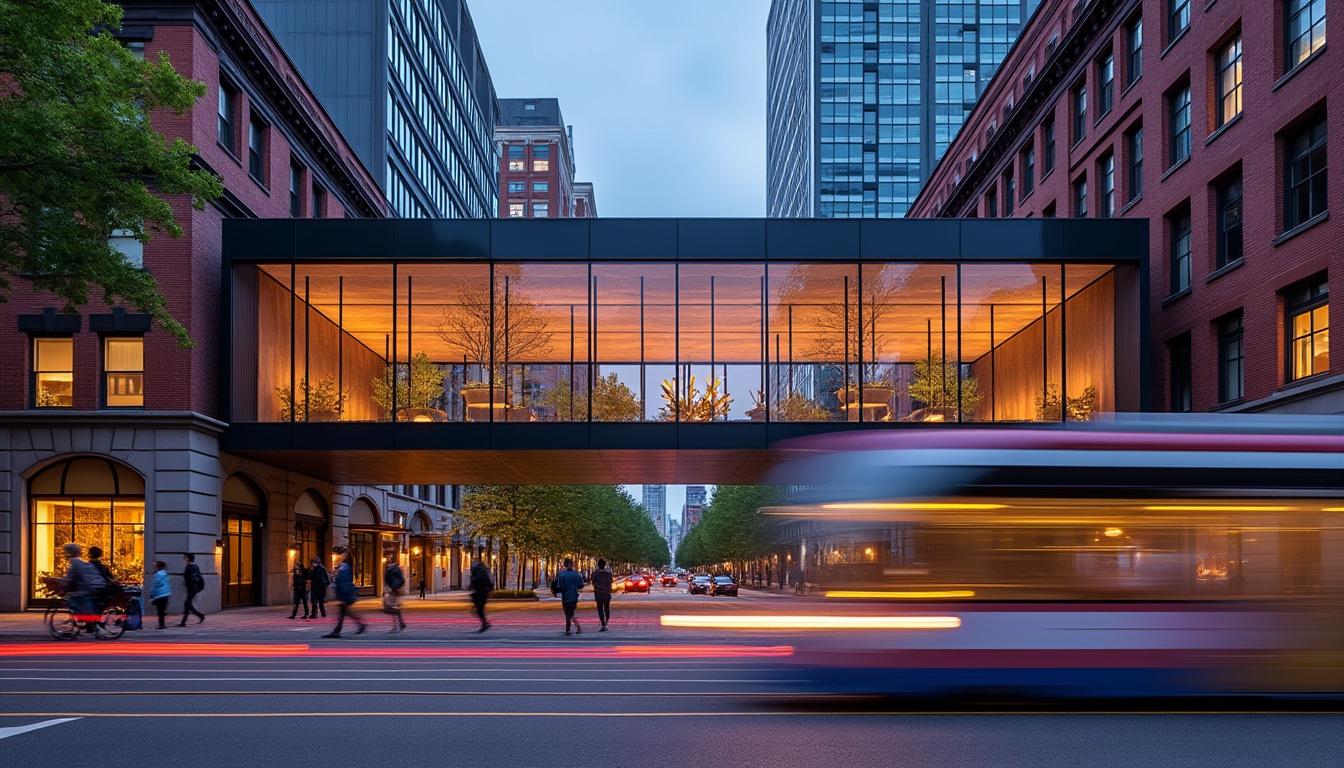
When Brian Ferriso took over as executive director in 2006, he inherited this complex legacy, alongside a significant $20 million debt. The architectural mission shifted from grandiose, donor-driven visions to a practical, thoughtful design solution focused purely on connectivity and community engagement. The resulting pavilion—a 24,230-square-foot glazed space set between the two landmarks—serves as a “giant welcome mat” that physically and symbolically reconnects the museum with Portland’s urban life. The pavilion’s modern glazing, designed with careful fritting to balance light, energy efficiency, and bird safety, acts as a subtle hyphen uniting divergent architectural styles, providing clarity and openness.
This architectural approach overcomes the previous disconnect between the buildings and notably addresses the museum’s relationship with its surroundings, particularly reintegrating with Portland’s streetcar line—the first major streetcar built in America since WWII. By positioning the pavilion slightly set back from street facades and integrating generous public spaces such as an enlarged café and bookstore, the museum now opens to the adjacent linear park and streetcar, activating urban avenues with cultural vitality.
Such a project required meticulous planning and architectural finesse. The pavilion’s setbacks preserve the rhythmic window fenestrations from both historic buildings, reflecting a deep respect for the site’s legacy while providing fresh spatial sequences that support art exhibition and community use. The design subtly captures Belluschi’s original ethos, which aimed at creating inviting public spaces infused with natural light and easy accessibility, underscoring the museum’s educational mission.
Strong partnerships between Chicago-based Vinci Hamp Architects and Portland’s Hennebery Eddy Architects harnessed preservation expertise to transform challenges—such as misaligned floor plates, landmark preservation restrictions, and site slopes—into opportunities to craft an inspiring cultural conduit. By installing seismic joints and implementing a glazed tunnel, the project offers 24-hour through-block access, which is vital for both visitors and community stakeholders, ensuring inclusivity and safety for all.
For professionals interested in the broader impact of this transformative architectural approach, further details are available in a detailed analysis by The New York Times which explores how design creativity and pragmatic decision-making combine to address urban and institutional challenges in cultural spaces.
Enhancing Community Access and Cultural Engagement through Smart Urban Integration
One of the most critical aspects of this intervention is its community-centered approach to accessibility and engagement. The museum’s repositioning of the loading dock from its awkward initial location to a busy bike and transit corridor, along with the installation of a public tunnel beneath the pavilion, demonstrates a thoughtful balance between operational needs and urban pedestrian dynamics.
A glazed tunnel connects both buildings while providing views into a large Black Art & Experiences Gallery, hosting important exhibitions and workshops that foster dialogue around community narratives and cultural histories. This transparent connection not only enhances visitor experience but also symbolizes the museum’s commitment to inclusivity and healing historical divides.
The pavilion’s terraces offer panoramic views of Portland’s cityscape and nearby treetops, creating contemplative spaces for visitors and neighborhood residents. This strategic design transforms circulation zones into places for cultural interaction and urban respite, turning the museum into a more welcoming and accessible destination.
The project aligns with broader city initiatives, such as those documented by Portland’s public art efforts to build community connections, demonstrating how cultural institutions can serve as catalysts for urban social cohesion. Through this lens, the museum not only serves art aficionados but actively participates in healing and uniting diverse community groups by facilitating art-based conversations and shared experiences.
Key community benefits include:
- 🚋 Enhanced integration with public transit and foot traffic via the streetcar line
- 🎨 Exhibition spaces designed for storytelling reflective of Portland’s cultural tapestry
- ♿ Compliance with accessibility demands, ensuring 24-hour through-block access for all
- ☀️ Abundant natural light in public and gallery spaces to enrich visitor experience
- 🛍️ Expanded amenities including a refreshed café and museum shop designed to encourage longer visits
By leveraging a seamlessly integrated spatial experience, the museum promotes community healing rooted in art and shared heritage. This model offers a replicable framework for other institutions seeking to modernize and democratize their cultural offerings while respecting historical contexts.
Relevant insights on urban cultural renewal projects such as Portland’s “Next Horizon” can be explored through specialized event summaries available here.
Preserving Historical Integrity While Introducing Modern Functionality
Conserving the museum’s architectural heritage while dramatically improving its function required sensitive, innovative strategies. Both the Belluschi-designed original building and the historic Masonic temple hold landmark status, presenting rigorous constraints on alterations. The architects responded to these challenges by carefully preserving intricate decorative elements inside the temple’s best-proportioned rooms, adapting them into a versatile black-box gallery with ample natural light and contemporary amenities.
The extensive use of glass in the pavilion not only allows visitors to appreciate the distinctive brick textures and window designs of the temple façade but also gently emphasizes contrasts between old and new. This architectural dialogue honors Portland’s rich history without diluting the museum’s forward-looking mission.
Noteworthy elements of the design include:
| Aspect 🎯 | Details 🔍 | Impact 🏆 |
|---|---|---|
| Seismic Isolation ⚠️ | The pavilion uses 9-inch-wide joints to separate it structurally from landmarks | Preserves historical structures while improving seismic resilience |
| Fenestration Rhythm ♻️ | Setbacks and mullion proportions mirror existing window patterns | Visual continuity and respect for original aesthetics |
| Natural Lighting 🌞 | Fritted glazing modulates light to protect artworks and reduce energy | Energy efficiency and enhanced visitor comfort |
| Adaptive Reuse ♻️ | Temple space converted into gallery maintaining ornate ceilings | Blends historic charm with modern exhibition needs |
| Operational Efficiency ⚙️ | New loading dock carefully concealed beneath new spaces | Preserves exterior appearance without compromising logistics |
Such design solutions reveal the project’s remarkable balance between heritage conservation, technological innovation, and functional adaptability. These aspects are consistent with the best practices endorsed by preservation experts and align with evolving museum standards for resilience and visitor engagement.
Further in-depth reporting on the museum’s expansion and architectural strategies was published by The Art Newspaper, offering useful insights for cultural managers and architects alike.
Transformative Art Programming Anchored by Portland’s Own Mark Rothko
The naming of the new pavilion after Mark Rothko signals a symbolic and pragmatic commitment to connecting the museum’s historical roots with contemporary cultural relevance. Rothko, raised in Portland and first exhibited at the museum, encapsulates the institution’s dedication to notable regional artists while fostering national and international art discourse.
The Rothko heirs’ agreement to rotate loans through 2036 ensures a dynamic, evolving collection that attracts diverse audiences. This active programming approach enhances the museum’s role as a cultural educator and community participant, fostering healing of past divides by promoting shared appreciation of important art and ideas.
The pavilion spaces accommodate innovative exhibition formats, including workshops and community-driven projects that resonate with the City of Portland’s recent art-driven healing initiatives. This synergy between physical space and mission highlights how architecture and programmatic decisions can converge to support meaningful community impact.
Such purposeful alignment demonstrates how art interventions serve as instruments to rebuild trust and stimulate cultural unity in historically complex urban contexts. Cultural organizations navigating similar challenges may find inspiration in Portland’s integrated approach combining quality infrastructure and community-responsive programming.
Leveraging Technology and Smart Tourism for Enhanced Visitor Experience
Integrating smart tourism solutions within the newly transformed Portland Art Museum sets a benchmark for cultural institutions aiming to modernize visitor services without compromising historic authenticity. Smart audio guides, accessible apps, and real-time navigation tools turn smartphones into professional-grade tour companions, facilitating faster and deeper engagement with exhibits and museum spaces.
Tools like the Grupem app illustrate how mobile platforms empower visitors and institutions by providing layered content tailored to diverse audience profiles, enabling flexible self-guided tours or complementary audio experiences during guided sessions. This digital enhancement aligns with the museum’s ethos of outreach and education, helping overcome language barriers and accessibility challenges.
Additionally, technologies integrated into the pavilion enable energy-efficient lighting controls and environmental monitoring that protect artworks while optimizing resource use. These advancements underscore the importance of embedding sustainable, user-friendly technology in cultural asset management.
Smart tools also equip museum staff with real-time visitor flow data, improving operational efficiency and personalized services. The case of Portland’s innovative expansion serves as a best practice model demonstrating that embracing digital transformation amplifies cultural access and supports seamless visitor journeys across complex architectural sites.
For professionals seeking practical insights on smart tourism technologies, consulting resources offered by specialized platforms can inform the implementation of efficient, innovative solutions.
What architectural challenges did the Portland Art Museum face before the Mark Rothko Pavilion?
Prior to the pavilion, connecting the museum’s original Belluschi building with the Masonic temple resulted in poorly proportioned galleries and confusing pathways, including a dimly lit underground passageway difficult for visitors to navigate.
How does the Mark Rothko Pavilion promote community healing through art?
By creating transparent, accessible spaces that physically and symbolically connect two historic landmarks, the pavilion facilitates inclusive exhibitions and public programs that engage diverse communities in shared cultural experiences.
What role does technology play in enhancing the visitor experience at the renovated museum?
The museum employs smart audio guides, mobile apps, and environmental monitoring to provide accessible, informative, and sustainable visitor experiences, improving navigation, interpretation, and artwork preservation.
In what ways were heritage preservation and modern functionality balanced in the expansion?
The project maintained landmark building integrity with seismic joints and preserved ornate interiors, while adding modern galleries, improved accessibility, and operational features—all carefully integrated to honor historical details.
Why was the pavilion named after Mark Rothko?
Mark Rothko, a Portland native with early exhibitions at the museum, symbolizes the link between local heritage and contemporary art discourse. The pavilion, named in his honor, hosts rotating loans from his heirs to enrich the museum’s collection through 2036.
