
Short on time? Here’s what you need to remember:
✅ Museum security is evolving rapidly in response to high-profile incidents like the Louvre Heist.
✅ Advanced Security Technology such as AI-driven Surveillance Systems and mathematical models are transforming risk management.
✅ Museums must balance accessibility with robust protection to safeguard Cultural Heritage without alienating visitors.
✅ Ignoring security vulnerabilities can lead to irreparable loss of priceless art and cultural identity.
How the Louvre Heist Exposed Critical Flaws in Museum Security
The daring robbery at the Louvre in October 2025, where thieves absconded with eight royal jewels, starkly exposed the museum security gaps even in one of the world’s most iconic institutions. This high-profile art theft not only shocked the public but also reignited serious questions about the vulnerability of cultural assets worldwide.
The Louvre’s existing protection measures, thought to be among the best, proved insufficient against audacious thieves operating in broad daylight. Experts analyzing the incident uncovered several shortcomings, such as limited real-time monitoring and reliance on outdated alarm protocols. Crucially, the intersection between welcoming public access and ensuring impregnable security was highlighted as a complex issue. Museums must avoid creating fortress-like environments which could diminish visitor experience, while preventing unnoticed incursions by professional criminals.
This heist catalyzed museums globally to reassess their risk management frameworks. For example, Washington’s renowned cultural institutions quickly began security audits, aiming to avoid vulnerabilities similar to those revealed in Paris. The event underscored how art thieves exploit predictable patterns in surveillance blind spots and security staff rotations.
Additionally, the cultural heritage protection dimension became a pivotal concern. The stolen royal jewels, beyond their monetary value, symbolize centuries of craftsmanship and national pride—losses that transcend mere financial cost. Museums recognize now more than ever that safeguarding these assets requires innovative approaches that combine technology, staff vigilance, and visitor collaboration.
These lessons are extensively discussed in analyses such as those presented by security experts on the Louvre heist. They emphasize understanding the human, technological, and procedural failures that allowed the theft, stressing that no museum is immune without proactive reinvention of security.
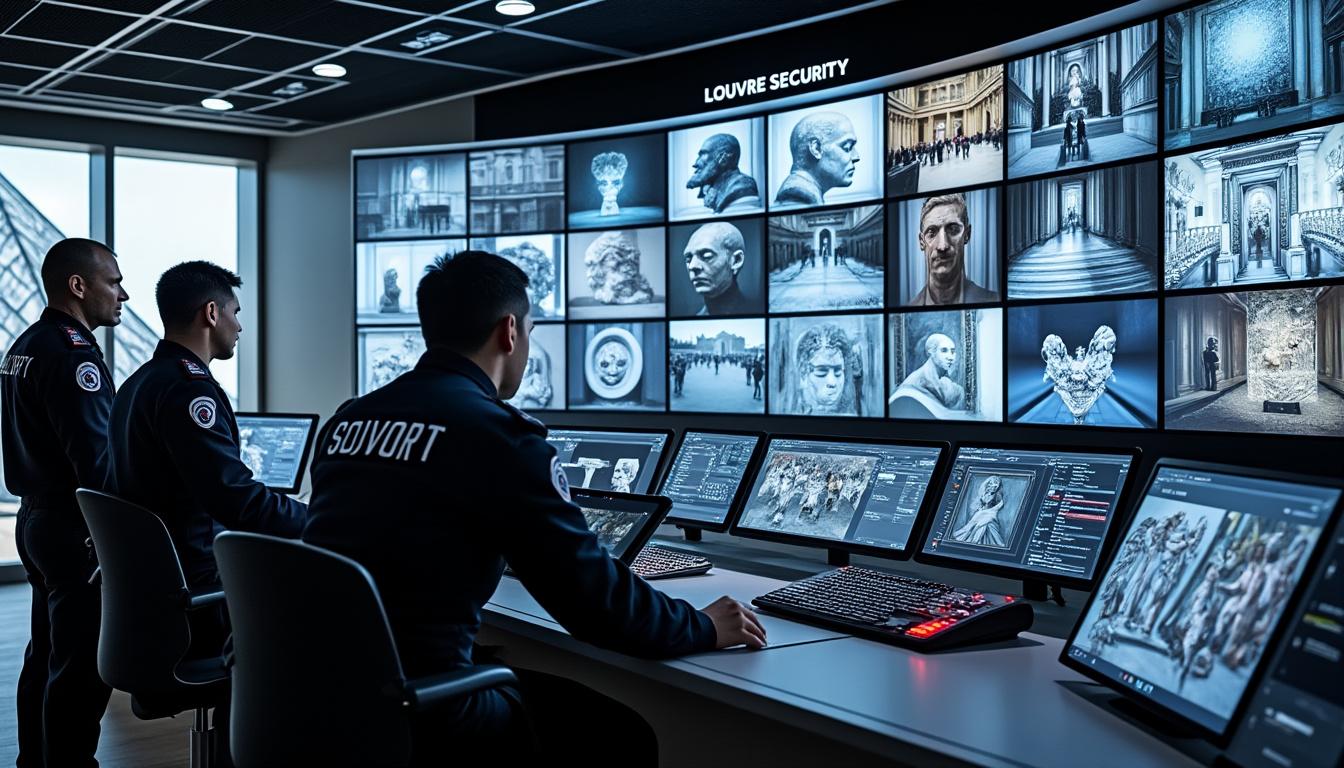
Emerging Surveillance Systems: From Cameras to AI-Powered Monitoring
In the wake of the heist, museums have accelerated the adoption of cutting-edge surveillance systems. Conventional CCTV infrastructure is being supplemented — or replaced — by AI-powered technology capable of detecting abnormal behavior instantly.
Modern systems utilize machine learning algorithms to analyze visitor movements, detect loitering near sensitive works, and identify potential threats without waiting for human intervention. These tools provide a proactive approach, alerting security teams to suspicious activity before thefts occur. For instance, the Louvre announced plans to install around 100 new cameras equipped with facial recognition and movement analysis by 2026, aiming to close previously exploited security gaps.
Beyond cameras, sensor networks embedded in exhibit cases and floors now track micro-movements or unauthorized contacts. Integrated alarms can disable exit routes or lock down gallery sections autonomously, preventing escape routes often used by thieves. According to reports on security upgrades, similar measures are being adopted in major museums worldwide, reflecting a global trend towards intelligent, adaptive security architectures.
However, the upgrade is not only about installing new devices but ensuring these technologies integrate seamlessly with human oversight and visitor flow. Museum staff receive enhanced training to interpret AI-generated alerts and engage visitors politely but firmly. This hybrid approach mitigates false alarms while maintaining an accessible environment.
Integrating security technology into everyday museum operations also increases resilience against insider threats and coordinated criminal activities. Historical museums have started collaborating with cybersecurity firms and law enforcement to develop defense strategies tailored to their unique challenges.
Key Elements of Modern Surveillance Systems
- 🎥 AI-driven video analytics for real-time threat detection
- 🔍 Facial recognition tools calibrated to respect privacy laws
- 📡 Sensor arrays detecting physical contact or vibrations
- 🔐 Automated lockdown and anti-intrusion mechanisms
- 👮 Enhanced communication channels between security and law enforcement
These components form a networked security ecosystem enabling faster response times and thorough documentation for post-incident investigations.
Balancing Accessibility and Security in Cultural Heritage Protection
One of the greatest challenges museums face today is reconciling cultural heritage protection with the imperative to remain open and welcoming to global audiences. After the Louvre jewelry theft, institutions have revisited their policies to strike this delicate balance without compromising either goal.
Historically, security measures often resulted in imposing physical barriers and restricted access, detracting from the visitors’ immersive experience. Yet, restricting access too drastically can alienate the public and undermine the educational mission of museums.
To solve this dilemma, several museums have leveraged digital innovations such as smart visitor guides and augmented reality to provide enriching experiences without close physical interaction with priceless artifacts. Tools like the Grupem app empower curators and guides to dynamically tailor visitor flows, manage capacities, and provide real-time audio commentary, reducing crowding near vulnerable exhibits.
Moreover, technological outreach extends the museum experience beyond physical walls, making collections accessible via virtual tours that incorporate sophisticated multimedia narration and interactive content. This digital pivot allows museums to both protect their treasures and expand cultural engagement globally.
Institutions also invest in staff training programs to sensitively manage security checkpoints and visitor screenings, ensuring that the human element of hospitality is preserved amidst higher security protocols.
By adopting such innovative yet user-centric approaches, museums uphold their dual mandates of security and accessibility. These strategies are essential, especially in a post-heist environment where both public trust and artifact safety must be continuously nurtured.
Examples of Innovative Visitor Engagement Practices
- 📱 Mobile guides with context-sensitive alerts for visitors
- 🌐 Virtual reality exhibitions paralleling physical tours
- 🛡️ Staff training emphasizing friendly yet firm security presence
- 🎧 Audio-based storytelling replacing overly intrusive physical barriers
- 📊 Real-time visitor flow analytics to prevent area overcrowding
Mathematics and Smart Risk Management: Revolutionizing Museum Security
An unexpected but groundbreaking development in museum security comes from applying mathematical models traditionally unrelated to security enforcement. For instance, a decades-old geometry problem’s principles are now leveraged to optimize camera placements and maximize overlap in blind spots coverage — directly addressing weaknesses highlighted by the Louvre incident.
Research published by security scholars points out how mathematical algorithms can improve surveillance efficiency, cut down false alarms, and ensure total area coverage by coordinating multiple sensor systems intelligently. Such applications enhance risk management by predicting likely points of intrusion and guiding resource allocation.
In parallel, predictive analytics powered by big data evaluates visitor behavior patterns and flags unusual trajectories indicative of suspicious intentions. Museums using these innovations improve their ability to intercept theft attempts early.
The following table summarizes how traditional setup compares with mathematically informed security designs:
| 🔑 Aspect | 📅 Traditional Security Setup | 🧠 Math-Based Optimization |
|---|---|---|
| 👁️🗨️ Surveillance Coverage | Partial blind spots common | Maximized, minimal blind spots |
| ⏱️ Response Time | Dependent on manual monitoring | Automated alerts reduce delays |
| 🔍 False Alarm Frequency | High due to limited context | Reduced using pattern recognition |
| 📈 Resource Allocation | Fixed staff patrols | Dynamically adjusted by data analysis |
Advanced institutions are now collaborating with mathematicians and data scientists to stay ahead of increasingly sophisticated art thieves. These interdisciplinary partnerships represent the frontier of museum innovations in security.
Staff Training and Collaboration: Human Factors in Security Reinvention
While technology forms the backbone of modern museum security, the human factor remains indispensable. Comprehensive training aligns personnel from front-line guards to curators on the enhanced protocols developed post-Louvre heist.
Security teams now practice scenario-based drills simulating intrusion attempts and coordinated responses. Staff are trained to differentiate between genuine threats and minor visitor irregularities, reducing undue disruptions while maintaining vigilance.
Cross-department collaboration within museums has increased, bringing together security, IT, and visitor services to create a holistic security culture. This integrated approach fosters communication and rapid information sharing essential for effective threat mitigation.
Moreover, community engagement initiatives invite visitors to act as partners in safeguarding cultural treasures. Awareness campaigns encourage reporting suspicious behavior discreetly, supported by digital tools like mobile reporting apps which align well with modern visitor habits.
This people-centric perspective complements technological advances to create a resilient defense network that adapts to evolving challenges while respecting the public’s experience.
- 👮 Cross-functional security and staff training programs ✅
- 📞 Enhanced communication protocols with local law enforcement 🚔
- 💡 Visitor awareness initiatives promoting collaborative security 🤝
- 🔄 Regular updates and reviews of security procedures 🔧
Such comprehensive reinvention efforts not only lower the risk of theft but also enhance museums’ reputations as safe, accessible cultural sanctuaries.
What major changes have museums made after the Louvre Heist?
Museums worldwide have upgraded surveillance technology with AI-driven cameras, improved alarm systems, integrated mathematical models for better coverage, and enhanced staff training protocols to prevent similar incidents.
How do AI-powered surveillance systems improve museum security?
AI enhances security by providing real-time detection of suspicious behavior, reducing false alarms via pattern recognition, and enabling automated lockdown procedures to swiftly respond to threats.
Is there a trade-off between museum accessibility and security?
Yes, museums balance visitor access with protection by employing smart technology that reduces physical barriers and using virtual guides to manage flows, ensuring both safety and enriching visitor experiences.
How are mathematical principles applied in museum security?
Mathematical models optimize camera placements, minimize blind spots, and improve resource allocation for surveillance, providing a more effective risk management framework.
What role does staff training play in modern museum security?
Staff training ensures personnel can respond appropriately to threats, coordinate across departments, engage visitors constructively, and work alongside advanced security technologies to protect collections.
For further insights and practical details on implementing museum security and enhancing visitor engagement, consider consulting resources such as Grupem’s guide on art security post-Louvre Heist, and international case studies analyzing the aftermath of the incident.
