
Short on time? Here’s what you need to know:
✅ The Japanese American National Museum in Los Angeles refuses to erase crucial historical truths despite federal pressure.
✅ The museum’s commitment to Diversity, Equity, and Inclusion (DEI) protects vital narratives of Japanese American incarceration and broader cultural history.
✅ Other museums have faced federal funding cuts or censorship, but JANM’s stance exemplifies courageous resistance in preserving unvarnished history.
✅ Collaboration and innovative outreach amplify JANM’s mission beyond its walls, leveraging modern cultural and educational tools.
Resisting Historical Whitewashing: JANM’s Defiant Stand in Los Angeles
In early 2025, President Donald Trump issued a sequence of executive orders aimed at eradicating Diversity, Equity, and Inclusion (DEI) initiatives within federal institutions, including museums known for truthful historical representation. This move sparked widespread concern across the cultural sector, as institutions grappled with potential funding losses and political repercussions.
Most museums reacted swiftly, often opting to comply by removing DEI language from public platforms or shuttering offices dedicated to inclusion efforts. For example, Washington’s National Gallery of Art closed its office of belonging and inclusion and quietly excised references to diversity on its website. Shortly thereafter, the Smithsonian followed a similar path, stoking fears about erasure and revisionism in the portrayal of American history.
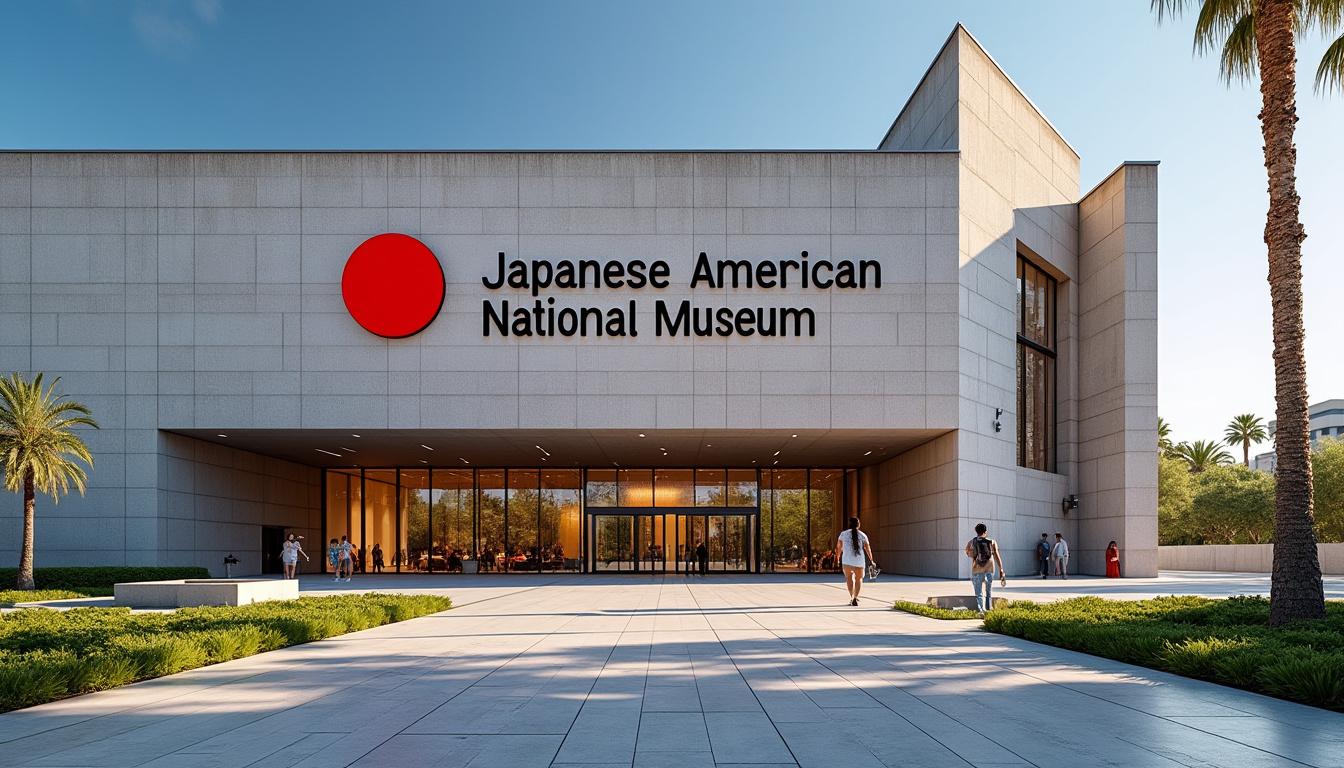
However, the Japanese American National Museum (JANM) in downtown Los Angeles stood apart from this trend. Rooted in the historic district of Little Tokyo and operating since 1992, JANM has long been committed to presenting a truthful narrative about the Japanese American experience, particularly spotlighting the World War II incarceration camps.
Amid increasing pressure, JANM made the bold decision to continue its mission without compromise, declaring publicly that it would “scrub nothing” from its exhibits or public materials. This pledge solidified JANM’s role as a bulwark against political interference, opting to prioritize historical integrity over federal grant money, even after losing substantial funding.
- 🌟 Maintaining an operating budget of approximately $13 million, JANM has lost over $660,000 in federal grants, including support from the National Endowment for the Humanities.
- 🌟 The museum was also denied project funding related to Japanese American incarceration from the National Park Service, a grant they had reliably secured in previous years.
- 🌟 JANM’s board unanimously reaffirmed its commitment to fight efforts aimed at historical erasure and discrimination, invoking the legacy of Issei and Nisei generations who suffered immense injustices.
JANM’s stance highlights the museum sector’s broader struggle amid political attempts to whitewash uncomfortable truths, especially those involving racial and ethnic histories. Its resistance serves as a model of cultural preservation and institutional integrity amid an increasingly hostile federal landscape.
Impacts of Trump’s Executive Orders on Museums and Cultural Institutions
President Trump’s executive order “Restoring Truth and Sanity to American History” explicitly targets what his administration considers “divisive” or “anti-American” ideologies. This directive has had a profound impact on institutions nationwide, leading to widespread censorship of vital histories and culture.
Several museums rapidly complied by removing references to DEI or closing offices dedicated to inclusion, fearing the loss of crucial federal funding. The decision to scrub historical content has caused ripple effects, resulting in the cancellation of hundreds of grants and the dilution of educational programs.
According to the industry reports, over 1,200 grants have been canceled within months of the order’s implementation, an estimated 85% of the National Endowment for the Humanities’ portfolio. This withdrawal severely affects research initiatives and public programs designed to explore complex histories honestly.
One direct consequence has been the elimination of funding for teacher-training programs that enable educators to impart the true history of Japanese American incarceration camps, a critical preventative tool against repeating past injustices. This undermining of educational infrastructure poses serious challenges to truth preservation in museums.
The lack of funding forces many institutions either to quietly accept censorship or explore alternative approaches, such as private fundraising, community partnerships, or digital outreach to maintain comprehensive historical narratives. The debate over whether museums should remain neutral or become advocates for truth has intensified.
- 📚 Federal funding cuts jeopardize research and public educational initiatives.
- 📚 Museum websites often now lack DEI language, weakening institutional commitments to inclusion.
- 📚 Community-specific museums like JANM face double challenges: resisting censorship while suffering targeted funding cuts.
- 📚 Some museums, like Oakland Museum of California, have refused certain federal grants due to attached restrictions, signaling a form of resistance through non-participation.
Comparative Table of Museum Responses to Federal DEI Directives 📊
| Institution 🏛️ | Response to DEI orders 🔧 | Funding Status 💵 | Public Stance on Historical Truth 🕊️ |
|---|---|---|---|
| Japanese American National Museum (JANM) | Refused to remove DEI content; declared “scrub nothing” | Lost $660,000+ federal grants | Strong public defiance; vocal opposition to whitewashing |
| National Gallery of Art | Closed DEI office; scrubbed DEI language | Maintained federal funding; compliance driven | Quiet compliance; avoided public controversy |
| Smithsonian Institution | Closed DEI offices; removed diversity statements | Funding maintained but under review | Officially silent; ongoing government review |
| Oakland Museum of California | Refused federal grant with compliance conditions | Lost some federal funding; pursuing private grants | Quiet resistance; prioritizes institutional integrity |
| Museum of Us, San Diego | No public stance, but aggressive DEI-themed exhibitions | Reduced federal grant applications | Focus on truthful storytelling in exhibits |
Preservation as Resistance: How Museums Protect Culture and Educate the Public
Preserving history within museums today is not only about conserving artifacts but actively resisting narratives that seek to distort or erase experiences. The Japanese American National Museum exemplifies this mission through its dedication to telling authentic stories that reflect all aspects of history, including uncomfortable chapters like World War II incarceration.
Museums serve as critical educational centers, offering interpretative experiences that help visitors understand past and present social dynamics. By retaining and communicating unabridged history, they foster critical thinking and counteract attempts at cultural erasure.
In practice, this requires museums to:
- 📖 Emphasize stories that have historically been marginalized or suppressed.
- 🎨 Curate exhibitions that engage communities empathetically and factually.
- 🗣️ Host public dialogues and programs that confront difficult histories directly.
- 🌐 Utilize modern technology and audio guides to enhance accessibility and engagement, aligning with innovations seen in the tourism sector such as smart audio guides.
The integration of smart tourism technology enables museums to extend their educational reach by providing clear, accessible narratives tailored to diverse audiences. These advancements create immersive environments that move beyond traditional display cases, making truth preservation an interactive experience.
Moreover, museums like JANM offer outreach programs such as “JANM on the Go,” which collaborates with institutions nationwide to bring culturally significant exhibits to broader communities. This mobile approach counters physical and political barriers to cultural education and ensures wider dissemination of critical narratives.
Financial and Political Challenges in Upholding Museum Missions
Standing firm against whitewashing incurs significant economic consequences. JANM’s case highlights how adherence to principles can result in millions lost in federal grants and stiff political backlash. However, this stance is often the only viable path to maintain community trust and institutional integrity.
Other museums frequently face difficult decisions balancing financial security with moral accountability. Many opt for compliance to safeguard funding streams, while a few choose paths of silent resistance or, as seen with the Oakland Museum of California, reject federal funds to maintain autonomy.
For museums, transparent governance and a committed board have proven essential factors in navigating these pressures. JANM’s unanimous board support allowed its leadership to take decisive, principled action without internal division.
With increased politicization of cultural spaces, museums now navigate an environment where historical narratives, community representation, and political power struggles intersect intensely. The refusal of federal support in certain cases further challenges operational stability, encouraging exploration of alternative revenue sources such as community fundraising, merchandise sales (e.g., “scrub nothing” t-shirts), and partnerships with non-federal organizations.
This persistent tension compels museums to innovate both culturally and operationally to sustain their missions. Emphasizing partnerships, technology, and community engagement are key pathways to resilience in this landscape.
Educational Role of Museums in Safeguarding Truth and Fighting Revisionism
The educational mandate of museums is fundamental, especially in a moment when political forces drive historical revisionism. Museums act as critical counterpoints to simplified or sanitized versions of history promoted by certain government policies.
By providing access to unfiltered history, museums foster civic awareness and empathy. Their programs educate not only about past injustices but also about ongoing struggles for civil rights and social equity. JANM’s work has included facilitating teacher programs to deeply root lessons about incarceration camps into national curricula, combating historical amnesia and promoting informed citizenship.
Amid rising misinformation, museums also serve as trusted sources of verified knowledge, employing research-based exhibits and incorporating oral histories, artifacts, and multimedia narratives to reinforce factual storytelling. This approach supports cultural literacy among diverse audiences, emphasizing voices that have been historically silenced.
- 🧑🏫 Teacher-training initiatives help extend reach into classrooms nationwide.
- 🎥 Documentary films and recorded testimonies preserve first-person narratives.
- 📚 Partnerships with schools and community groups embed museum learning into broader educational ecosystems.
- 🌍 Digital outreach tools break geographic and political boundaries in sharing authentic histories.
JANM’s ongoing dedication underlines how museums can serve as active sites of resistance, preventing the appropriation or neglect of marginalized communities’ histories. Their unwavering commitment to “scrub nothing” urges cultural institutions broadly to reaffirm their roles not just as relic repositories but as vibrant spaces of historical truth and social engagement.
Why did the Japanese American National Museum refuse to remove DEI content?
JANM’s mission is deeply rooted in preserving and truthfully presenting the Japanese American experience, including its painful history of WWII incarceration. Removing DEI content would compromise their integrity and community trust. Their board unanimously supported maintaining complete historical narratives despite federal pressure.
How have Trump’s executive orders affected federal funding for museums?
Thousands of federal grants, particularly from the National Endowment for the Humanities, have been canceled or withheld from museums that feature DEI programs or present critical perspectives on American history. This has led to significant financial losses and forced some institutions to alter or suppress content.
What strategies do museums use to continue educating the public despite funding cuts?
Many museums increase community partnerships, pursue private funding, and implement technological innovations such as smart audio guides and mobile exhibits. Outreach programs expand access beyond physical museum walls, ensuring important stories reach diverse audiences.
Are all museums equally affected by these federal policies?
No. The impact varies depending on governance, funding sources, political environment, and community support. Culturally specific museums like JANM often have stronger community backing and clearer missions, which can empower resistance, though they might face more targeted funding cutbacks.
How does preserving historical truth benefit society?
Safeguarding accurate history fosters critical thinking, empathy, and social justice awareness. It prevents the repetition of past injustices by educating future generations and upholding the rights and dignity of marginalized communities through truthful storytelling.
